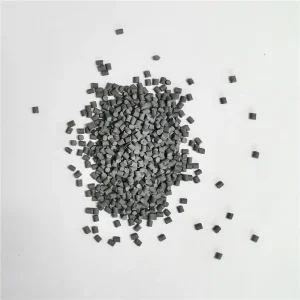
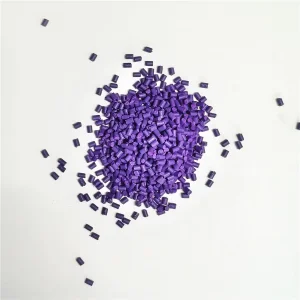
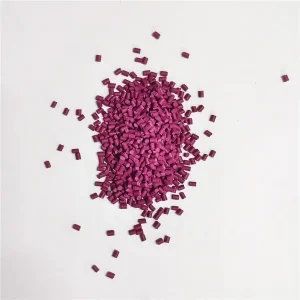
Explore our specialized carrier-matched masterbatch formulations engineered for blown film, injection molding, profile extrusion, and outdoor weather-critical applications.
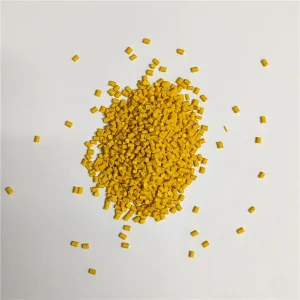
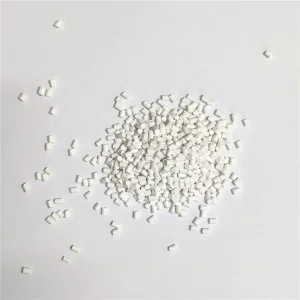
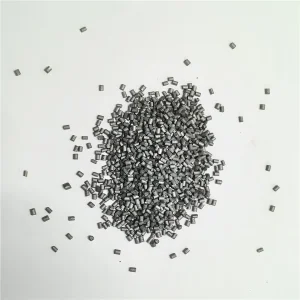
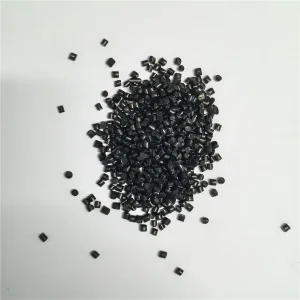
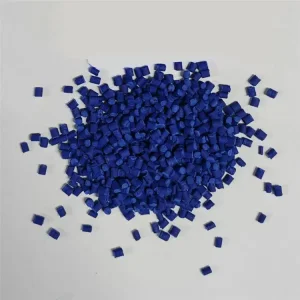
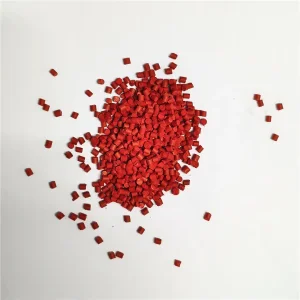
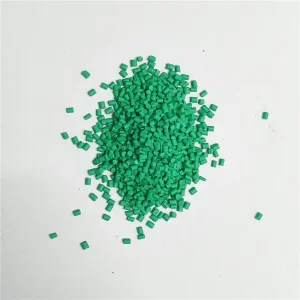
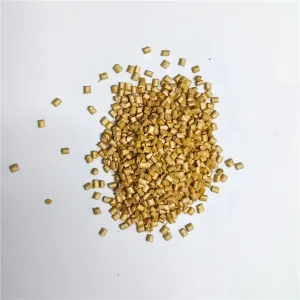
Polyethylene (PE) resins—encompassing Low-Density Polyethylene (LDPE), Linear Low-Density Polyethylene (LLDPE), and High-Density Polyethylene (HDPE)—are inherently susceptible to photo-oxidative degradation when exposed to solar ultraviolet (UV) radiation. Solar light within the UV-A (315–400 nm) and UV-B (280–315 nm) spectrum initiates Norrish Type I and Type II free radical reactions within the polyolefin backbone. Left uninhibited, this photochemical degradation results in polymer chain scission, cross-linking, severe embrittlement, loss of tensile strength, surface chalking, and catastrophic color fading.
In outdoor yellow polyolefin applications, achieving prolonged weather resistance presents a unique chemical challenge. Yellow pigments generally feature high absorption coefficients in the violet-blue spectral region (400–450 nm). Standard organic yellow pigments (such as Diarylide Yellows PY12 or PY13) possess weak chemical bonds that rapidly cleave under outdoor UV exposure, accelerating both chromatic shifts and polymer matrix breakdown. A high-performance Custom Weather Resistant Yellow PE Masterbatch resolves these vulnerabilities through a synergistically stabilized formulation matrix.
To ensure robust resistance against outdoor weathering, custom masterbatches incorporate a dual-action additive package. UV Absorbers (typically Benzotriazoles such as UV-326 or UV-329) act as internal filters, absorbing harmful high-energy UV radiation and dissipating it harmlessly as thermal energy before it can cleave the polymer chain. Concurrently, Hindered Amine Light Stabilizers (such as HALS 622 or HALS 944) operate via the Denisov Cycle, repeatedly trapping alkyl and peroxyl free radicals formed during photo-oxidation.
When formulated into high-concentration LLDPE or HDPE carrier matrices, this additive synergistic system effectively halts photo-degradation, preserving physical elasticity, impact strength, and color saturation across thousands of hours of direct solar exposure.
Why leading global polyolefin converters partner with specialized Chinese masterbatch suppliers for high-volume custom color and functional additive compounding.
Utilizing high-speed co-rotating twin-screw extruders with Length-to-Diameter (L/D) ratios of 44:1 to 48:1, Chinese manufacturers achieve ultra-fine pigment dispersion down to the sub-micron scale, eliminating filter clogging and color streaks in thin film processing.
Proximity to world-class petrochemical refineries and organic pigment synthesis plants allows Chinese suppliers to source high-purity virgin PE resins and high-lightfastness pigments at unmatched economies of scale, directly lowering Total Cost of Ownership (TCO).
State-of-the-art QC laboratories equipped with Datacolor spectrophotometers, Melt Flow Indexers (MFI), Thermogravimetric Analyzers (TGA), and QUV accelerated weathering chambers ensure Delta E variance stays consistently below 0.5 between batches.
The manufacturing of premium custom weather resistant yellow masterbatch involves precise multi-stage engineering:
The global masterbatch market is experiencing a profound transition driven by stringent environmental directives, regional chemical safety frameworks, and the rapid expansion of sustainable plastic circular economies. Key regulatory frameworks including EU REACH (Registration, Evaluation, Authorisation and Restriction of Chemicals), RoHS 3.0 (Directive 2015/863), and US FDA 21 CFR 177.1520 have fundamentally reshaped pigment selection criteria for custom masterbatch formulators.
| Industry Trend / Directive | Regulatory & Technical Focus | Impact on Custom Masterbatch Engineering |
|---|---|---|
| Lead Chromate Phase-Out | REACH Annex XIV / Heavy Metal Elimination | Shift from low-cost Lead Chromates (PY34) to high-performance Bismuth Vanadate (PY184) and Isoindoline (PY139) chemistry. |
| Circular Economy Recyclability | EU Plastics Strategy / NIR Sorting Compatibility | Formulating weather-resistant yellow masterbatches that remain detectable by Near-Infrared (NIR) sorting systems at recycling plants. |
| Non-Migratory Additive Packages | FDA 21 CFR Food Contact & Environmental Leaching | Utilizing high-molecular-weight polymeric HALS to prevent chemical migration, blooming, or phase separation in outdoor film applications. |
| Extended UV Lifetime Guarantees | ASTM G155 / ISO 4892-2 Weathering Standards | Demanding 5-to-10 year outdoor lifespan verification for agricultural geomembranes, urban conduit, and renewable energy infrastructure. |
Historically, industrial yellow polyolefins relied heavily on Cadmium Yellows and Lead Chromate Yellows due to their high opacity, vivid hue, and extreme heat resistance. However, global bans on toxic heavy metals have forced compounders to innovate. Modern custom yellow PE masterbatches leverage advanced Bismuth Vanadate (BiVO4) technology, delivering exceptional opacity and lightfastness (Blue Wool 8) matching heavy-metal alternatives while maintaining full eco-compliance and food-contact approvals.
From harsh desert solar farms to extreme agricultural microclimates, our weather-resistant yellow PE masterbatches provide crucial protection and vivid identification.
Yellow photoselective films require extreme UV stabilization to withstand agricultural chemicals (pesticides, sulfur vapor) while providing light transmission control. Custom PE masterbatch ensures 36+ months of film integrity in high-UV regions.
Underground and aerial HDPE yellow conduit for optical fiber cables requires strict color coding (RAL 1021 / RAL 1023) and high ESCR (Environmental Stress Crack Resistance) under direct thermal exposure.
Blow-molded HDPE road safety barrels, warning cones, and construction barriers demand high-visibility yellow shades that maintain high brilliance without chalking or fading under intense ambient solar irradiance.
Outer protective covers and color-coded components of Intermediate Bulk Containers (IBCs) molded with HDPE require anti-migration yellow pigments resistant to harsh chemical spillage and ambient oxidation.
Rotomolded and injection-molded LLDPE playground equipment requires non-toxic, skin-contact safe yellow masterbatches that comply with EN 71-3 safety standards while remaining lightfast for over 10 years.
PP/PE woven tapes exposed to outdoor storage require masterbatches with zero filter blockage during high-speed extrusion drawing, offering anti-split properties and intense yellow color identity.
One-size-fits-all color concentrates frequently fail under real-world processing and atmospheric conditions. A professional Weather Resistant Yellow PE Masterbatch Company evaluates the complete polymer environment before compounding. Key engineering variables include:
The Melt Flow Index (MFI) of the masterbatch carrier must perfectly align with or slightly exceed the MFI of the base polymer resin. For thin blown films (15–30 microns), a high-flow LLDPE carrier (MFI 20–30 g/10min) is utilized to ensure instantaneous melt blending without causing pinholes or melt fracture. Conversely, for pipe extrusion, a low-MFI HDPE carrier (MFI 0.5–2.0 g/10min) prevents localized mechanical degradation.
Low-molecular-weight additives tend to migrate to the plastic surface over time, creating a whitish powder bloom or sticky residue that degrades sealability and aesthetics. Our proprietary formulation utilizes oligomeric HALS with high molecular weights (>2000 g/mol) combined with surface-modified pigments, anchoring additives within the polyolefin matrix permanently.
High-speed injection molding of thick-walled components subjects colorants to severe thermal stress. Our weather-resistant yellow formulations undergo heat-stability verification up to 280°C for 5-minute dwell times, preventing thermal discoloration, shade shifts, or polymer gas formation during molding cycles.
Essential technical criteria and evaluation metrics for international procurement managers sourcing masterbatch from OEM suppliers.
When selecting a masterbatch supplier, global enterprise buyers must look beyond initial per-kilogram pricing and evaluate total compounding performance. A structured procurement framework encompasses four critical audit dimensions:
Demand CIELAB data parameters (L*, a*, b*, C*, h*) measured using d/8° geometry spectrophotometers. Ensure supplier guarantees Delta E (ΔE*) color tolerance thresholds below 0.5 across consecutive manufacturing lots.
For fine fiber or thin film extrusion, require FPV data (EN 13900-5). Premium masterbatches exhibit FPV values below 1.0 bar/g, proving zero coarse particle agglomeration and preventing production downtime.
Verify third-party QUV (ASTM G154 / ISO 4892-3) or Xenon-Arc (ASTM G155) exposure reports documenting gloss retention, tensile strength retention, and color shift after 1,000 to 5,000 exposure hours.
Reliable China B2B suppliers maintain flexible packaging and rapid fulfillment protocols to support global just-in-time (JIT) manufacturing schedules:
Expert technical answers to common engineering, formulation, and procurement questions regarding weather-resistant yellow PE masterbatch.
Weather resistance is achieved by combining high-lightfastness pigments (Wool Blue Scale 7-8 rating, such as Bismuth Vanadate or Isoindoline) with a synergistic light stabilization package consisting of Hindered Amine Light Stabilizers (HALS) and UV Absorbers (UVA). This prevents photo-oxidative polymer chain scission and pigment fading caused by outdoor solar UV radiation.
Standard let-down ratios range from 1.0% to 4.0% depending on the final wall thickness, opacity requirement, and expected outdoor exposure lifetime. For thin agricultural films, an LDR of 2.0% to 3.0% is common, while thick injection-molded parts may achieve full opacity at 1.5% to 2.0% LDR.
While a PE carrier masterbatch is universally compatible with LDPE, LLDPE, HDPE, and PP (polypropylene) in many non-critical applications, engineered polymers like ABS or PC require carrier-matched masterbatches (such as SAN or Acrylic carriers) to avoid mechanical delamination or reduced impact strength.
We select organic and inorganic pigments with high molecular weight and extremely low solubility in polyolefins. Additionally, we avoid low-molecular-weight waxes or lubricants during compounding, preventing pigment bleeding or surface blooming even under elevated thermal and physical pressure.
Every export shipment is accompanied by a Certificate of Analysis (COA), RoHS 3.0 Compliance Certificate, REACH SVHC Declaration, Heavy Metal Free Statement, and Technical Data Sheet (TDS). FDA food-contact compliance declarations are available upon request for specific formulations.
You can provide a standard color code (such as RAL 1021, RAL 1023, Pantone 109C) or send a physical plastic sample to our R&D lab. We utilize optical spectrophotometers to generate an exact color match, formulate trial masterbatch samples within 3 days, and ship sample pellets for your machine trial.
High-concentration pigment masterbatches and additive concentrates engineered for demanding international plastic processing markets.