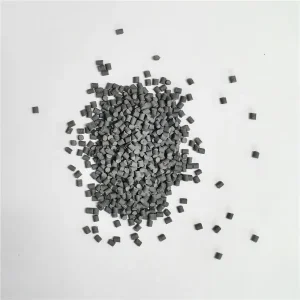
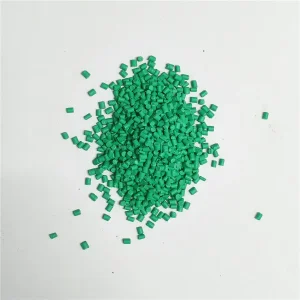
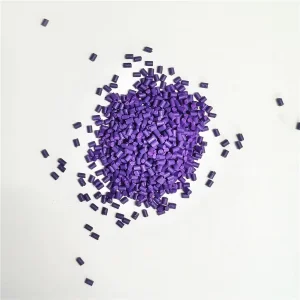
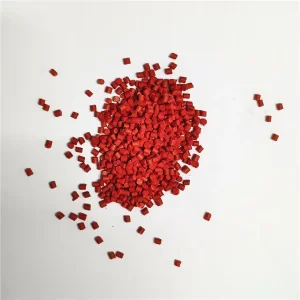
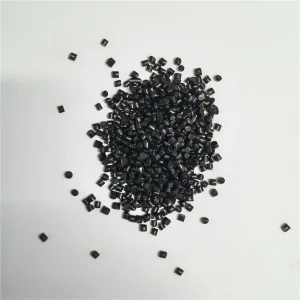
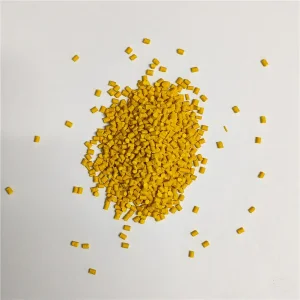
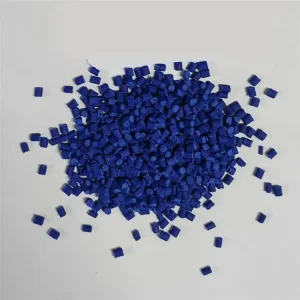
Engineered for solar backsheets, anti-aging frame sealing, high-durability EVA/POE encapsulant color-coding, and custom utility module aesthetics.
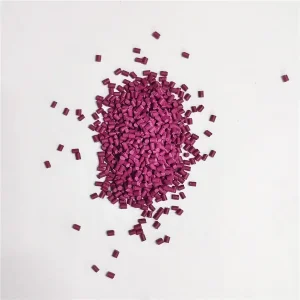

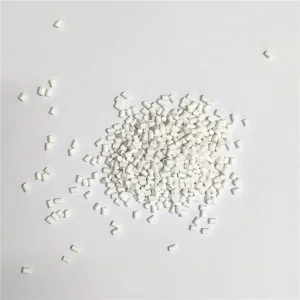
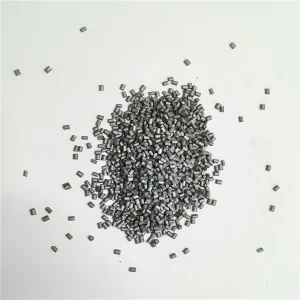
Unlocking utility-scale project returns, resilient OEM procurement frameworks, and high-purity material science in contemporary solar manufacturing.
The global wholesale solar panel industry has entered an irreversible technological renaissance. For more than a decade, p-type Passivated Emitter and Rear Cell (PERC) architectures served as the workhorse for developers. Today, n-type architectures—predominantly Tunnel Oxide Passivated Contact (TOPCon) and Silicon Heterojunction (HJT)—command over 75% of new commercial contracting pipelines.
This paradigm shift is driven by the physics of zero Light-Induced Degradation (LID), superior temperature coefficients reaching down to -0.26%/°C in HJT, and bifaciality factors surpassing 85%. For wholesale buyers, engineering procurement contractors (EPCs), and IPPs, sourcing directly from audited original equipment manufacturers (OEMs) ensures optimized Levelized Cost of Electricity (LCOE).
Global decarbonization mandates have triggered localized trade dynamics, including the United States Uyghur Forced Labor Prevention Act (UFLPA), the European Union Corporate Sustainability Due Diligence Directive (CSDDD), and India’s Approved List of Models and Manufacturers (ALMM). Sourcing custom wholesale solar panels is no longer merely a transaction based on spot prices per watt.
Leading factories must now provide end-to-end supply chain transparency, starting from metallurgical-grade silicon processing down to polysilicon ingots, wafer slicing, cell diffusion, and automated module lamination. BloombergNEF (BNEF) Tier-1 bankability status, alongside comprehensive factory audits by DNV GL, PVEL, and RETC, forms the non-negotiable benchmark for global procurement teams.
While cell efficiencies capture industry headlines, the physical survivability of photovoltaic modules across 30 years of field exposure depends squarely on polymer engineering. High-performance encapsulants (POE/EPE/EVA), co-extruded fluoropolymer backsheets, silicone junction adhesives, and engineered masterbatch stabilizers prevent early catastrophic failures.
Without rigorous control over thermal aging (85°C/85% RH damp-heat exposure) and ultraviolet irradiance (UV15/UV60 testing), wholesale modules risk micro-cracking, potential-induced degradation (PID), acetic acid generation, and delamination. Our 16-year material formulations provide the physical bedrock for high-yield solar assemblies.
Comparative deep-dive into cutting-edge wafer configurations, metallization techniques, and cell architectures dominating high-volume production lines.
| Architecture Metric | n-Type TOPCon (Tunnel Oxide) | HJT (Silicon Heterojunction) | xBC (Back Contact - ABC/HPBC) | Perovskite-Silicon Tandem (2026+) |
|---|---|---|---|---|
| Theoretical Limit | 28.7% | 28.5% | 29.1% | > 35.0% |
| Mass Production Efficiency | 24.5% – 25.2% | 25.0% – 25.8% | 24.8% – 25.5% | 26.5% – 28.0% (Pilot Lines) |
| Temperature Coefficient | -0.30% / °C | -0.26% / °C (Industry Best) | -0.29% / °C | -0.25% / °C |
| Bifaciality Factor | 80% – 85% | 90% – 95% | 65% – 75% (Aesthetic Focus) | 80% – 85% |
| CAPEX / Line Complexity | Moderate (Upgraded from PERC) | High (Requires PECVD/PVD) | High (Complex Photolithography) | Very High (Vapor Deposition Tech) |
| Primary Wholesale Focus | Utility Scale & Large C&I | Extreme Heat / Desert Climates | Premium High-End Residential BIPV | Next-Gen High-Density Megawatt Sites |
Modern wholesale manufacturing lines have largely abandoned legacy 5BB and 9BB layouts. High-speed stringers now deploy Super Multi-Busbar (16BB to 20BB) and proprietary Zero-Busbar (0BB) micro-wire welding solutions. By eliminating ribbon shadowing and replacing thick silver busbars with dense copper filament networks, factories achieve lower cell stress, cut precious silver consumption by 30%, and drastically reduce micro-crack susceptibility under cyclic wind loading.
Thermal loss within photovoltaic circuits is proportional to the square of operating current ($P_{loss} = I^2R$). By laser-cleaving full M10 (182mm) and G12 (210mm) wafers into half-cut or triple-cut configurations using Low-Temperature Non-Destructive Slicing (NDC), operating currents inside cell strings are bisected. This yields a 4x reduction in internal resistive losses while preserving cell edges against micro-chipping, ensuring an extra 5W to 15W boost per module.
Double-glass (2.0mm + 2.0mm or 1.6mm + 1.6mm heat-strengthened glass) has become standard for ground-mount installations, delivering superior zero-water-permeability. However, for industrial rooftop applications constrained by load limits, custom wholesale manufacturers engineer lightweight bifacial modules utilizing transparent, highly cross-linked fluoropolymer backsheets, capturing backside albedo without compromising roof structural safety.
How the Yangtze River Delta industrial cluster, automated gigawatt fabs, and localized raw-material control create unmatched economies of scale.
Situated in Changzhou, Jiangsu Province—globally acknowledged as the epicentre of photovoltaic and new energy equipment—our factories operate within an integrated ecosystem where solar glass, aluminium extrusion profiles, junction boxes, ribbons, and specialized polymer additives are sourced within a 50-kilometer radius. This eliminates intermediate transit risks and compresses production turnaround times to just 15 days.
Modern production facilities utilize fully automated manufacturing execution systems (MES). From automated tabber-stringing robots operating at speeds exceeding 7,000 cells per hour to multi-angle AI electroluminescence (EL) defect scanning before and after lamination, artificial intelligence flags hidden micro-cracks, finger breaks, and cold-soldering defects with parts-per-million (PPM) accuracy.
Our 16-year foundational expertise in high-concentration PE and specialty polymers allows direct compounding of UV stabilizers, heat-resistant matrices, and optical additives in-house. By integrating upstream compound engineering with downstream module bill-of-materials (BOM), we eliminate middleman markup, granting wholesale B2B partners a decisive 6–11% cost-per-watt competitive advantage.
Unlike rigid high-volume standard lines, our custom wholesale factories support bespoke engineering: tailored module dimensions for restricted European roofs, customized IP68 junction box cable lengths, integrated DC optimizer mounting channels, ultra-black aesthetic front-sheets for high-end residential estates, and reinforced 5400Pa snow load / 2400Pa wind load framing.
Engineering customized physical profiles, environmental protection layers, and electrical properties for divergent global climates and project topologies.
Desert environments across the Middle East (GCC region), Northern Africa, and Western Australia subject photovoltaic modules to extreme operating challenges: ambient temperatures exceeding 50°C, sandstorm abrasion, and intense UV irradiation. Custom wholesale modules engineered for these zones feature ultra-low temperature coefficients (-0.26%/°C to -0.30%/°C), high-modulus anti-soiling hydrophobic front coatings, and POE encapsulation to resist acid degradation.
Dual-glass architecture prevents backsheet scouring from windblown sand, while reinforced anodized 35mm-40mm aluminium frames resist mechanical torsion during severe gust storms.
Deploying solar arrays on ocean lagoons, mining reservoirs, and coastal shores exposes systems to constant salt-mist corrosion, ammonia vapours, and continuous high humidity. Standard modules suffer rapid galvanic corrosion on frame joints and severe potential-induced degradation (PID).
Our custom coastal wholesale specifications feature IEC 61701 (Salt Mist Level 6) and IEC 62716 (Ammonia) certified components. Encapsulants deploy pure Polyolefin Elastomer (POE) matrices with water-vapor transmission rates (WVTR) below 0.1 g/m²·day, paired with 316 stainless-steel grounding clips and marine-grade junction box resin potting.
Agrivoltaics combines food production with clean power generation. Wholesale panels manufactured for Agri-PV require custom spectral transmittance: enough photosynthetically active radiation (PAR) must pass through to allow crop photosynthesis beneath the racking.
We manufacture custom semi-transparent dual-glass bifacial panels with variable cell-spacing layouts (allowing 20% to 50% light transmittance), enabling farmers to harvest berries, leafy greens, or livestock grazing pastures while simultaneously generating clean electricity, preserving soil moisture, and shielding crops from severe hail events.
Modern commercial architecture demands seamless visual harmony. Wholesale BIPV panels replace standard cladding, skylights, and curtain walls with power-generating glass elements. Customized production lines apply specialized ceramic frit printing, nano-optical color masterbatch layers (such as metallic gold, slate grey, and pure white), and textured non-glare anti-reflective glass.
These customized architectural panels deliver fire-class Class A ratings, fulfill structural safety glass requirements according to EN 12600, and convert urban facades into zero-emission distributed generation power plants.
A zero-compromise approach to international regulatory compliance, structural testing, and field lifecycle longevity.
Every custom module line manufactured in our partner facilities is certified under rigorous international standards, including IEC 61215:2021 (design qualification and type approval) and IEC 61730:2023 (module safety qualification). For North American utility and C&I deployments, modules carry full UL 61730 listings and CEC California Energy Commission registry listings.
Independent factory inspections conducted by TÜV Rheinland, TÜV SÜD, and Intertek verify our quality management systems adhere strictly to ISO 9001 (Quality), ISO 14001 (Environmental Management), and ISO 45001 (Occupational Health & Safety).
Wholesale procurement requires reliable bankability. Our custom panels come standard with a 12-year to 15-year limited product workmanship warranty and a 30-year linear performance power warranty, guaranteeing no less than 87.4% nominal power output at Year 30 for n-type TOPCon and over 88.5% for HJT modules.
To provide ironclad protection for commercial asset owners and financial institutions, our warranties are backstopped by world-leading reinsurance syndicates (such as Munich Re and Ariel Re), ensuring continuous claim settlement coverage irrespective of corporate structural changes.
Navigating global ocean freight, container load planning, and customs clearance is critical to protecting project COD (Commercial Operation Date) schedules. We maintain specialized break-bulk and 40ft High-Cube container packing configurations engineered with vertical wooden pallet cushioning to eliminate micro-cracks induced during maritime transit.
With localized customs clearance capabilities across Rotterdam, Hamburg, Los Angeles, Houston, Dubai, and Singapore, we deliver smooth Delivered Duty Paid (DDP) shipments, backed by 1% to 2% critical on-site spares inventory supplied free of charge in every mega-order.
In-depth technical answers addressing minimum order volumes, bill-of-materials auditing, degradation mitigation, and warranty mechanisms.
Access direct factory pricing, comprehensive technical data sheets (TDS), and ISO-certified quality compliance for your global project pipeline.