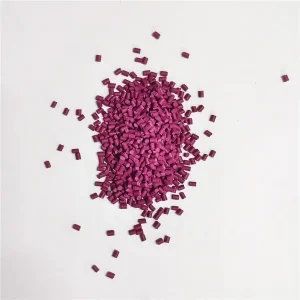
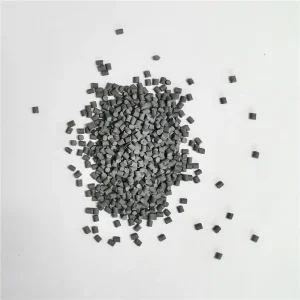
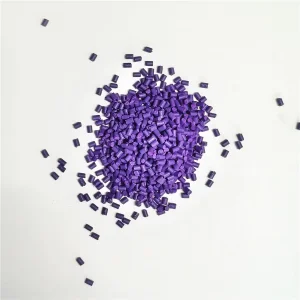
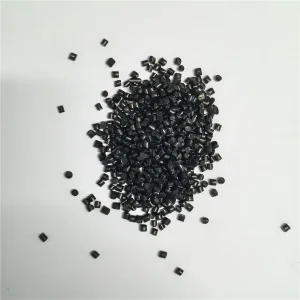
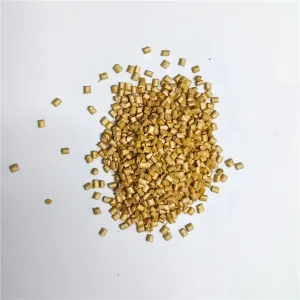
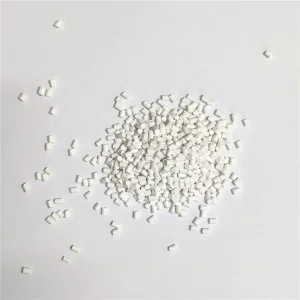
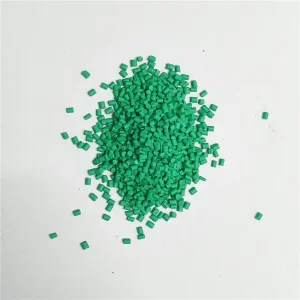
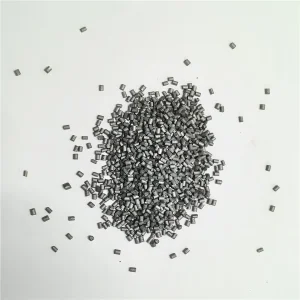
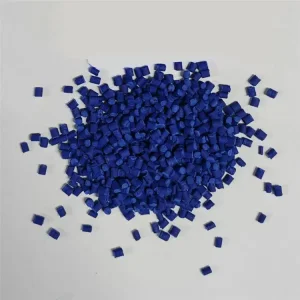
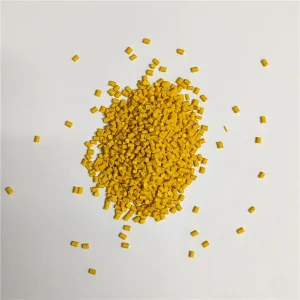
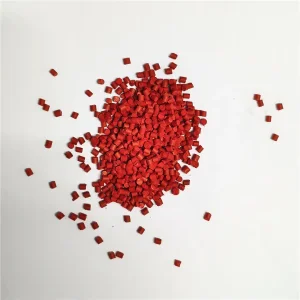
Explore our top-tier high-concentration Polyethylene masterbatch formulations engineered for blown film, injection molding, and complex industrial profile extrusion.
In the contemporary polymer processing ecosystem, Polyethylene (PE)—spanning Low-Density (LDPE), Linear Low-Density (LLDPE), and High-Density (HDPE) variants—represents the structural backbone of modern packaging, agricultural infrastructure, civil engineering geomembranes, and automotive fluid storage. However, the intrinsic chemical vulnerability of polyolefins to thermo-oxidative degradation during extrusion and subsequent photo-oxidative degradation under terrestrial solar radiation presents a severe barrier to long-term service life.
The global demand for high-performance Anti-Aging PE Masterbatch solutions has experienced an unprecedented surge. Modern supply chains require plastic substrate longevity to increase from traditional 12-month thresholds to multi-decade horizons (20 to 50+ years for civil HDPE piping and agricultural films). This whitepaper provides a comprehensive technical overview of chemical stabilization mechanisms, global sourcing parameters, China's manufacturing integration, and procurement strategies for corporate decision-makers.
Polyethylene degradation follows a classic auto-catalytic free radical mechanism initiated by UV-A (315-400 nm) and UV-B (280-315 nm) spectrum absorption. Our masterbatch formulations deploy a multi-tiered defense matrix.
Hindered Amine Light Stabilizers (HALS) do not absorb UV light; instead, they act as regenerative free-radical traps via the Denisov Cycle. Low-basicity NOR-HALS chemistry prevents acid-deactivation in agricultural applications exposed to pesticides and sulfur burning.
Utilizing high-molecular-weight Hydroxyphenyl-Benzotriazoles and Triazines to convert harmful ultra-violet photons into non-destructive thermal dissipation before photochemical cleavage of carbon-carbon polymer chains can occur.
Sterically hindered phenols combined with high-purity organo-phosphites provide processing stabilization against thermal degradation up to 260°C during compounding, preventing melt index shift and polymer cross-linking.
| Additive Class | Primary Target Spectrum | Mechanism of Action | Typical Retained Tensile Strength (3000h QUV) | Migration Profile |
|---|---|---|---|---|
| Standard HALS (Monomeric) | Free Radicals (R•, ROO•) | Radical Trapping (Denisov Cycle) | 62% - 68% | Moderate Blooming Risk |
| Polymeric HALS (High Mol-Wt) | Free Radicals (R•, ROO•) | Long-Term Radical Scavenging | 84% - 89% | Zero Migration / Non-Extractable |
| NOR-HALS + Benzotriazole Blend | UV Radiation & Radicals | Absorption + Synergistic Trapping | 94% - 98% | Ultra-Low Migration Rate |
| Carbon Black Micro-Dispersion | Full Spectral Blocking | Light Absorption & Energy Conversion | 96% - 99% | Completely Immobilized |
Changzhou Jiazhou Plastic Products Co., Ltd. (Established 2010) operates at the nexus of China’s most advanced chemical manufacturing cluster in Jiangsu Province. Spanning a state-of-the-art 6,000m² facility, Jiazhou has engineered a fully integrated compounding ecosystem designed to eliminate batch-to-batch color variance and optimize active stabilizer dispersion.
Why Tier-1 Global Buyers Partner with Jiazhou Masterbatch Factory:
Anti-aging PE masterbatches must be engineered precisely for specific environmental stresses, wall thickness, processing temperatures, and end-use exposure regimes.
Agricultural films demand extreme resistance to continuous solar radiation, pesticide sprays (containing sulfur and chlorine), and high ambient heat. Our NOR-HALS formulations ensure greenhouse films maintain high light transmission and structural integrity over 3-5 season exposure cycles.
Used in landfill liners, mining leach pads, and water reservoirs, HDPE geomembranes require 50+ year service lives. Incorporating high-grade carbon black or non-migrating polymeric HALS prevents stress cracking and oxidative induction time (OIT) failure under extreme environmental conditions.
Industrial IBC tanks and chemical storage drums exposed to outdoor storage yard conditions leverage our color-stabilized PE masterbatches to prevent embrittlement, color fading, and environmental stress cracking (ESCR).
Potable water lines and telecommunication conduit extrusions utilize high-concentration thermal and UV masterbatches to resist underground soil chemistry, residual chlorine oxidants, and direct UV exposure prior to burial.
Complex rotomolded parts (playground equipment, water tanks) experience long heating cycles. Our masterbatch ensures zero thermal discoloration during molding and long-term weatherability in high UV-index equatorial regions.
Polyolefin tapes used in woven sacks have a high surface-area-to-thickness ratio, making them extraordinarily sensitive to UV degradation. Our specialized masterbatches preserve tensile breaking strength during long-distance maritime transport.
The global masterbatch sector is experiencing a paradigm shift driven by stringent environmental legislation (e.g., EU Packaging and Packaging Waste Regulation - PPWR) and the imperative to transition toward a circular plastics economy. Sourcing strategies must adapt to three critical technological movements:
1. Post-Consumer Recyclate (PCR) Polyethylene Restabilization: Recycled PE resins exhibit compromised thermal history and pre-existing hydroperoxides. Next-generation anti-aging masterbatches incorporate reactive restabilization systems that repair chain scission during re-processing and neutralize catalytic residual degradation promoters.
2. Bio-Based PE Carrier Systems: Aligning with corporate decarbonization targets, masterbatch carriers are increasingly manufactured using sugarcane-derived bio-PE or mass-balanced circular polymers without compromising processing compatibility with fossil-based PE streams.
3. Smart Hybrid & Synergy Systems: Combining nano-scale inorganic UV blockers (such as surface-modified rutile TiO2 or ultra-fine zinc oxide) with organic HALS to achieve synergistic protection while reducing total active chemical loading rates.
When issuing RFPs to global anti-aging PE masterbatch suppliers, procurement directors should evaluate vendors across five standardized technical vectors:
Request verified QUV testing (ASTM G154 / ISO 4892-2) metrics demonstrating retained elongation-at-break and color fastness (ΔE < 2.0) after 3,000+ hours of continuous exposure.
Ensure the masterbatch carrier resin MFI closely aligns with your target substrate (e.g., MFI 0.3 for blown film vs. MFI 20 for injection molding) to prevent phase separation.
Low FPV ratings (< 1.5 bar/g) confirm ultra-fine particle dispersion, preventing filter mesh clogging in high-speed film extruders and reducing film pinhole defects.
Verify documentation for REACH SVHC compliance, RoHS 3.0, heavy metal limits (EN 71-3), and FDA 21 CFR food-contact approvals where end-use packaging mandates safety.
Detailed answers to technical inquiries frequently raised by plastics engineers and procurement managers.
Select from our comprehensive inventory of color and performance masterbatches engineered for long-term weatherability and color stability.
Engineered longevity for your plastic products. Contact Changzhou Jiazhou Plastic Products Co., Ltd. for custom formulation matching, TDS/MSDS requests, and factory-direct pricing.
Request Technical Specification & Catalog