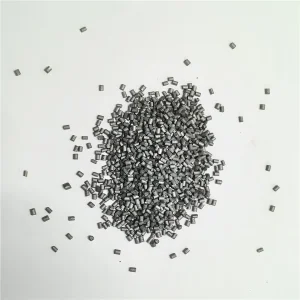
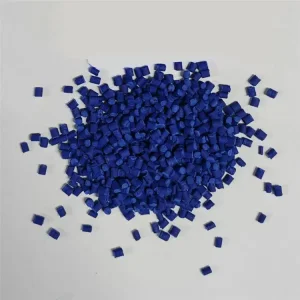
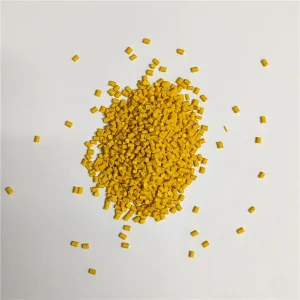
Engineered for blown film extrusion, injection molding, and complex polyolefin application profiles.
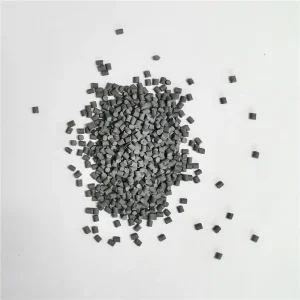
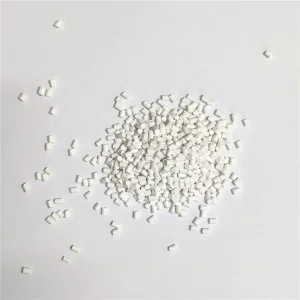
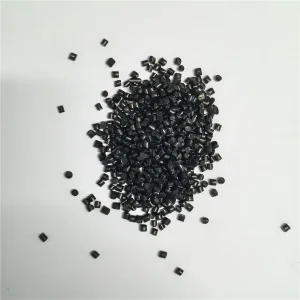
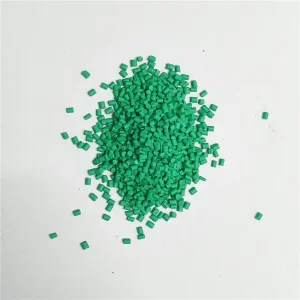
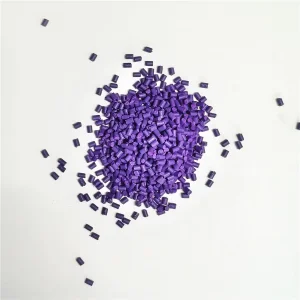
In polyolefin film manufacturing—specifically blown linear low-density polyethylene (LLDPE), low-density polyethylene (LDPE), and high-density polyethylene (HDPE)—film-to-film adhesion or "blocking" represents one of the most critical operational challenges. When smooth polymer films are extruded, cooled, and wound under high tension onto reels, atmospheric pressure and intermolecular attraction (Van der Waals forces) cause adjacent film layers to adhere tightly together. This physical blocking makes film separation virtually impossible during downstream unwinding, bag-making, conversion, or automatic packaging operations.
To overcome this phenomenon, modern plastic compounders utilize Anti-Block PE Film Masterbatches. Formulated by encapsulating finely dispersed inorganic micro-particles or high-efficiency organic agents within a specialized polyethylene carrier resin, anti-blocking masterbatches create microscopic surface roughness on the film surface. This microscopic topography reduces the effective contact area between adjacent polymer layers, trapping microscopic air pockets and drastically lowering the film-blocking force (ASTM D3354).
Analyzing the performance spectrum of inorganic vs. organic anti-blocking agents in blown film processing.
Synthetic amorphous silica provides the ultimate balance between ultra-high optical transparency and anti-blocking efficiency. Featuring a controlled, porous spherical structure with refractive index matching polyolefin resins (n = 1.45–1.46), synthetic silica minimizes light scattering (haze), making it the premier choice for food-grade, shrink, and high-clarity lamination films.
Diatomaceous earth (calcined natural silica derived from fossilized diatoms) offers exceptional cost efficiency for heavy-duty industrial film packaging. Although its natural particle morphology causes slightly higher film haze than synthetic silica, its irregular structure provides superior mechanical spacing at low LLDPE dosing rates (typically 1.0% to 2.5%).
Platy micronized talc acts as both an anti-blocking agent and a nucleation aid in polyolefin blown films. Due to its laminar crystal structure, talc creates barrier pathways that improve film modulus, melt strength, and bubble stability, making it ideal for agricultural stretch covers, greenhouse films, and thick liner bags.
Global plastic converters, film extruders, and flexible packaging manufacturers increasingly partner directly with specialized masterbatch factories in China—particularly within key chemical hubs such as Changzhou, Jiangsu Province. The integration of modern compounding technology, ultra-pure carrier resins, and extensive scale economies makes Chinese masterbatch manufacturers the strategic core of global supply chains.
Leading Chinese factories utilize high-torque, co-rotating twin-screw extruder systems equipped with continuous gravimetric loss-in-weight feeders. This guarantees uniform micro-dispersion of silica particles without agglomeration, preventing film gels or pinhole defects during high-speed extrusion.
Quality verification is conducted under ISO9001 and ISO14001 frameworks. Laboratories are equipped with Thermogravimetric Analysis (TGA), Melt Flow Index (MFI) testers, and optical haze meters to verify that every batch complies with REACH, RoHS, and FDA 21 CFR 177.1520 food contact safety standards.
Direct proximity to major petro-chemical polymer producers and ocean shipping ports allows Chinese masterbatch manufacturers to deliver fast 15-day production lead times, customizable packaging options (25kg moisture-proof vacuum bags or 1000kg jumbo totes), and competitive factory-direct pricing.
Evaluating silica grade choices against critical optical and physical extrusion parameters.
| Additive Mineral / Chemistry | Mean Size (D50) | Haze Impact (%) | Refractive Index | Screw Abrasion Risk | Primary Application Field |
|---|---|---|---|---|---|
| Synthetic Amorphous Silica | 1.8 - 2.5 µm | Ultra-Low (< 1.5%) | 1.458 | Negligible | High-Clarity Lamination & Food Packaging Film |
| Natural Diatomaceous Earth | 2.5 - 3.5 µm | Moderate (2.5 - 4.5%) | 1.430 | Low | General LDPE/LLDPE Shopping & Courier Bags |
| Micronized Talc (Platy) | 3.0 - 5.0 µm | High (> 5.0%) | 1.570 | Moderate | Agricultural Covers & Heavy-Duty Liner Bags |
| Organic Amide-Based Anti-Block | Non-particulate | Zero (Transparent) | N/A | None | Specialized Optical Thin Films & Barrier Coatings |
Tailored additive formulations satisfying stringent global film conversion demands.
Co-extruded black/white courier bags demand rapid unwinding and instant bag-opening on automated packing lines. High-loading Anti-Block PE Masterbatch ensures zero film tackiness during high-speed shear operations while protecting tear resistance and corona treatment retention for adhesive sealing.
Compliant with FDA 21 CFR 177.1520 guidelines, synthetic silica anti-block formulations maintain pristine film clarity, low odor (VOC-free), and non-migratory characteristics required for fresh produce vacuum pouches, meat overwrap, and shrink wrap films.
As circular economy mandates increase PCR polymer content in flexible packaging, masterbatch formulations engineered with specialized dispersants ensure uniform anti-blocking performance even within contaminated or degraded recycled polyolefin streams.
In blown film processing, anti-blocking agents are rarely used in isolation. To achieve complete surface optimization, extruders combine Anti-Block Masterbatch with Slip Masterbatch (primary fatty acid amides such as Erucamide or Oleamide). Understanding their synergistic mechanism is essential for polymer engineers:
Inorganic micro-particles create permanent surface protrusions immediately upon melt cooling. They do not migrate over time and act as microscopic rigid pillars that space adjacent film layers apart, mitigating blocking under storage pressure and heat.
Erucamide molecules dissolve in the molten polymer and slowly migrate (bloom) to the film surface post-extrusion. They form a microscopic lubricating monolayer that dramatically reduces the surface Coefficient of Friction (COF) down to < 0.20.
Without anti-block particles, slip amide molecules alone cannot prevent blocking under heavy roll winding tension. Conversely, without slip agents, anti-block particles lower film adhesion but leave the film surface with a high friction coefficient. Using a balanced combo masterbatch—or dosing individual PE Anti-Block and PE Slip masterbatches at optimized ratios—delivers optimal processing efficiency.
Expert technical answers addressing real-world extrusion and B2B sourcing challenges.
The typical let-down ratio ranges between 1.0% and 3.0% by weight, depending on the film thickness, polyolefin resin type (LLDPE vs LDPE), and target film blocking force. For thin blown films (< 25 microns) or high-density winding reels, a dosing rate of 2.0% to 3.5% may be required.
Natural inorganic minerals like talc or diatomaceous earth scatter light, increasing film haze by 2% to 5%. However, high-grade Anti-Block PE masterbatches formulated with synthetic amorphous silica match the refractive index of polyethylenes, keeping haze increases below 1.0% while maintaining exceptional optical clarity.
Inorganic anti-blocking particles are non-migratory and remain physically anchored within the polymer matrix. Consequently, unlike migrating slip additives or wax components, anti-block additives do not interfere with corona discharge treatment, surface printing inks, or heat-seal strength.
B2B buyers should demand ISO9001 quality management certificates, RoHS/REACH compliance test reports, FDA food contact statements (21 CFR 177.1520), and batch Certificate of Analysis (COA) specifying Melt Flow Index (MFI), moisture content (< 0.1%), and Filter Pressure Value (FPV).
While PE carrier resin masterbatches can be blended into polypropylene at low dosage rates, it is best practice to request a specialized PP carrier anti-block masterbatch to prevent polymer incompatibility, phase separation, or reduced mechanical tensile strength.
Factory-direct pigment and additive masterbatches for global B2B procurement.