Engineered with premium carrier resins and micro-milled organic/inorganic pigment complexes for optimal blown film, extrusion, and injection molding performance.
Analyzing global polyolefin demand, chromatic performance mandates, and the shift toward high-yield, micro-dispersed color concentrates.
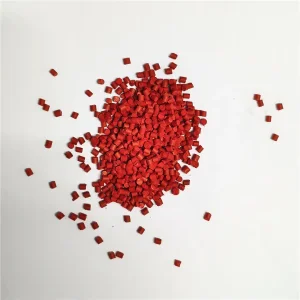
The global market for high-concentration polyethylene (PE) color masterbatch is accelerating, projected to exceed $14.5 Billion by 2030. Bright Red variants—specifically formulated using high-purity Diketopyrrolopyrrole (DPP Red / Pigment Red 254) and Organic Azo Reds—represent one of the fastest-growing chromatic segments due to demanding branding aesthetics in retail, agricultural film protection, and automotive polyolefins.
Achieving an ultra-vibrant, non-fading bright red shade requires meticulous pigment selection. Tier-1 masterbatch factories utilize micro-milled organic pigments (PR254, PR170, PR48:2) combined with specialized inorganic boosters. This prevents pigment migration (blooming), ensures high tinting strength, and guarantees zero thermal degradation up to 260°C–280°C under continuous extrusion melt pressure.
Global buyers in North America, Europe, and Asia-Pacific face tightening environmental standard mandates. Leading Chinese manufacturers are now prioritizing heavy-metal-free, low-VOC, RoHS 3, REACH SVHC, and FDA 21 CFR 177.1520 food-contact compliant red masterbatches to meet international export prerequisites without compromising mechanical stiffness or optical brilliance.
How top-tier Chinese masterbatch factories optimize melt flow indexes (MFI), carrier polymer compatibility, and twin-screw compounding setups to eliminate agglomeration.
The foundational key to manufacturing premium bright red PE masterbatch lies in matching the Melt Flow Index (MFI) of the carrier resin to the end-use matrix resin. Using high-MFI low-density polyethylene (LDPE, MFI 20–50 g/10min) or Metallocene LLDPE carriers guarantees complete wet-out of micronized red pigment particles during extrusion compounding.
Poorly dispersed red masterbatch leads to film tears, pinholes, and filter screen clogging. Advanced factories execute twin-screw co-rotating extrusion with specialized kneading blocks. Dispersion efficiency is quantified via the Filter Pressure Value (EN 13900-5) test.
| Masterbatch Grade | Pigment Content (%) | Carrier Resin | MFI (g/10 min @ 190°C) | Heat Fastness (°C) | Lightfastness (1-8) | Primary Processing Application |
|---|---|---|---|---|---|---|
| Ultra-Bright Red Premium | 50% DPP Red (PR254) | Metallocene LLDPE | 25 – 35 | 280°C | 8 (Maximum) | High-end Injection Molding, Luxury Packaging Film |
| Standard Bright Red Extrusion | 40% Organic Azo Red | LDPE | 15 – 25 | 260°C | 7 | Shopping Bags, Agricultural Mulch, Pipe Striping |
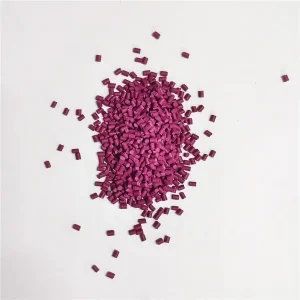
| Rose Red Special Concentrate | 45% Quinacridone Blend | LLDPE | 20 – 30 | 260°C | 7-8 | Cosmetic Containers, Blow Molded Bottles |
| Economical Red Masterbatch | 35% Solvent Red / Iron Oxide | Recycled LDPE / HDPE | 10 – 18 | 230°C | 5-6 | Garbage Bags, Industrial Tarpaulins, Construction Films |
Framework for procurement directors, polymer engineers, and supply chain managers evaluating China-based masterbatch manufacturers.
Procurement is no longer just about price per kilogram. A masterbatch with 50% pigment concentration used at a 1.5% let-down ratio (LDR) yields lower total unit costs and less barrel wear than a 30% masterbatch used at 3% LDR.
Fluctuations in red shade destroy brand integrity. Leading suppliers utilize spectrophotometric spectrophotometer testing (CIELAB system) to guarantee ΔE (Delta E) < 0.5 across consecutive production runs.
Factory capacity, automated gravimetric dosing systems, and proximity to major ports (such as Shanghai / Ningbo) enable reliable 10–15 day export fulfillment times for container-load orders.
Tailored masterbatch formulation strategies for Blown Film Extrusion, Injection Molding, and Blow Molded Containers.
In blown film manufacturing (courier bags, agricultural films, stretch hoods), red masterbatch must deliver uniform opacity without affecting heat-seal strength or film tear propagation.
High-speed injection molding (crates, caps, automotive trim) demands fast cycle times and dimensional stability. Improper pigment dispersion causes warpage and differential shrinkage.
Used in consumer chemicals, detergent bottles, and industrial jerrycans requiring high Environmental Stress Crack Resistance (ESCR) and bright shelf appeal.
Navigating global regulatory landscapes and integrating post-consumer recycled (PCR) resin carriers into bright red masterbatch production.
To guarantee seamless global export capability, modern masterbatch compounding facilities adhere to rigorous toxicity and environmental auditing frameworks:
• RoHS 3 (Directive 2015/863): Zero heavy metals (Lead, Cadmium, Hexavalent Chromium, Mercury, PBBs, PBDEs).
• REACH SVHC: Free from Substances of Very High Concern and restricted Azo dyes.
• FDA 21 CFR 177.1520: Direct food-contact safe polyolefin colorants.
• EN 71-3 Safety of Toys: Migration limits of heavy elements for toy grade plastics.
As brands transition to 30%–100% Post-Consumer Recycled (PCR) polyolefins, masterbatch manufacturers face the challenge of color-matching yellowed or greyish recycled feeds. Next-generation Bright Red Masterbatches incorporate thermal anti-oxidants and specialized optical brighteners to neutralize PCR background discoloration, restoring vivid chromatic saturation in recycled PE streams.
AI-driven spectrophotometry, Near-Infrared (NIR) detectable pigments, and nano-encapsulated red color concentrates.
Machine-learning algorithms analyze target Pantone/RAL samples, predicting pigment interactions and optimizing recipe cost while satisfying target lightfastness and heat resistance constraints.
Future-proof red masterbatches utilize Near-Infrared reflective pigments that allow automated recycling facility sorters to identify and separate PE plastics rapidly from municipal waste streams.
Encapsulating red organic pigments in ultra-thin silica shells boosts heat stability up to 300°C, enabling PE masterbatch usage in high-temperature engineering polyolefin blends.
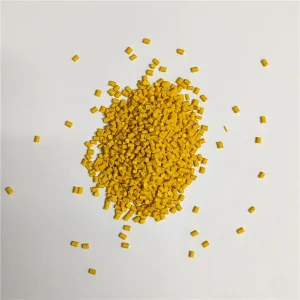
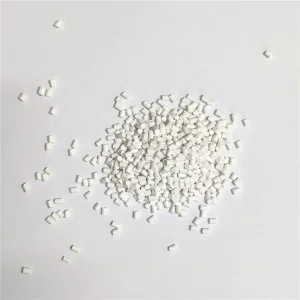
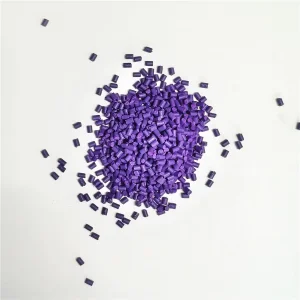
Discover our broad spectrum of high-concentration PE color masterbatches, engineered for maximum dispersion, stability, and anti-fading longevity.
In-depth answers to real-world processing challenges encountered during PE color masterbatch processing.