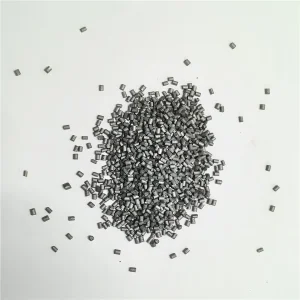
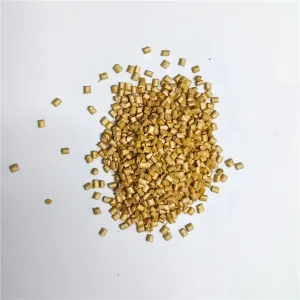
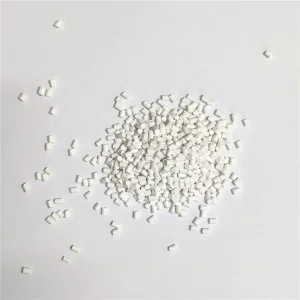
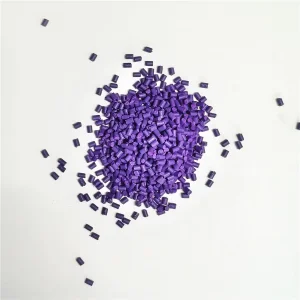
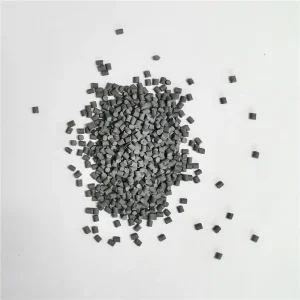
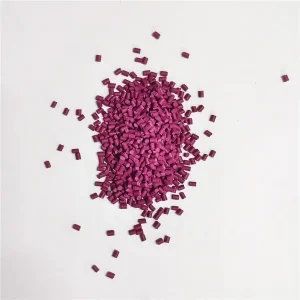
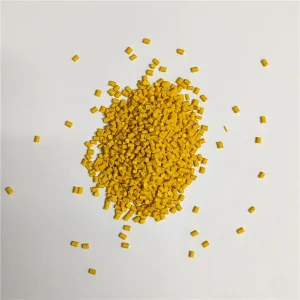
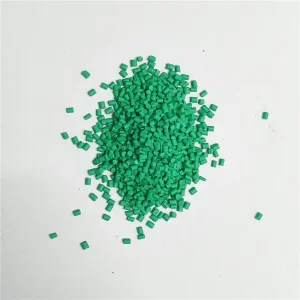
Explore our primary range of color masterbatches tailored for blown film, extrusion, and high-speed injection molding.
The global plastics compounding market is experiencing a profound paradigm shift driven by stringent environmental regulations, advanced polymer engineering demands, and the rapid expansion of automated high-speed extrusion lines. At the forefront of this evolution is the modern Coloring Masterbatch industry. No longer viewed as merely pigment carriers, modern masterbatches are highly engineered multi-component additive systems designed to impart aesthetic vibrancy, thermal endurance, UV resilience, and processing efficiency in a single solid pelletized matrix.
Historically, plastic converters relied heavily on dry pigment powders or liquid colorants. However, these traditional methods presented significant operational bottlenecks, including severe airborne dust contamination, inconsistent Let-Down Ratios (LDR), screw slipping, and high cleaning downtime between color transitions. The shift toward high-concentration PE, PP, and universal carrier masterbatches has solved these industrial friction points, enabling uniform color dispersion at let-down rates as low as 1% to 3%.
Elimination of heavy metals (Lead, Cadmium, Hexavalent Chromium) in favor of organic phthalocyanines, quinacridones, and high-performance inorganic titanates to meet EU REACH and FDA food contact regulations.
Utilization of co-rotating twin-screw extruders with high L/D ratios (40:1 to 48:1) to achieve ultra-fine pigment particle size (< 1 micron), preventing filter clogging during fine denier fiber spinning and ultra-thin film blowing.
Development of NIR-detectable black masterbatches (carbon black-free) allowing automated sorting of post-consumer recycled (PCR) plastics in material recovery facilities (MRFs).
Achieving uniform opacity, brilliant hues, and flawless mechanical properties in plastic conversion requires a meticulous balance of melt flow index (MFI), surface chemistry, shear distribution, and heat stability. Premium masterbatches rely on selecting high-purity organic and inorganic pigments compounded into carrier resins that possess melt behavior perfectly matched to the destination matrix polymer (LDPE, LLDPE, HDPE, PP, PET, or ABS).
During high-temperature extrusion or injection molding, inferior pigments undergo thermal degradation, resulting in color shift, gas evolution, surface silver streaks, or reduced tensile strength. High-grade masterbatches incorporate thermal stabilizers, primary/secondary antioxidants (e.g., Hindered Phenols and Phosphites), and heat-stable inorganic oxides or phthalocyanines capable of enduring 260°C process temperatures for extended dwell times without color breakdown.
Pigment agglomerates must be mechanically deagglomerated and chemically wetted during compounding. Advanced formulations utilize specialized polyethylene waxes (PE Wax), EBS (Ethylene Bis-Steramide), and organosilanes. These additives lower interfacial tension between the hydrophobic polyolefin carrier and hydrophilic pigment crystals, ensuring zero pinholes or streaks in blown films as thin as 10 microns.
| Masterbatch Type | Pigment Loading (%) | Carrier Base | Thermal Resistance (°C) | Light Fastness (Blue Wool) | Key Applications |
|---|---|---|---|---|---|
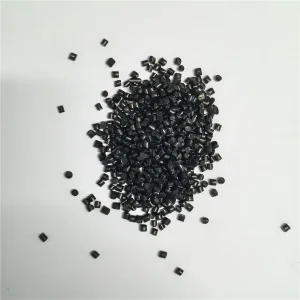
| PE Black Masterbatch | 40% - 50% Carbon Black | LDPE / LLDPE | 260°C - 300°C | 8 (Excellent) | Geomembranes, Agriculture Film, Pipes, Bags |
| PE White Masterbatch | 60% - 70% TiO₂ (Rutile) | PE / PP | 280°C | 8 (Max UV Stability) | Lamination Film, Food Containers, Milk Film |
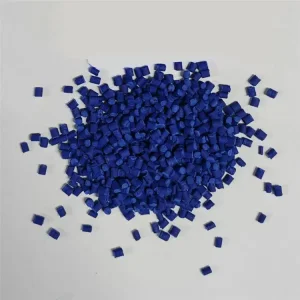
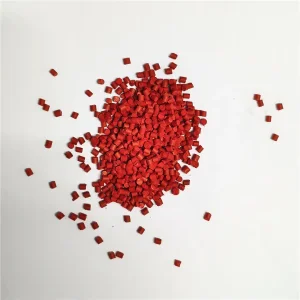
| Chromatic Masterbatch (Red, Blue, Yellow) | 20% - 40% Organic Pigments | Universal PE Carrier | 240°C - 260°C | 6 - 7 (Very High) | Injection Molded Crates, Toys, Housings |
| Special Effect (Gold, Silver, Metallic) | 15% - 30% Coated Mica / Aluminium | PE / Specialty Polymer | 220°C - 240°C | 7 (Anti-Fading) | Cosmetic Packaging, Luxury Containers |
For tier-1 international buyers, plastic converters, and commercial supply chain managers, selecting a masterbatch supplier involves far more than simply comparing unit prices. Quality assurance, batch-to-batch repeatability, and international regulatory compliance are paramount to prevent costly downtime, batch rejections, or product recall liabilities.
High-precision spectrophotometric testing (CIE L*a*b* space) guarantees that every production batch stays within a strict Delta E tolerance of < 0.5 compared to master color standards.
Formulations are thoroughly tested and certified free of Substances of Very High Concern (SVHC), Heavy Metals, PBBs, and PBDEs, granting seamless access to European and North American markets.
Pigments are molecularly locked within the polymer matrix, eliminating blooming, bleeding, or dye transfer during contact with liquids, oils, or food products (FDA 21 CFR compliant).
Pellet moisture levels are kept below 0.05% via automated inline desiccant drying before packaging, preventing micro-voids, bubbles, and lamination failure during high-speed processing.
As global market demands grow increasingly dynamic, Changzhou Jiazhou Plastic Products Co., Ltd. stands out as a premier 16-year B2B masterbatch manufacturing benchmark in Jiangsu Province, China. Spanning a state-of-the-art 6,000m² manufacturing plant equipped with automated continuous twin-screw compounding lines, computerized color matching systems, and stringent ISO quality controls, Jiazhou delivers uncompromised product quality paired with significant cost efficiency.
Eliminating manual weighing errors, continuous loss-in-weight gravimetric feeders maintain ultra-precise proportions of pigment, carrier, and dispersants to ensure absolute batch uniformity.
Equipped with spectrophotometers and computerized database matching, our laboratory can formulate custom shades (Pantone, RAL, or physical target sample) within 24 to 48 hours.
Strategic proximity to Shanghai and Ningbo deep-water ports guarantees rapid export turnaround, streamlined container loading, and average 15-day order-to-shipment lead times for 100+ countries.
Utilized extensively for shopping bags, courier express mailers, industrial shrink film, and agricultural mulch film. Requires flawless dispersion to prevent filter screen pack clogging, die lines, and micro-pinholes. Offers high opacity, gloss, and UV weatherability.
Engineered for household appliances, plastic furniture, crates, automotive interior/exterior trim, and toys. Designed for fast cycle times, zero warpage, high dimensional stability, and uniform surface gloss without sink marks or color flow lines.
Formulated specifically for HDPE water supply pipes, corrugated conduit, PVC/PE profiles, and cable sheathing. Black masterbatch variants utilize fine-particle carbon black to deliver high UV protection (> 2.5% carbon content) and long-term outdoor weatherability.
Ideal for food packaging trays, disposable cups, blister packaging, and industrial covers. Provides non-toxic, anti-static, and anti-fog functionality while maintaining thermal stability during secondary thermoforming reheating cycles.
Applied in hollow containers, chemical drums, cosmetic bottles, and lubricant jerrycans. Guarantees complete opacity, stress crack resistance (ESCR), zero chemical leaching, and vibrant aesthetic shelf appeal.
Custom masterbatch formulations for PP, PET, and PA spunbond non-woven fabrics, carpet yarns, and textile fibers. Features ultra-fine pigment particle size (< 0.5 micron) for continuous filterability without filament breakage.
The standard recommended Let-Down Ratio ranges between 1% to 4% by weight, depending on the pigment concentration in the masterbatch, wall thickness of the finished product, and target opacity. For thin film applications (10–20 microns), a 3% to 4% LDR is common, whereas heavy-wall injection molding can achieve full color coverage at 1% to 2% LDR.
Pigment specks or fish-eyes are caused by poor pigment dispersion, MFI mismatch between carrier resin and substrate, or moisture contamination. To prevent this, ensure your masterbatch carrier matches or has a slightly higher Melt Flow Index (MFI) than your base resin, use masterbatches compounded on co-rotating twin-screw extruders with high shear, and store pellets in dry, sealed bags.
Yes, Low-Density Polyethylene (LDPE) carrier masterbatches are widely compatible with Polypropylene (PP) for injection molding and film extrusion at standard let-down ratios (1% to 3%). However, for specialized PP fiber spinning or high-clarity PP applications, a dedicated PP carrier masterbatch is recommended to prevent localized optical haziness or tensile strength variations.
Rutile Titanium Dioxide possesses a higher refractive index (2.73) compared to Anatase (2.55), offering superior opacity, opacity per gram, and weatherability. Anatase TiO₂ is softer and less abrasive to machinery screws but chalks faster under outdoor UV exposure. Premium industrial white masterbatches predominantly use Rutile TiO₂ for maximum opacity and outdoor durability.
When correctly formulated with high-quality carrier resins and dispersants, color masterbatch has minimal impact on mechanical properties. In fact, well-dispersed pigments and included antioxidants can enhance thermal stability and impact resistance. Conversely, low-grade filler masterbatches or improperly wetted colorants can act as stress concentration points, reducing impact strength.
Stored in original moisture-proof packaging away from direct sunlight, heat, and humidity, masterbatches have a shelf life of 12 to 24 months. Ensure opened bags are resealed tightly to prevent moisture absorption, especially for hydroscopic polymer carriers or functional additive masterbatches.
Inquire directly with our technical team for custom color matching, technical datasheets (TDS), and bulk wholesale quotations.