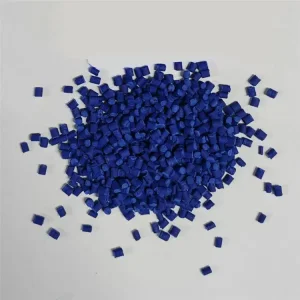
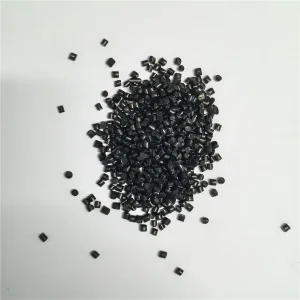
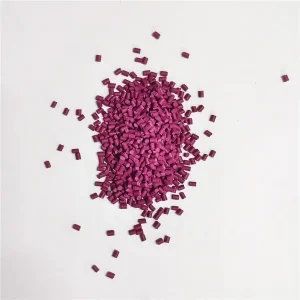
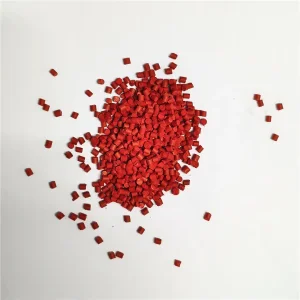
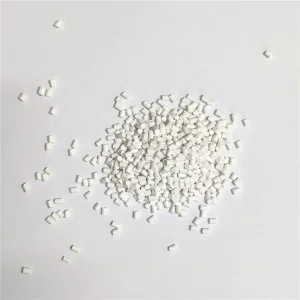
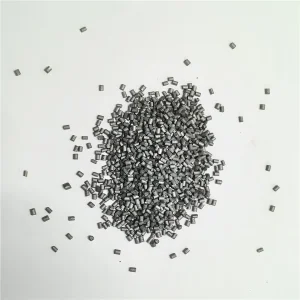
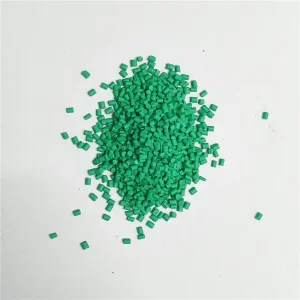
Engineered for high-dispersion blown film, extrusion, and injection molding applications across global manufacturing industries.
In modern industrial plastics compounding, Conductive Black Polyethylene (PE) Masterbatch serves as a critical functional material for eliminating static charges, enabling electrostatic discharge (ESD) protection, and providing electromagnetic interference (EMI) shielding. By dispersing high-structure conductive carbon black (CCB) or specialized carbon nanostructures into low-density (LDPE), linear low-density (LLDPE), or high-density polyethylene (HDPE) matrixes, masterbatch compounders transform insulating polymers into precisely tuned conductive media.
Achieving electrical conductivity in polyethylene matrixes without destroying melt elasticity, tensile toughness, or environmental stress crack resistance (ESCR) requires a deep understanding of Percolation Theory. Standard carbon black grades provide pigmentation and UV stability; however, conductive black masterbatches utilize specialty Conductive Carbon Black (CCB) featuring exceptionally high specific surface areas (BET surface area > 800 m²/g) and high dibutyl phthalate (DBP) oil absorption (> 300 ml/100g).
When Conductive Carbon Black is compounded into the PE carrier resin, conductive paths are established as particle concentrations approach the critical percolation threshold. At this exact geometric point, electron tunneling across micro-gaps between carbon aggregates allows electric current to flow smoothly across the polymer matrix.
High-structure carbon black increases melt viscosity significantly. Premier masterbatch manufacturers overcome processing friction by utilizing low-viscosity, high-melt-index (MI) PE carriers combined with proprietary processing aids to preserve extrusion throughput and prevent melt fracture.
For electronics carrier tapes and cleanroom ESD packaging, ionic contaminants (sulfur, ash, trace metals) can cause micro-chip damage. High-end suppliers mandate ultrapure carbon black feedstocks to guarantee low ionic extractables and zero surface blooming.
| Performance Parameter | Standard Black Masterbatch | ESD Dissipative Masterbatch | Conductive Black PE Masterbatch |
|---|---|---|---|
| Surface Resistivity (Ω/sq) | 1011 – 1014 (Insulating) | 106 – 109 (Dissipative) | 102 – 105 (Conductive) |
| Volume Resistivity (Ω·cm) | 1010 – 1013 | 105 – 108 | 101 – 104 |
| Carbon Black Loading (%) | 15% – 40% (Standard P-type) | 20% – 30% (ESD Conductive) | 35% – 50% (High-Structure CCB) |
| Thermal Stability | Up to 240°C | Up to 260°C | Up to 260°C – 280°C |
| Primary Target Application | General Coloring / UV Protection | Electronic Trays / Anti-static Packaging | ATEX Fuel Packaging, Cables, ESD Sheets |
The worldwide market for conductive masterbatch is undergoing a massive transformation driven by strict regulatory mandates (such as the EU ATEX directives for explosive environments), exponential growth in semiconductor fabrication, EV battery manufacturing expansion, and smart electronics packaging requirements.
Modern microchips with sub-3nm architectures are extremely sensitive to static voltage spikes as low as 10V. Procurement managers demand conductive black PE sheets, IC shipping tubes, and conductive injection trays with permanent, non-humidity-dependent volume resistivity under 105 Ω·cm.
In chemical plants, coal mines, and grain storage facilities, static sparks in combustible dust atmospheres lead to catastrophic explosions. Conductive PE pipes, intermediate bulk containers (IBC containers), and chemical drums engineered with conductive masterbatch eliminate spark discharge risks entirely.
Underground energy transmission cables demand semi-conductive PE insulation shielding layers. Suppliers must provide conductive black masterbatches with ultra-smooth surface finish (zero agglomerates > 45 microns) to prevent dielectric localized stress breakdown.
As global plastic processors face increasing pressure on profit margins and stringent quality specifications, partnering with established, tech-forward Chinese manufacturers like Changzhou Jiazhou Plastic Products Co., Ltd. provides a decisive competitive edge. Spanning 16 years of specialized B2B compounding history across a modern 6,000m² facility, Chinese smart factories have integrated industry-leading automation to deliver unmatched consistency.
Utilizing high L/D ratio co-rotating twin-screw extruders with segmented screw profiles ensures complete dispersion of carbon black agglomerates without breaking the high-aspect-ratio conductive networks or degrading the carrier polymer backbone.
Loss-in-weight gravimetric feeders dynamically control raw pigment feeds within ±0.2% accuracy. This eliminates batch-to-batch resistivity drift—a frequent defect encountered with smaller, manual compounding setups.
Situated in Jiangsu’s Changzhou industrial belt, raw material polymer access is direct and resilient. Standard procurement orders achieve a rapid 15-day factory-to-port dispatch, supported by ISO-certified quality assurance across 100+ global destinations.
Conductive Black PE Masterbatch is formulated to perform seamlessly across distinct plastic conversion processes. Below are primary field-tested scenarios detailing carrier resin matching, let-down ratios (LDR), and performance outcomes.
Industry: Consumer Electronics & Disk Drive Packaging
Resin System: LDPE / LLDPE Blown Film Lines
Let-Down Ratio (LDR): 15% – 25%
Outcome: Reaches permanent surface resistivity of 104 – 106 Ω/sq without relying on ambient humidity. Free from oily amine migration, ensuring optical clarity for barcode scanners and zero chemical outgassing on sensitive drive components.
Industry: Underground Mining & Petrochemical Processing
Resin System: HDPE Pipe Grade (PE100 / PE80)
Let-Down Ratio (LDR): 20% – 35%
Outcome: Meets strict European ATEX directive EN 13463-1 for electrostatic safety in underground coal mines. Maintains hydrostatic strength and burst resistance while providing surface electrical resistance below 105 Ω.
Industry: Automotive OEM Component Injection Molding
Resin System: HDPE / PP Injection Molding
Let-Down Ratio (LDR): 18% – 30%
Outcome: Imparts robust EMI shielding performance and static charge dissipation during high-velocity fuel flow. Withstands thermal cycling tests from -40°C to +120°C without micro-cracking or surface flaking.
In-depth technical answers for procurement directors, plastic engineers, and quality assurance managers.
The primary distinction lies in surface and volume resistivity ranges measured according to ASTM D257 standards. Antistatic masterbatches (migratory chemical additives) slow down static build-up with surface resistivities of 109 to 1012 Ω/sq and depend heavily on ambient humidity. Static Dissipative masterbatches maintain resistivities between 106 and 109 Ω/sq. Conductive Black Masterbatch uses specialized conductive carbon black to achieve surface resistivities of 102 to 105 Ω/sq, offering immediate, humidity-independent electrical conduction.
Carrier resin matching is paramount. Using a PE carrier (LDPE, LLDPE, HDPE) ensures total thermodynamic compatibility when blending into a PE matrix. If the carrier melt index (MFI) is mismatched or incompatible (e.g., using a high-viscosity PP carrier in thin LDPE film), microscopic phase separation occurs, breaking the continuity of the conductive carbon network and leading to mechanical failure or localized non-conductive spots.
Depending on the conductivity level required and the initial concentration of the masterbatch (which typically contains 35% to 50% CCB), the recommended Let-Down Ratio ranges from 15% to 35%. For thin ESD blown films, an LDR of 18%–25% is standard. For heavy-walled extruded conductive pipes or injection-molded parts, LDRs of 25%–35% ensure consistent volume resistivity throughout the entire wall thickness.
High loadings of rigid carbon particles can increase composite stiffness while reducing impact strength and elongation at break. However, premium masterbatches overcome this trade-off by incorporating elastomeric impact modifiers, specialized elastomer carriers, and ultra-high dispersion additives. This maintains polymer ductility and burst resistance even at high conductive loading levels.
Thermal stability up to 260°C guarantees that organic dispersants, coupling agents, and carrier resins do not suffer thermal degradation, outgassing, or chemical chain scission during high-temperature melt processing (such as high-speed injection molding or cast extrusion). This ensures surface defect-free finished goods and stable Melt Flow Index (MFI).
Yes. Standard single-screw extruders and injection molding machines are fully capable of processing conductive PE masterbatches, provided the screw length-to-diameter ratio (L/D) is sufficient (typically L/D ≥ 20:1) to achieve complete thermal homogenisation and melt mixing.
High-quality conductive masterbatches comply fully with global regulatory standards including EU RoHS (Restriction of Hazardous Substances), REACH SVHC (Substances of Very High Concern), and FDA food-contact regulations where required. Low volatile content prevents toxic outgassing during high-temperature processing.
Traditional anti-static additives absorb moisture from the air to create a surface conductive layer. In dry environments (such as cleanrooms or low-humidity winter air with relative humidity below 20%), traditional anti-static films fail completely, creating severe static discharge risks for sensitive microchips. Conductive carbon black masterbatches rely on an internal physical carbon network, providing 100% stable performance regardless of ambient humidity.
Conductive carbon black has a high surface area that can naturally adsorb moisture from atmospheric humidity. If masterbatch pellets contain moisture (> 0.15%), steam bubbles, pinholes, and severe surface roughness can occur during extrusion. Masterbatches should be stored in sealed moisture-proof bags in dry conditions, and pre-drying at 80°C for 2 hours is recommended if bags are exposed to air prior to processing.
Procurement managers should require Certificate of Analysis (COA) documents for every batch, detailing key metrics: Melt Flow Rate (MFR ISO 1133), Volume Resistivity (IEC 60093 / ASTM D257), Carbon Content (ISO 6964), and Filter Pressure Value (FPV) to confirm dispersion uniformity.
In addition to Conductive Black PE formulations, Changzhou Jiazhou Plastic manufactures a full spectrum of high-concentration color and functional masterbatches.