Engineered for high-throughput injection molding, film blowing, and extrusion. High pigment loading, superior ΔE consistency, and non-migration formulations.
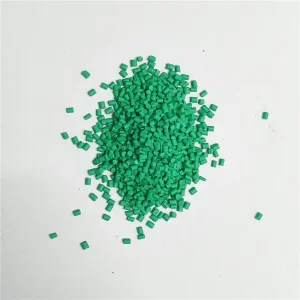
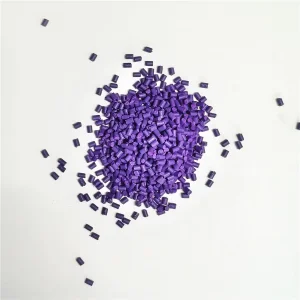
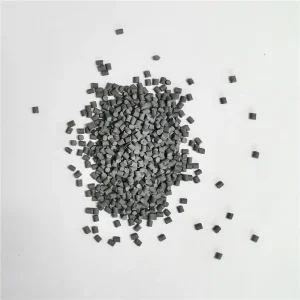
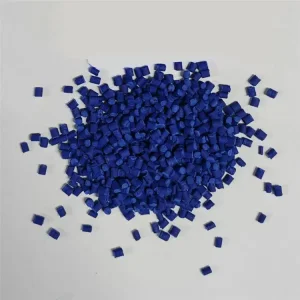
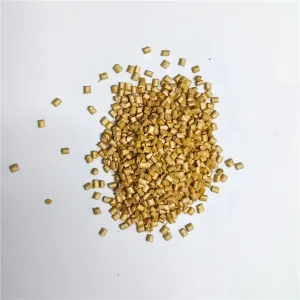
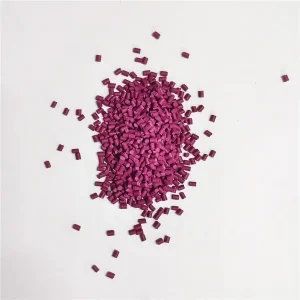
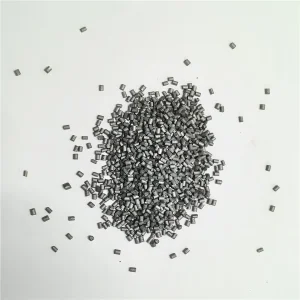
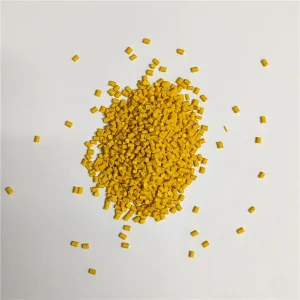
Understanding the interplay between organic chromophores, polyolefin carrier resins, and twin-screw shear forces during color extrusion.
In modern polyolefin processing, achieving a rich, colorfast, and thermally stable dark red shade presents unique rheological and chemical engineering challenges. Polyethylene (PE) carrier matrices—comprising Low-Density Polyethylene (LDPE), Linear Low-Density Polyethylene (LLDPE), and High-Density Polyethylene (HDPE)—require precise matching of Melt Flow Index (MFI) to avoid phase separation, surface blooming, or melt fracture during high-speed blown film or injection molding operations.
A premier Dark Red PE Masterbatch Factory & Manufacturer must utilize advanced compounding techniques to disperse high concentrations of organic pigments—such as Diketopyrrolopyrrole (Pigment Red 254), Anthraquinone Red (Pigment Red 177), and Quinacridone Magenta (Pigment Red 122)—synergistically paired with inorganic iron oxide (Pigment Red 101) to achieve deep opacity and high undertone brilliance without inducing warping or dimensional distortion in crystalline polyolefin structures.
Achieved through high-intensity shear mixing and specialized hyper-dispersants, eliminating streak formation in ultra-thin agricultural and packaging films down to 10 microns.
Formulated using virgin LLDPE/LDPE carrier resins with melt flow rates calibrated between 10 g/10min to 30 g/10min to guarantee instantaneous dispersion in the primary polymer melt.
Polymers colorized with our dark red masterbatch demonstrate class 5 non-migration properties under ISO 20105-A03, preventing bleed into adjacent layers or secondary packaging.
Fully compliant with FDA 21 CFR 178.3297, EU No 10/2011, REACH SVHC, and RoHS 3.0, ensuring safety in food packaging, cosmetics, and medical containers.
Rigorous physical testing standards applied to every batch of Dark Red PE Masterbatch manufactured in certified factories.
| Physical / Chemical Property | Testing Protocol / Standard | Technical Benchmark Range | Industrial Application Significance |
|---|---|---|---|
| Pigment Loading Concentration | ISO 3451-1 (Ash Content / TGA) | 30% - 60% w/w | Determines let-down ratio (LDR 1%-4%), optimizing logistics costs and melt homogeneity. |
| Thermal Stability Range | DIN EN 12877-2 | 220°C - 280°C (Dwell time 5 min) | Prevents thermal discoloration and degradation during hot-runner injection molding. |
| Color Difference (ΔE*) | ISO 11664-4 (CIE D65/10°) | ≤ 0.50 against Master Standard | Guarantees exact shade reproducibility across different manufacturing batches globally. |
| Lightfastness Rating | ISO 105-B02 (Xenon Arc Lamp) | Grade 7 to 8 (Blue Wool Scale) | Prevents fading under intense solar UV exposure in outdoor applications and crates. |
| Filter Pressure Value (FPV) | DIN EN 13900-5 (14μm mesh) | ≤ 1.0 bar/g Masterbatch | Protects extrusion screens, prevents bubble breaks in film extrusion, prolongs filter life. |
| Weather Resistance | ISO 4892-2 (Accelerated Weathering) | ΔE < 2.0 after 3000 Hours | Crucial for agricultural films, geomembranes, and exterior automotive plastic trims. |
| Moisture Content | Karl Fischer Titration (ISO 15512) | < 0.05% (500 ppm) | Eliminates splay marks, silver streaks, and voids in molded plastic surfaces. |
Why global polyolefin processors source custom Dark Red PE Masterbatch from specialized Changzhou & Jiangsu industrial hubs.
China's synthetic chemical clusters provide immediate access to ultra-pure organic pigments (DPP Red, Quinacridone) and virgin PE resins directly from petrochemical giants (SINOPEC, PetroChina). This integration minimizes supply chain latency and insulates buyers from global raw material price volatility.
Leading factories in Changzhou utilize high-speed co-rotating twin-screw extruders equipped with loss-in-weight gravimetric feeders, underwater pelletizers, and online spectrophotometric quality monitoring. This guarantees micro-pellet uniformity (±0.2mm) for seamless automated dosing.
State-of-the-art laboratory infrastructure allows R&D engineers to match custom Pantone, RAL, or physical color samples within 24 to 48 hours. Computer-aided formulation tools calculate metamerism indices to ensure consistent shade perception under daylight, LED, and fluorescent lighting.
Addressing modern eco-design directives, Post-Consumer Recycled (PCR) resin compatibility, and NIR-detectable colorants.
The global plastics sector is undergoing a paradigm shift driven by stringent circular economy regulations such as the EU Packaging and Packaging Waste Regulation (PPWR). The production of High-Quality Dark Red PE Masterbatch has evolved to address three major industry vectors:
To support sustainability mandates, modern manufacturers formulate dark red concentrates using post-consumer recycled HDPE or rLLDPE carriers. High-performance antioxidants (hindered phenols & phosphites) are incorporated to prevent thermo-oxidative chain scission of recycled polymers during re-processing.
Traditional dark formulations using carbon black or heavy metal pigments absorb Near-Infrared (NIR) wavelengths, preventing automated optical sorting at recycling plants. Advanced dark red masterbatches utilize specialized organic pigments that reflect NIR spectra, enabling 100% sortability in automated waste recovery facilities.
Strict elimination of lead chromate, cadmium red, and diarylide pigments in favor of high-purity synthetic organic chromophores ensures compliance with global eco-labeling standards and eliminates toxic ash residue during municipal energy recovery processes.
Customized formulations designed specifically for distinct polyolefin conversion processes.
Specially optimized for heavy-duty shipping bags, agricultural film, courier bags, and multi-layer barrier packaging. Features ultra-fine filtration (≤1.0 bar/g FPV) to ensure bubble stability, zero pinholes, and superior tensile strength retention in films down to 15 microns.
Tailored for automotive trim parts, logistics crates, caps, closures, and housewares. Engineered with non-nucleating organic pigments to prevent shrinkage differential and dimensional warping in large-scale structural HDPE components.
Designed for industrial chemical drums, gas tanks, and jerry cans. Provides exceptional ESCR (Environmental Stress Crack Resistance) compliance and high opacity to protect light-sensitive liquid chemicals from actinic degradation.
Formulated for telecommunications ducting, gas pipes, and cable jacketing requiring bright color identification. Incorporates HALS (Hindered Amine Light Stabilizers) for guaranteed 10+ year outdoor UV weatherability.
Step-by-step framework for international B2B enterprise procurement officers and polymer engineers.
Supply factory engineers with your polymer resin grade, target processing temperature (°C), and processing machinery specifications (e.g., L/D screw ratio, injection pressure limits).
Provide Pantone/RAL codes or physically mail standard color chips. Modern laboratories measure reflectance spectra to generate master formulas with ΔE < 0.3.
Request a 5kg sample batch alongside the factory's Certificate of Analysis (COA) specifying FPV values, moisture content, and recommended let-down ratios (LDR).
Ensure masterbatch is packed in 25kg moisture-proof aluminum foil valve bags or 1000kg bulk jumbo bags with UV-protective outer shrink packaging for ocean transport.
Browse our full range of color and functional masterbatches manufactured under strict ISO quality control protocols.
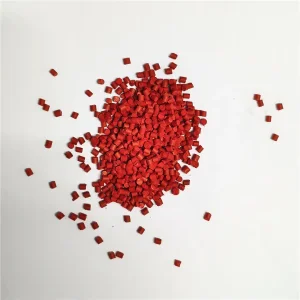
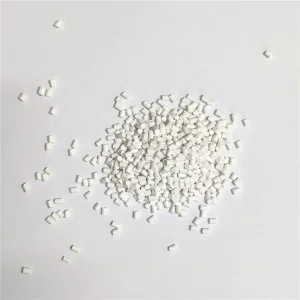
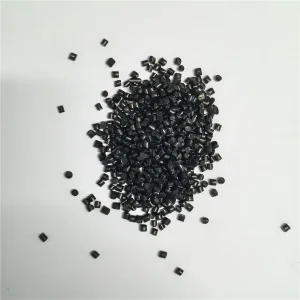
In-depth technical answers addressing masterbatch integration, quality control, and international logistics.
For standard PE blown film (20 to 50 microns), a Let-Down Ratio (LDR) of 1% to 3% is typically recommended, depending on the pigment concentration of the masterbatch (usually 40% to 50% pigment loading). Higher opacity or heavy-duty packaging films may require up to 4% LDR. Always ensure the carrier resin of the masterbatch closely matches the melt index (MFI) of the base LLDPE/LDPE resin to prevent melt incompatibility.
Pigment blooming occurs when low-molecular-weight organic pigments dissolve slightly in the warm polymer matrix and crystallize on the surface upon cooling. Premium manufacturers utilize high-molecular-weight organic chromophores—such as Diketopyrrolopyrrole (DPP Red P.R. 254) or Anthraquinone Red (P.R. 177)—paired with high-solubility hyper-dispersants and virgin PE carrier resins. This delivers Class 5 non-migration performance under ISO 20105-A03 standards.
Yes. High-quality dark red masterbatches are formulated with thermally stable organic and inorganic pigments rated up to 280°C under DIN EN 12877-2 (with a dwell time of 5 minutes). This prevents thermal degradation, color shifting toward brown shades, and chemical breaking of organic chromophore bonds during hot-runner injection molding of thick-walled HDPE crates or automotive components.
Filter Pressure Value (FPV), tested according to EN 13900-5, measures the dispersion quality of the pigment within the masterbatch. It records the pressure rise across a fine screen mesh (e.g., 14 microns) per gram of masterbatch processed. An FPV below 1.0 bar/g ensures micro-pigment agglomerates are virtually absent, preventing screen pack clogging, bubble instability, and pinholes in ultra-thin polyolefin films.
Our standard dark red PE masterbatches comply fully with FDA 21 CFR 178.3297 (Colorants for Polymers), EU Regulation No 10/2011 on plastic materials intended to come into contact with food, REACH SVHC candidate list, and RoHS Directive 2011/65/EU (RoHS 3.0). Heavy metal-free certificates (Cd, Pb, Hg, Cr VI) and migration test reports are supplied with every commercial shipment.
If an incompatible carrier resin (e.g., PP or PS) is used in PE processing, phase separation occurs, resulting in severe delamination, poor impact resistance, and stress cracking. Quality masterbatch manufacturers utilize virgin low-density or linear low-density polyethylene (LDPE/LLDPE) carriers with high MFI (10 to 30 g/10min). This allows instant melting and uniform distribution without compromising the tensile strength or impact toughness of the host resin.
Standard OEM shade matching takes 24 to 48 hours upon receipt of target samples or Pantone/RAL references. Production lead times for full container loads (20ft FCL ~ 18-20 Metric Tons) typically range between 7 and 12 business days. Factories offer custom bag printing, palletization with shrink wrap, moisture barrier liners, and specific Let-Down Ratio formulations tailored to customer extruders.
Masterbatch pellets should be stored in their original unopened moisture-proof bags in a cool, dry, and ventilated warehouse away from direct sunlight and heat sources (temperature below 35°C). Under ideal storage conditions, the shelf life exceeds 24 months. If bags are damaged or exposed to high humidity, pre-drying the masterbatch at 70°C to 80°C for 2 hours prior to processing is recommended to eliminate moisture-induced splay marks.