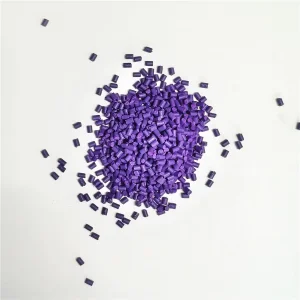
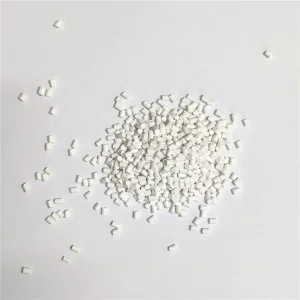
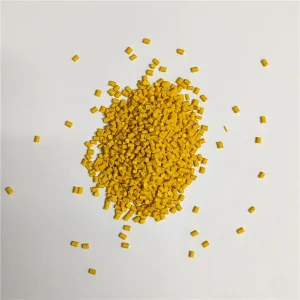
Engineered for blown film, injection molding, and continuous pipe extrusion with 260°C+ heat resistance and non-migration properties.
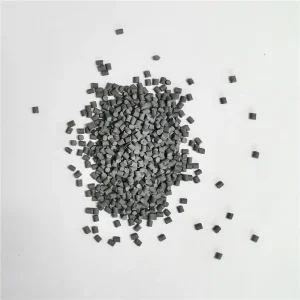
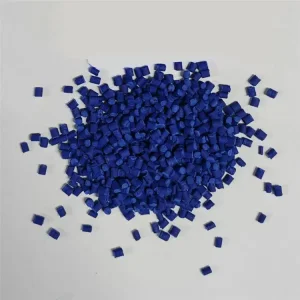
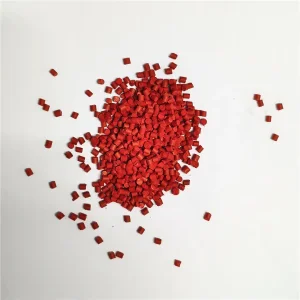
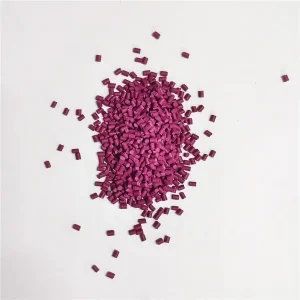
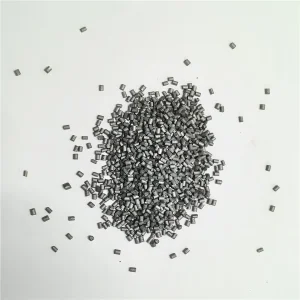
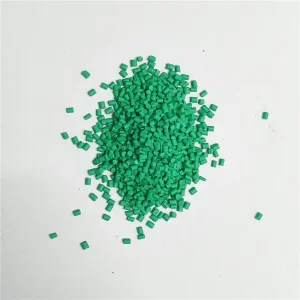
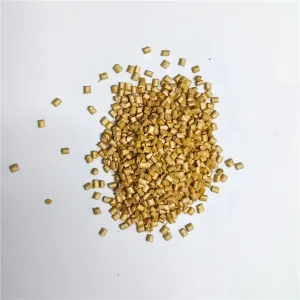
How tier-1 polymer converters are mitigating global supply risks, eliminating premium import markups, and achieving technical parity with high-end Chinese manufacturing.
In the global plastics transformation sector, Polyethylene (PE) masterbatches serve as the technical backbone for aesthetic coloration, structural opacity, and functional additive delivery across blown films, injection-molded components, and industrial extrusions. Historically, multinational polymer converters in North America, Western Europe, and East Asia relied heavily on legacy European and Japanese masterbatch manufacturers for high-spec applications. However, structural shifts in global petrochemical supply chains, volatile international freight economics, and prolonged lead times have forced procurement executives to systematically re-evaluate their reliance on imported masterbatch grades.
The emergence of China's advanced polymer processing infrastructure—exemplified by enterprise-class facilities like Changzhou Jiazhou Plastic Products Co., Ltd.—has catalyzed a comprehensive transition toward domestic substitution of imported masterbatch grades. This is not merely a cost-reduction drive; it is a technical alignment where modern domestic high-concentration PE masterbatches meet or exceed international standards for melt flow index (MFI) consistency, pigment dispersion rating ($F_p$), thermal degradation thresholds ($\ge 260^\circ\text{C}$), and regulatory compliance (REACH, RoHS, FDA 21 CFR).
Imported masterbatches carry hidden overheads: 15–25% tariff duties, international logistics premiums, currency fluctuation risks, and mandatory 12-week minimum order lead times. Domestic substitution eliminates these friction points, delivering direct material savings of up to 48% while maintaining identical pigment loading levels.
A common failure point in low-tier masterbatches is carrier resin mismatch. Premium domestic replacement formulas utilize virgin LLDPE/LDPE carrier resins with tightly controlled molecular weight distribution, ensuring identical melt viscosity to base polymers without inducing melt fracture or phase separation.
By establishing strategic partnerships with domestic masterbatch manufacturers capable of rapid color-matching (48-hour turnarounds) and scalable twin-screw extrusion output, enterprise buyers eliminate production downtime caused by overseas port congestion or raw material allocations.
Exploring the compounding mechanics that allow domestic PE masterbatches to match legacy European color standard benchmarks.
The core determinant of masterbatch quality lies in pigment dispersion. Agglomerated pigment particles cause micro-voids, pinholes in blown films (< 15 microns), filter mesh clogging during extrusion, and aesthetic surface streaks. To achieve equivalence with imported premium grades, Changzhou Jiazhou Plastic employs high-torque co-rotating twin-screw extruders featuring optimized screw element configurations (combining forward/reverse kneading blocks and shear-intensive mixing elements).
Organic and inorganic pigments undergo pre-surface modification using specialized titanate and silane coupling agents. This reduces surface tension between the hydrophobic polyethylene carrier matrix and polar pigment surfaces, enabling nanometer-level primary particle breakdown. The resulting Pressure Filter Value (DFR test according to EN 13900-5) drops to exceptionally low levels, preventing screen pack blinding in downstream production.
In high-speed injection molding and thin-walled packaging extrusion, thermal degradation of organic colorants can cause severe color shift, off-gassing, or polymer matrix embrittlement. Domestic substitute PE masterbatches incorporate secondary antioxidants (phosphite esters) and primary hindered phenol stabilizers to protect both the carrier resin and the pigment lattice during high-temperature melt processing.
| Performance Benchmark Metric | Legacy European Import Grade | Jiazhou Domestic Substitute Grade | Technical Advantage |
|---|---|---|---|
| Pigment Loading Concentration | 40% – 50% Carbon / TiO₂ | 45% – 55% High Concentration | Equal or Higher Opacity |
| Color Difference Tolerance (ΔE) | ≤ 0.30 vs Master Spec | ≤ 0.20 Spectrophotometer | Superior Batch Consistency |
| Pressure Filter Value (EN 13900-5) | < 0.5 bar/g | < 0.3 bar/g | Reduced Screen Pack Clogging |
| Thermal Resistance Rating | 260°C Maximum | 260°C – 280°C Continuous | Broader Processing Window |
| Procurement Lead Time | 8 to 12 Weeks (Sea Freight) | 7 to 15 Days (Global Express) | 80% Inventory Hold Reduction |
From ultra-thin barrier blown film to heavy-duty underground piping systems, our PE masterbatch grades integrate seamlessly into global production lines.
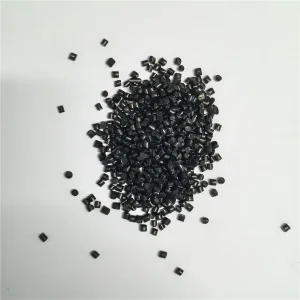
High-speed blown film co-extrusion lines (LDPE/LLDPE/HDPE) require masterbatches that introduce zero fish-eyes, gel particles, or bubble instability. Jiazhou's high-concentration White and Black masterbatch formulations deliver high opacity at low addition rates (1.5%–3%), maintaining tear strength and heat-seal integrity for food packaging and courier express bags.
Automotive interior components, home appliances, and rigid container closures require strict dimensional stability. Our PE color masterbatches incorporate non-nucleating organic pigments that prevent differential shrinkage or post-molding warpage, ensuring tight tolerance assembly for technical parts.
HDPE pressure pipes, corrugated ducting, and outdoor architectural profiles demand extended UV protection and resistance to environmental stress cracking (ESCR). Our P-type carbon black masterbatch range guarantees sub-25 nanometer particle dispersion, fulfilling ISO 4427 / EN 12201 water pipe standards.
Ensuring global buyers experience smooth import replacement through turnkey color matching, on-site technical support, and complete regulatory verification.
Transitioning from an established foreign masterbatch vendor to a Chinese domestic substitute supplier requires strict quality risk management. Changzhou Jiazhou Plastic Products Co., Ltd. operates an ISO 9001:2015 certified quality control lab equipped with Datacolor spectrophotometers, melt flow indexers (MFI), differential scanning calorimetry (DSC), and laboratory-scale blown film test units.
Send us your target plastic sample, Pantone/RAL code, or competitor grade code. Our R&D technicians generate a precise spectrophotometric match and dispatch 1kg–5kg evaluation samples within 48 to 72 hours.
Every export shipment is accompanied by a Certificate of Analysis (CoA) and complete compliance documentation, including REACH SVHC registration, RoHS 2.0 heavy metal test reports, and FDA food-contact compliance declarations.
Our polymer engineers provide remote and on-site assistance to optimize your extruder temperature profiles, screw speed RPMs, and let-down ratios (LDR), ensuring immediate drop-in replacement without machine downtime.
Pioneering sustainable, intelligent, and circular economy masterbatch solutions for next-generation plastic processing.
As the global polymer industry accelerates toward circular economy mandates, domestic substitute masterbatches are evolving beyond traditional coloration. Jiazhou Plastic's R&D roadmap focuses on three technological pillars designed to future-proof global procurement networks:
Standard carbon black masterbatches absorb Near-Infrared (NIR) radiation, preventing automated optical sorting in municipal recycling facilities. Our next-gen NIR-black masterbatch enables automated sorting systems to detect and separate PE/PP resins, facilitating closed-loop plastic recycling compliance with EU packaging waste directives.
To support carbon neutrality targets, our green product line incorporates certified Post-Consumer Recycled (PCR) polyethylene and bio-based PE carriers sourced from sugarcane ethanol. These carrier systems maintain high melt flow stability while reducing Scope 3 upstream carbon footprints.
Combining primary coloration with active processing aids (PPA), anti-static, anti-fogging, and anti-microbial functional compounds into a single masterbatch pellet. This reduces dosing feeder complexity for processors and lowers inventory SKU management costs.
Addressing key operational, technical, and logistical inquiries from global procurement officers and polymer plant engineers.
Select a specific grade below to review technical data sheets (TDS), safety data sheets (SDS), and custom ordering options.