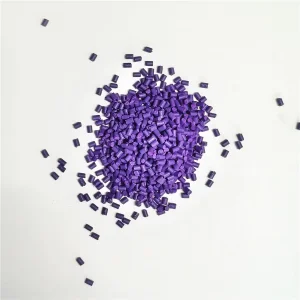
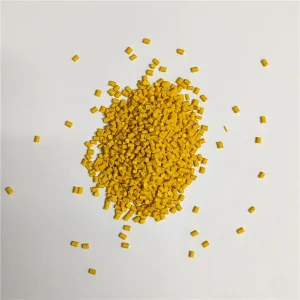
Extrusion PE masterbatch represents the synthesis of concentrated colorants, functional additives, and tailor-made polyolefin carrier resins. Selecting a high-quality extrusion PE masterbatch company requires evaluating carrier matrix matching. Premium formulations utilize Low-Density Polyethylene (LDPE), Linear Low-Density Polyethylene (LLDPE), or High-Density Polyethylene (HDPE) resins possessing melt flow indexes (MFI) precisely calibrated to match the host polymer.
In extrusion processing—whether blown film, cast film, sheet, profile, or pipe extrusion—shear rate and thermal history dictate color homogenization. Inadequate dispersion causes pigment agglomeration, leading to pinholes, streak lines, stress concentration points, and filter pack clogging. Leading manufacturers employ twin-screw co-rotating compounding systems to achieve a dispersion rating of Filter Pressure Value (FPV) under 0.2 bar/g.
Extrusion thermal windows typically span 180°C to 280°C depending on resin density and melt tension requirements. High-grade PE masterbatches incorporate organic and inorganic pigments engineered for thermal degradation resistance, ensuring color integrity, lightfastness (Blue Wool Scale 6–8), and weatherability under prolonged UV exposure without yellowing or mechanical embrittlement.
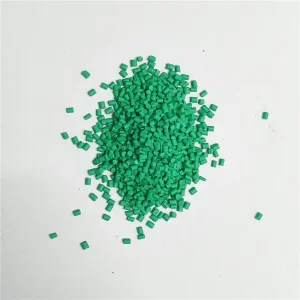
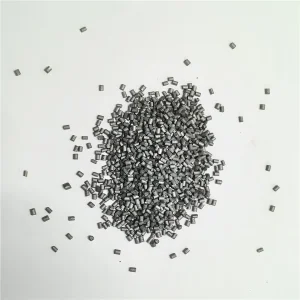
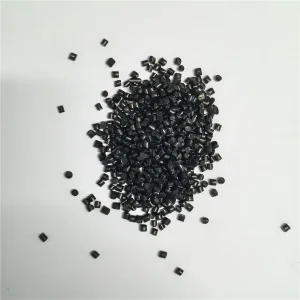
Explore our primary range of color masterbatch formulations specifically optimized for blown film, sheet, pipe, and injection extrusion manufacturing.
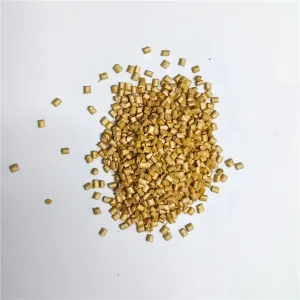
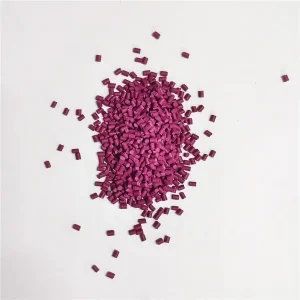
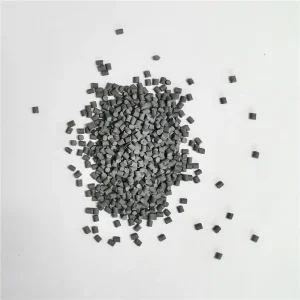
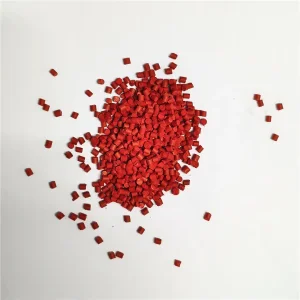
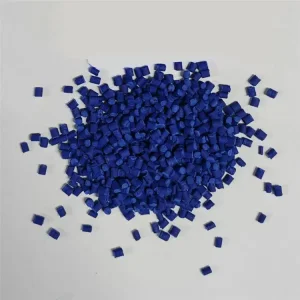
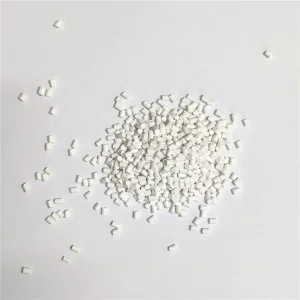
The global market for extrusion PE masterbatch is driven by expansion across flexible packaging, agricultural geomembranes, civil infrastructure piping (HDPE conduit), industrial blow molding, and consumer goods packaging. Valued at over USD 12.8 Billion globally, polyolefin colorants and functional additives are expanding at a compound annual growth rate (CAGR) of 5.4% through 2032.
Industrial consumers demand consistent melt flow matching, chemical inertness, non-migration properties, and strict compliance with food contact regulations (FDA 21 CFR, EU 10/2011, REACH, and RoHS). In developed procurement markets such as North America and Western Europe, emphasis centers on circular economy compatibility—such as Post-Consumer Recycled (PCR) carrier resins and Near-Infrared (NIR) detectable carbon black masterbatches for automated sorting plants.
Simultaneously, rapidly developing industrial sectors across Southeast Asia, Latin America, and the Middle East prioritize high tinting strength, superior opacity, and cost efficiency to scale up their extrusion processing throughput.
China's masterbatch manufacturing sector—particularly concentrated in premier chemical engineering zones like Changzhou, Jiangsu—offers distinct technological and supply chain advantages. Integrated industrial ecosystems allow factories to source virgin polymers, titanium dioxide (TiO₂), carbon black, and synthetic organic pigments directly from upstream synthesis plants, reducing raw material logistics latency.
Modern Chinese factories employ multi-zone high-torque co-rotating twin-screw extruders with Length-to-Diameter (L/D) ratios exceeding 44:1 or 48:1. Advanced gravimetric loss-in-weight feeders ensure dosing precision within ±0.2%, eliminating batch-to-batch Delta E color variance and preserving shear-sensitive additive molecules during compounding.
By combining high-speed automated underwater pelletizing systems, centralized material conveyancing, and round-the-clock continuous production shifts, leading Chinese factories achieve substantial economies of scale. Global buyers obtain enterprise-grade products at competitive price points without compromising strict quality parameters.
Polyethylene extrusion processing encompasses distinct sub-disciplines, each presenting unique rheological, mechanical, and thermal demands on the masterbatch compound:
| Extrusion Scenario | Target Base Resin | Critical Masterbatch Requirement | Standard Pigment Loading | MFI Range (g/10min) |
|---|---|---|---|---|
| Ultra-Thin Blown Film | LDPE / LLDPE | FPV < 0.15 bar/g, zero pinholes, dispersion < 5 microns | 30% - 50% TiO₂ / Pigment | 12 - 25 |
| HDPE Pressure Pipe | HDPE (PE100 / PE80) | P-type Carbon Black (particle size < 25nm), UV absorption | 35% - 45% Carbon Black | 2 - 7 |
| Geomembrane Extrusion | HDPE / LLDPE | Long-term OIT (Oxidative Induction Time), anti-weathering | 40% Carbon Black / Colorant | 5 - 10 |
| Wire & Cable Jacketing | LDPE / XLPE | Dielectric properties, non-conductive, anti-migration | 20% - 40% Organic Pigment | 8 - 15 |
| Sheet & Profile Extrusion | HDPE / PP / PE | High rigidity balance, thermal stability up to 280°C | 30% - 70% Inorganic / Filler | 4 - 12 |
When introducing masterbatch into an extruder hopper, carrier resin pellets must melt simultaneously with host resin matrix to prevent melt fracture. If the carrier resin has a lower melt index (higher viscosity) than the host resin, incomplete mixing occurs, resulting in visible color streaks. Conversely, if the carrier melt index is excessively high, mechanical strength, impact resistance, and environmental stress crack resistance (ESCR) of the final extrusion profile degrade. Premium masterbatch suppliers customize carrier resin MFI matching to the client's precise extrusion processing parameters.
Global sustainability mandates require polymer processors to integrate Post-Consumer Recycled (PCR) content into single-use packaging and structural products. Leading masterbatch manufacturers are developing specialized bio-based polyethylene carriers and PCR-compatible binder technology that stabilizes recycled resin streams, mitigates gel formation, and compensates for thermal degradation during re-processing cycles.
Traditional carbon black masterbatch absorbs Near-Infrared (NIR) radiation emitted by optical sorting sensors at municipal recycling facilities, causing black plastic waste to end up in landfills. Advanced masterbatch companies produce NIR-detectable black formulations using specialty organic dyes or modified inorganic matrices, allowing automated identification and recovery of polyolefin polymers.
The market is shifting away from single-function color masterbatch toward combination multi-attribute additive masterbatches ("Combo Batches"). Modern formulations blend vibrant colorants with UV stabilizers (HALS), slip agents (erucamide/oleamide), anti-static compounds, and anti-oxidants (Irganox 1010/168) into a single pelletized product, streamlining inventory management for extruders.
When global enterprise procurement teams evaluate an extrusion PE masterbatch manufacturer, technical auditing must extend beyond price-per-kilogram. Assessing the following key quality criteria prevents costly production line downtime and customer rejections:
Explore additional high-performance pigment and additive masterbatch options engineered for industrial polymer processing.
In-depth answers to critical technical and procurement questions from plastic processing engineers and sourcing directors.
The standard let-down ratio (LDR) for high-concentration PE masterbatch typically ranges from 1% to 4% by weight, depending on pigment concentration, target wall thickness, and opacity requirements. For thin blown films (under 25 microns), an LDR of 2% to 3% ensures complete coverage, whereas thick-walled HDPE pipe extrusion may require only 1% to 2% to achieve required carbon black or pigment density without compromising melt stability.
Low-quality masterbatches containing poorly dispersed pigment agglomerates or coarse inorganic fillers cause rapid screen pack clogging, leading to elevated backpressure, melt temperature spikes, and frequent line shutdowns. Choosing a masterbatch with a Filter Pressure Value (FPV) under 0.2 bar/g extends screen pack life 3 to 5 times, maintaining consistent barrel shear and throughput.
While polyethylene (PE) and polypropylene (PP) are both polyolefins, they are non-miscible at a molecular level. Low concentrations of PE masterbatch (1%–2% LDR) in PP extrusion generally do not affect structural integrity for commercial products. However, for high-clarity PP cast films or high-tensile PP strapping, using a dedicated PP carrier masterbatch is recommended to prevent phase separation and cloudiness.
Extruder die build-up occurs when low-molecular-weight waxes, unreacted dispersants, or volatile pigments separate from the polymer melt at the die exit lip. High-performance masterbatches utilize high-molecular-weight processing aids and fully reacted wax dispersants, eliminating volatile off-gassing and reducing die maintenance cleaning cycles.
Food contact masterbatches must be formulated exclusively with organic pigments, inorganic oxides, and additive carriers listed on positive lists such as FDA 21 CFR 178.3297 or EU Regulation No 10/2011. Certified manufacturers conduct heavy metal migration tests and total aromatic amine (TAA) extraction analyses to provide formal Certificates of Analysis (CoA) per shipment.
When stored in original sealed moisture-barrier packaging away from direct sunlight and ambient temperatures under 35°C, PE color masterbatches retain optimal processing properties for up to 24 months. Hygroscopic functional masterbatches (such as desiccants or anti-fog compounds) should be processed within 12 months or re-dried using a desiccant hopper dryer prior to extrusion.
Custom color matching via spectrophotometer takes 3 to 5 working days upon receiving target color plaques or Pantone/RAL codes. Standard Minimum Order Quantities (MOQ) for custom masterbatches range from 500 kg to 1,000 kg, with full container load (FCL) production completed within 10 to 15 calendar days from order confirmation.
Titanium dioxide (TiO₂) in raw form is photo-reactive. In high-quality white masterbatch, Rutile-grade TiO₂ particles undergo inorganic surface coating with alumina/silica compounds and organic silane treatment. This prevents photocatalytic polymer degradation, improves dispersion within the PE matrix, and prevents yellowing caused by phenolic antioxidant interactions during high-temperature film extrusion.