High-Quality Greenhouse Film Weather Resistant White Masterbatch Factories & Manufacturer

Next-Generation Polymer Additive Engineering: Maximizing Light Scattering Efficiency, UV Lifetime Extension, and Photothermal Stability in Modern Controlled-Environment Agriculture

Featured Weather Resistant Masterbatch Portfolio

High-concentration carrier formulations engineered for blown film co-extrusion, agricultural greenhouse covers, and demanding outdoor polymer applications.
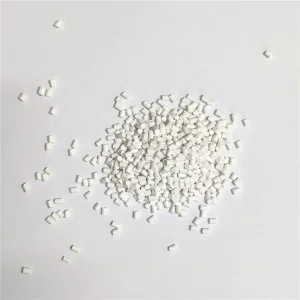
Custom High Concentration PE White Masterbatch

Custom High Concentration PE White Masterbatch Non-toxic Weather Resistant for Injection Molding Blown Film Extrusion Plastic Coloring Companies, Suppliers

View Technical Specs
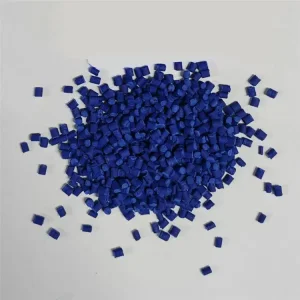
China High Concentration Blue Masterbatch PE Carrier

China High Concentration Blue Masterbatch PE Carrier for Plastic Injection Blowing Film Coloring Company, Factories

View Technical Specs
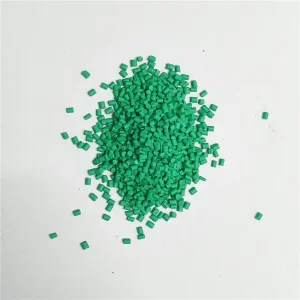
Custom High Concentration PE Green Masterbatch

Custom High Concentration PE Green Masterbatch Anti-fading Heat Resistant for Injection Blown Film Extrusion Plastic Coloring Company, Manufacturer

View Technical Specs
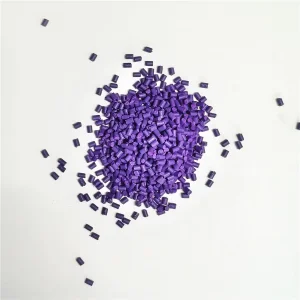
Cheap High Concentration PE Purple Masterbatch

Cheap High Concentration PE Purple Masterbatch Anti-fading Stable Color for Blown Film Injection Extrusion Plastic Coloring Supplier, Manufacturers

View Technical Specs
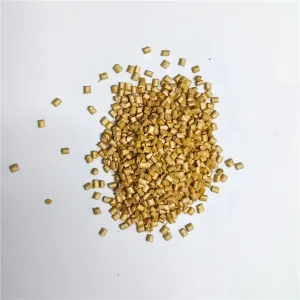
High-Quality High Concentration PE Gold Masterbatch

High-Quality High Concentration PE Gold Masterbatch Anti-fading Heat Resistant for Injection Blown Film Extrusion Plastic Coloring Factory, Supplier

View Technical Specs
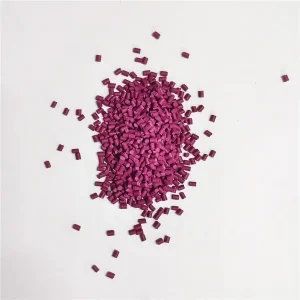
Cheap High Concentration PE Rose Red Masterbatch

Cheap High Concentration PE Rose Red Masterbatch Anti-fading Heat Resistant for Blown Film Injection Extrusion Plastic Coloring Factories, Suppliers

View Technical Specs
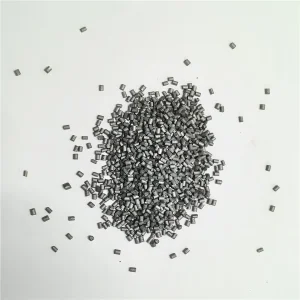
Custom High Concentration PE Silver Masterbatch

Custom High Concentration PE Silver Masterbatch Anti-fading High Weather Resistance for Blown Film Injection Extrusion Plastic Coloring Factory, Manufacturer

View Technical Specs
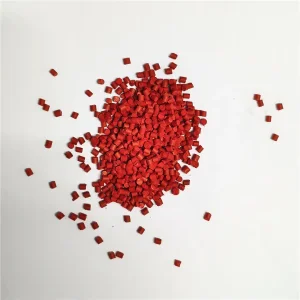
High-Quality High Concentration PE Red Masterbatch

High-Quality High Concentration PE Red Masterbatch Bright Color 260°C Heat Resistant for Blown Film Injection Extrusion Coloring Factories, Manufacturers

View Technical Specs

The Evolution of Agricultural Film Polymer Chemistry

An technical investigation into inorganic pigment dispersion, photothermal management, and long-term UV stabilization mechanisms in modern greenhouse polyolefins.

Optimizing Light Scattering & Photothermal Regulation

Agricultural greenhouse films represent one of the most demanding operational environments for polyolefin materials. Exposed to continuous solar ultraviolet (UV) irradiation, variable thermal cycles, and aggressive agrochemical sprays, structural polymers quickly undergo photo-oxidative degradation unless protected by specialized additive systems. Modern controlled-environment agriculture (CEA) requires films that do not merely block thermal radiation, but actively manipulate light transmission to optimize crop yield.

High-quality weather-resistant white masterbatch plays a central role in this micro-environmental control. By integrating surface-passivated Rutile Titanium Dioxide (TiO₂) at loading levels ranging up to 70%, engineered masterbatch formulations reflect excess near-infrared (NIR) wavelengths to prevent heat accumulation inside greenhouse structures. Simultaneously, the inorganic crystal structure scatters direct sunlight into soft, omnidirectional diffuse light. This diffusion minimizes shadow zones under dense crop canopies, dramatically enhancing Photosynthetically Active Radiation (PAR) absorption while mitigating leaf scorching.

"The strategic incorporation of inorganic crystal lattice modifiers allows white film co-extrusion layers to achieve over 60% light diffusion while preserving optimal PAR transmission—delivering up to 18% higher crop yields in high-sunlight regions."

Synergistic UV Photostabilization Architectures

Titanium dioxide, while an exceptionally efficient white pigment, possesses intrinsic photocatalytic activity when exposed to UV wavelengths below 380 nm. Absorbed photons excite electrons from the valence band to the conduction band, forming reactive oxygen species (ROS) capable of degrading polyolefin polymer chains (LLDPE, LDPE, EVA). Advanced white masterbatch factories overcome this challenge through multi-layer inorganic encapsulation—typically applying dual coatings of Dense Silica (SiO₂) and Alumina (Al₂O₃) directly to the TiO₂ crystal surface.

Furthermore, leading masterbatch manufacturers incorporate targeted photostabilizer complexes into the masterbatch matrix. By combining high-molecular-weight Hindered Amine Light Stabilizers (HALS) with traditional UV absorbers (Benzotriazoles or Triazines), the white masterbatch acts as a comprehensive stabilization package. This multi-component approach scavenges free radicals generated during photo-oxidation, preserving the mechanical tensile strength, elongation at break, and optical clarity of multi-year agricultural films over 36 to 60 months of field exposure.

70%
Max TiO₂ Pigment Loading
<0.5
Filter Pressure Value (bar/g)
3000h+
QUV Accelerated Weathering
ΔE < 0.3
Batch-to-Batch Color Tolerance

Industry Trends in Weather-Resistant Masterbatch

Key technological breakthroughs driving the next decade of agricultural film formulation, co-extrusion processing, and raw material selection.

Sub-Micron Surface Passivation

Migration from legacy single-coat titanium dioxide particles to advanced multi-layer nano-encapsulated inorganic pigments. Modern coatings combine zircon (ZrO₂), silica, and alumina to completely passivate photo-reactive crystal nodes.

  • Zero catalytic degradation of carrier resin
  • Dramatically reduced chalking and yellowing
  • Enhanced compatibility with HALS additives

Pesticide & Deactivation Resistance

Widespread adoption of sulfur- and chlorine-resistant photostabilizer packages (NOR-HALS). Traditional HALS molecules deactivate when reacting with acidic agrochemical residue; modern formulations resist chemical neutralizing agents.

  • Compatible with high-sulfur organic farming
  • Prevents premature film embrittlement
  • Extended performance under pesticide spraying

Ultra-Thin Multilayer Co-Extrusion

Transition from mono-layer film lines to 5-layer and 7-layer blown film technology. Masterbatches must offer exceptional melt-flow indexing (MFI) matching to distribute evenly into micro-layers under 15 microns thick.

  • Optimized cost per square meter of film
  • Layer-specific additive placement
  • Reduced pressure build-up during processing

Global Procurement Criteria for Industrial Buyers

Rigorous quantitative benchmarks required by enterprise agricultural film converters, greenhouse constructors, and commercial buyers.

Technical Parameters & Rheological Properties

Industrial buyers prioritize consistent rheology to guarantee seamless compounding at high film-blowing speeds. Key specs include:

  • Filter Pressure Value (FPV): Must remain under 0.5 bar/gram to prevent screen-pack clogging during continuous blown film extrusion.
  • Melt Flow Index (MFI) Matching: Standardized carrier resin (typically LLDPE with MFI between 4 to 20 g/10min) to prevent melt fracture.
  • Moisture Content: Kept below 0.05% (500 ppm) to prevent bubble formation, void creation, or pinholes in micro-thin films.
  • Thermal Stability: Sustained color and chemical integrity up to 260°C to eliminate volatile gas release during melt processing.

Quality Assurance & Global Compliance SLAs

Global enterprise supply chains demand strict adherence to international environmental and physical safety frameworks:

  • Accelerated QUV Testing: ASTM G154 / ISO 4892 compliance verifying zero physical embrittlement after 3,000+ hours of continuous UV-B exposure.
  • Heavy Metal & Eco Compliance: Full compliance with EU REACH SVHC, RoHS directives, and non-toxic food-contact standards.
  • Batch Traceability: Individual lot COAs (Certificate of Analysis) certifying Spectrophotometer color delta (ΔE < 0.3).
  • Supply Chain Resilience: Minimum 30-day raw material safety buffer and guaranteed 15-day factory dispatch turnaround.

China Factory 4.0: Changzhou Jiazhou Ecosystem

Leveraging advanced twin-screw extrusion technology, automated gravimetric dosing, and deep regional raw material integration.

High-Torque Twin-Screw Extrusion

Changzhou Jiazhou utilizes continuous, high-shear twin-screw extruders operating with precise temperature zones. This ensures high inorganic TiO₂ agglomerate breakdown, achieving homogeneous dispersion down to the single-micron level without polymer thermal degradation.

Closed-Loop Gravimetric Dosing

Loss-in-weight gravimetric feeders dynamically monitor raw material feed rates in real time. This automated closed-loop control guarantees that pigment ratio variances remain under 0.1%, eliminating color fluctuations across multi-ton production runs.

Strategic Supply Integration

Situated within Changzhou’s world-class polymer manufacturing hub, Jiazhou maintains direct supply partnerships with premier Rutile mineral refiners and virgin LLDPE resin producers, ensuring stable pricing and uninterrupted supply chain flow.

Localized Application Scenarios & Climate Adaptation

Tailored white masterbatch formulations designed to solve extreme environmental challenges across distinct geographical agricultural zones.

1. Arid High-UV Desert Climates (MENA Region)

In regions like the Middle East and North Africa, solar radiation levels exceed 2,000 kWh/m² annually, accompanied by intense ambient temperatures. Standard greenhouse films undergo rapid photo-oxidation and thermal sagging.

  • Masterbatch Formulation: Ultra-high Rutile TiO₂ loading combined with NOR-HALS and thermal NIR reflection agents.
  • Operational Advantage: Lowers interior greenhouse temperatures by 4°C to 8°C while maintaining physical film elasticity over 3+ years.

2. High-Altitude UV-B Intense Zones (South American Andes)

High-elevation agricultural operations experience severe UV-B spectrum intensity due to thinner atmospheric layers, causing conventional polyolefins to crack within months.

  • Masterbatch Formulation: Dual-action UV absorber/HALS system blended into high-density passivated white masterbatch.
  • Operational Advantage: Absorbs destructive 290-320 nm light frequencies, protecting delicate flower and berry crops underneath.

3. Mediterranean Multi-Span Horticulture

Commercial vegetable growers in Spain, Italy, and Greece require diffuse light white films to prevent crop leaf burn during intense summer months while maximizing light capture on cloudy days.

  • Masterbatch Formulation: Controlled-particle-size white masterbatch optimized for high forward light scattering (65% Haze index).
  • Operational Advantage: Eliminates internal shading, promotes uniform fruit ripening, and reduces thermal stress on plants.

4. Tropical High-Humidity Agrochemical Zones (Southeast Asia)

High humidity coupled with frequent fungicide and pesticide applications subjects films to intense chemical attack and micro-fungal degradation.

  • Masterbatch Formulation: Sulfur-resistant passivated masterbatch with integrated anti-block and anti-mildew additives.
  • Operational Advantage: Resists yellowing from chemical sprays and maintains high film opacity without structural degradation.

Frequently Asked Technical Questions

Expert technical insights regarding masterbatch compounding, dosage calculations, testing protocols, and field performance optimization.

Q What is the optimal masterbatch addition ratio for a 150-micron, 3-year greenhouse cover film?
For standard 3-layer co-extruded films (150 microns total thickness), the typical addition ratio ranges between 4% to 8% of a 60% or 70% concentrated TiO₂ white masterbatch, primarily concentrated in the outer weatherable layer. The exact ratio depends on target light opacity (haze percentage), local UV index, and whether thermal reduction or light diffusion is the primary objective.
Q How does Rutile TiO₂ particle size distribution influence light scattering in agricultural films?
The ideal particle size for maximum scattering of visible light (400–700 nm) is approximately 0.2 to 0.3 microns. If the particle size distribution is too small, light passes through without scattering; if too large, opacity decreases and processing defects increase. Jiazhou white masterbatch controls particle size distribution within a narrow band to ensure maximum light diffusion without sacrificing tensile strength.
Q Why do standard white masterbatches yellow when exposed to sulfur-based agrochemicals?
Standard Hindered Amine Light Stabilizers (HALS) are basic molecules. When exposed to acidic sulfur or chlorine residues from pesticide spraying, acid-base neutralization reactions occur, deactivating the stabilizer and causing yellow complex formation. Our weather-resistant white masterbatch incorporates non-basic (NOR-HALS) technology to maintain color neutrality and UV protection even under high sulfur exposure.
Q What quality control test methods guarantee zero pinholes during high-speed film blowing?
We evaluate masterbatch dispersion using the Filter Pressure Value (FPV) test according to EN 13900-5. Masterbatch melt is passed through a fine mesh filter (e.g., 25 microns). A pressure rise of less than 0.5 bar/g indicates complete dispersion of pigments without agglomerates, guaranteeing zero pinhole defects or bubble breakage during ultra-thin film extrusion.
Q Can Jiazhou white masterbatch be customized for EVA or Metallocene LLDPE carrier systems?
Yes. While LLDPE is the standard carrier resin, we produce custom masterbatches using EVA (Ethylene-Vinyl Acetate), mLLDPE, or PP carriers. Matching the carrier resin to the target film formulation is critical for preventing delamination, optical hazing, or compromised mechanical properties during high-output film blowing.

Explore Our Full Color & Additive Masterbatch Series

High-concentration carrier systems designed for blown film, injection molding, and industrial extrusion applications globally.
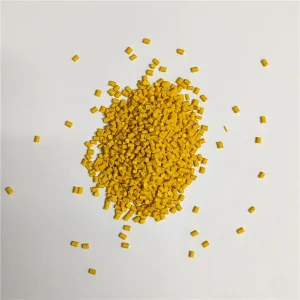
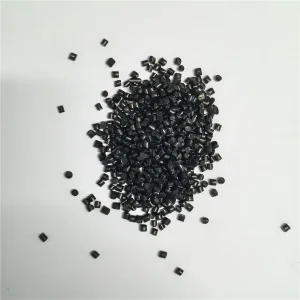
Custom High Concentration PE Yellow Masterbatch

Custom High Concentration PE Yellow Masterbatch Non-toxic Anti-migration for Blown Film Injection Extrusion Coloring Suppliers, Manufacturer

View Technical Specs
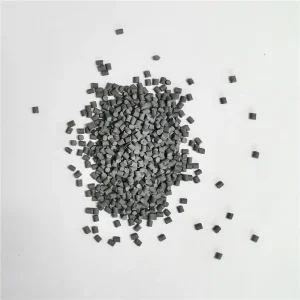
China High Concentration PE Black Masterbatch

China High Concentration PE Black Masterbatch Eco-friendly 260°C Heat Resistant for Blown Film Injection Extrusion Plastic Coloring Suppliers, Supplier

View Technical Specs
China High Concentration PE Grey Masterbatch

China High Concentration PE Grey Masterbatch Non-migration Heat Resistant for Blown Film Injection Extrusion Plastic Coloring Manufacturer, Manufacturers

View Technical Specs
Custom High Concentration PE White Masterbatch

Custom High Concentration PE White Masterbatch Non-toxic Weather Resistant for Injection Molding Blown Film Extrusion Plastic Coloring Companies, Suppliers

View Technical Specs
China High Concentration Blue Masterbatch PE Carrier

China High Concentration Blue Masterbatch PE Carrier for Plastic Injection Blowing Film Coloring Company, Factories

View Technical Specs
Custom High Concentration PE Green Masterbatch

Custom High Concentration PE Green Masterbatch Anti-fading Heat Resistant for Injection Blown Film Extrusion Plastic Coloring Company, Manufacturer

View Technical Specs
Custom High Concentration PE Silver Masterbatch

Custom High Concentration PE Silver Masterbatch Anti-fading High Weather Resistance for Blown Film Injection Extrusion Plastic Coloring Factory, Manufacturer

View Technical Specs
High-Quality High Concentration PE Red Masterbatch

High-Quality High Concentration PE Red Masterbatch Bright Color 260°C Heat Resistant for Blown Film Injection Extrusion Coloring Factories, Manufacturers

View Technical Specs