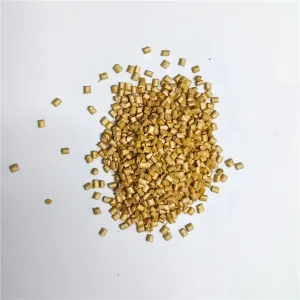
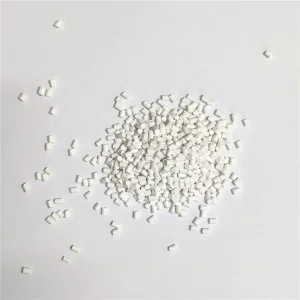
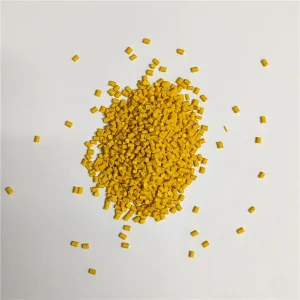
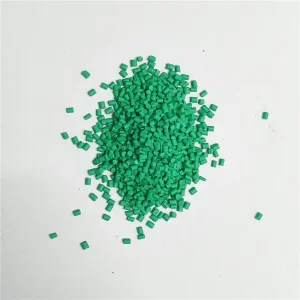
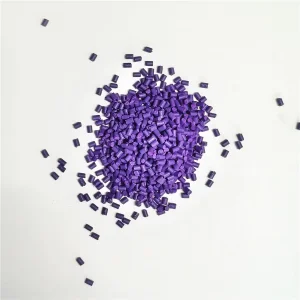
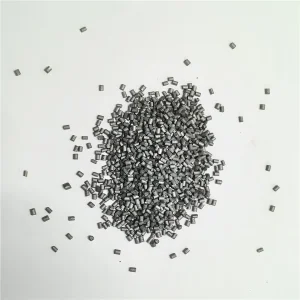
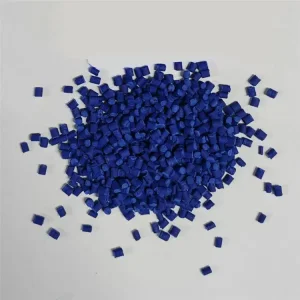
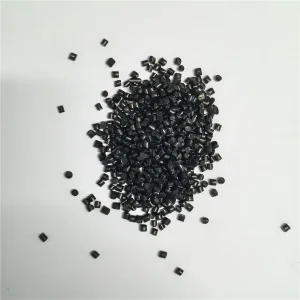
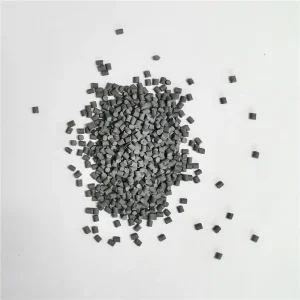
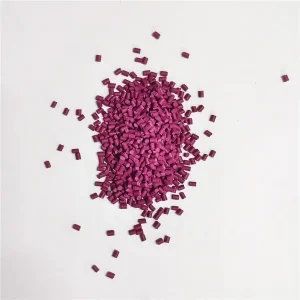
Discover our core high-performance masterbatch solutions engineered for injection molding, film blowing, and profile extrusion across global manufacturing facilities.
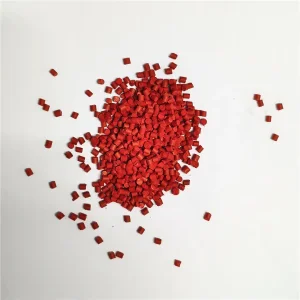
In modern polyolefin processing, achieving an immaculate, mirror-like surface finish combined with deep optical blackness (high jetness) represents one of the most rigorous technical challenges for masterbatch compounding companies. High Gloss Black PE Masterbatch serves as a critical functional additive across high-end automotive interior trim, luxury cosmetic packaging, electronic housings, and high-pressure pipe systems. The quality of black masterbatch is not merely determined by carbon black loading; rather, it hinges upon a precise balance of primary particle size morphology, surface chemistry modifications, carrier resin Melt Flow Index (MFI) matching, and high-shear dispersion rheology.
As global manufacturers shift toward lightweighting, recycled resin integration (PCR/PIR), and stringent volatile organic compound (VOC) limits, the demand for specialized black masterbatch factories capable of delivering tailored, non-blooming, heat-stable masterbatches has surged. This whitepaper systematically evaluates the engineering principles, global procurement trends, macro-industry solutions, and regulatory roadmaps that define industry-leading High Gloss Black PE Masterbatch manufacturing.
The global market for polyolefin black masterbatch is transitioning from commodity-grade pigment concentrate to high-value functional compounds. Enterprise B2B buyers in North America, Europe, and Asia-Pacific are reshaping their vendor evaluation criteria based on several critical market forces:
Automotive Tier-1 suppliers demand Piano Black interior accents without paint or secondary coatings. Black PE and PP masterbatches must deliver ultra-high surface gloss, scratch resistance, and low fogging values to meet strict VDA 278 emissions standards.
With regulations mandating minimum Post-Consumer Recycled (PCR) content, masterbatch companies must formulate masterbatches with high melt-index carrier resins capable of re-stabilizing degraded recycled PE matrices while restoring intense black color.
Global enterprise buyers require ironclad compliance certifications including EU REACH, RoHS 3.0, FDA 21 CFR 177.1520 food contact approval, and halogen-free compliance for electronic component housings.
Achieving peak performance in High Gloss Black PE Masterbatch requires precise control over the raw material selection, compounding extruders, and surface physics. Below are the key technical pillars that distinguish premier masterbatch companies from standard pigment mixers:
Carbon black jetness is inversely proportional to primary particle size. However, smaller primary particles (<18 nm) possess immense surface area (>200 m²/g) and strong Van der Waals attractive forces, causing severe agglomeration. If un-dispersed aggregates exceed 5 microns in the final molded article, they create light refraction centers that dull surface gloss and cause mechanical notch sensitivity.
State-of-the-art masterbatch factories utilize co-rotating twin-screw extruders with Length-to-Diameter (L/D) ratios of 44:1 to 48:1 equipped with specialized kneading blocks and back-mixing elements. By introducing hyper-dispersants (such as low-molecular-weight oxidized polyethylene waxes or modified fatty acid esters), the carbon black aggregates are completely broken down and encapsulated within the Virgin LLDPE/LDPE matrix, preventing re-agglomeration during downstream injection molding or film blowing.
| Performance Parameter | Standard Black Masterbatch | High-Gloss Premium PE Masterbatch | Testing Standard / Methodology |
|---|---|---|---|
| Carbon Black Content (%) | 30% - 40% | 45% - 50% High-Loading | ASTM D1603 / TGA Analysis |
| Primary Particle Size | 35 nm - 55 nm | 15 nm - 19 nm High-Jetness Furnace | Transmission Electron Microscopy (TEM) |
| Optical Color Value (L*) | 2.2 - 2.8 (Dull Black) | < 1.45 (Deep Jet Black) | CIE L*a*b* Spectrophotometer |
| Surface Gloss (60° Angle) | 65 - 75 Gloss Units (GU) | 92 - 98 Gloss Units (GU) | ASTM D523 / ISO 2813 Glossmeter |
| Filter Pressure Value (FPV) | > 2.5 bar/g | < 0.4 bar/g (Ultra-Clean) | EN 13900-5 Filtration Test (14µm mesh) |
| Thermal Stability | 220°C - 240°C | 280°C - 300°C Non-Yellowing | Thermogravimetric Analysis (TGA) |
Every plastic manufacturing process presents unique thermal, mechanical, and rheological conditions. Leading High Gloss Black PE Masterbatch factories develop process-specific formulations to maximize end-product efficiency:
For agricultural mulch film, geomembranes, and luxury courier packaging, masterbatch non-dispersion leads to pinholes, bubble breakage, and micro-tears. High Gloss Black PE Masterbatch engineered for film applications guarantees an exceptionally low Filter Pressure Value (<0.3 bar/g), preventing die build-up and delivering uniform opacity at low let-down ratios (1.5%–3.0%).
Precision injection molded parts (appliance panels, caps & closures, automotive bezels) require rapid crystallization, low shrinkage anisotropy, and complete freedom from weld-line marks. Our carrier-matched PE masterbatch flows seamlessly into intricate mold cavities without sink marks or surface haze.
In municipal water mains and gas distribution pipes, black masterbatch acts as a crucial UV protector. High Gloss PE masterbatches incorporate 20nm–25nm fine furnace black that absorbs UV radiation in the 290nm–400nm spectrum, preventing photo-oxidative degradation for over 50 years of design service life.
Procurement directors in multinational corporations evaluate masterbatch companies not only by initial product pricing but by long-term batch-to-batch consistency, raw material traceability, and regulatory compliance infrastructure.
Every batch of High Gloss Black PE Masterbatch manufactured at certified facilities undergoes rigorous laboratory screening to ensure total compliance with global chemical and safety frameworks:
As the plastics industry shifts rapidly toward decarbonization and intelligent materials, masterbatch R&D centers are pioneering next-generation technological innovations:
Conventional carbon black absorbs NIR light emitted by automated sorting sensors at recycling facilities, rendering black plastics un-sortable. Next-generation High Gloss Black PE Masterbatch uses specialized optical black dyes or modified carbon structures that reflect NIR spectrum light, enabling 100% sortability in automated municipal recycling plants.
Replacing fossil-based PE carriers with bio-based Polyethylene derived from sugarcane or bio-ethanol allows masterbatch factories to reduce Scope 3 carbon footprints by up to 60% without sacrificing mechanical dispersion or gloss performance.
Integrating siloxane-based anti-scratch additives directly into high gloss black masterbatches eliminates the need for post-molding spray coatings, reducing production cycle times while providing permanent mar resistance for high-touch consumer products.
Browse our full range of enterprise-grade masterbatch formulations produced at our 6,000m² modern production facility for global export.
Expert answers to technical and commercial questions commonly raised by B2B procurement officers, process engineers, and plastic compounding buyers: