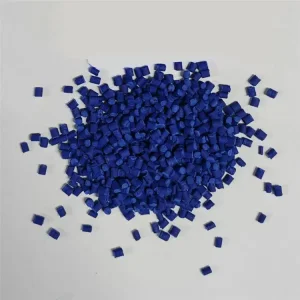
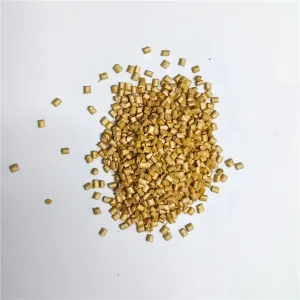
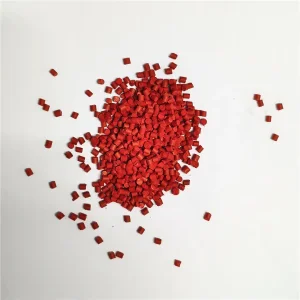
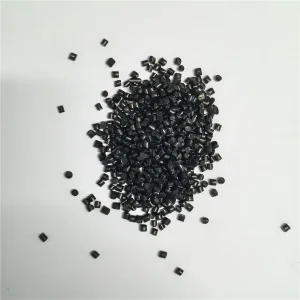
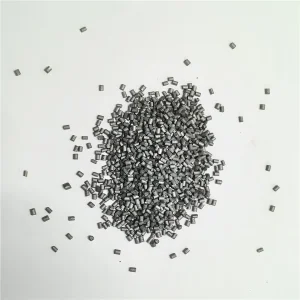
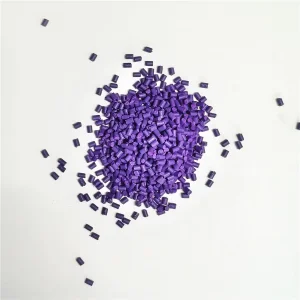
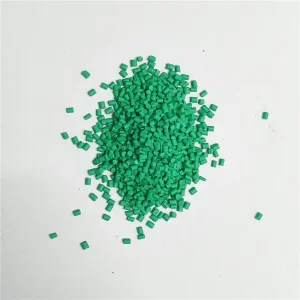
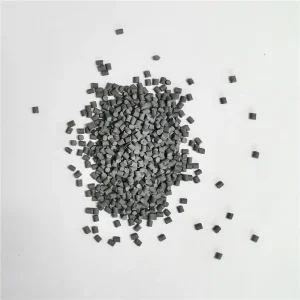
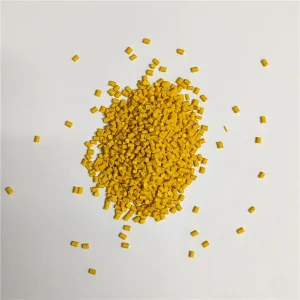
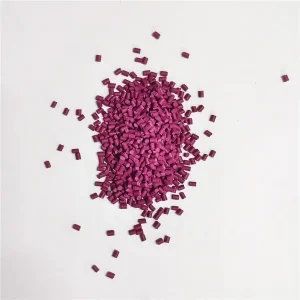
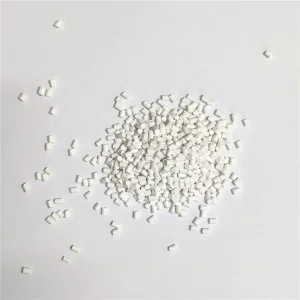
Explore our flagship high-concentration color concentrate formulations engineered for maximum tinting power, non-migration performance, and high thermal stability across polyolefin resins.
In modern polyolefin processing, color masterbatch serves as far more than a simple optical additive; it represents a highly specialized chemical matrix designed to optimize opacity, mechanical integrity, processing economics, and color fidelity. As global demand escalates for ultra-thin blown films, high-speed injection-molded components, and weather-resistant industrial pipes, plastic converters face severe pressure to reduce let-down ratios (LDR) without suffering color streakiness, filter screen clogging, or structural polymer degradation. Achieving maximum tinting strength in Polyethylene (PE) masterbatches requires mastering pigment chemistry, surface energy modification, and shear-controlled melt compounding.
Changzhou Jiazhou Plastic Products Co., Ltd. (operating globally via MasterbatchPro) stands at the forefront of this industrial evolution. With over 16 years of dedicated B2B manufacturing experience, an ISO-certified 6,000m² manufacturing plant, and distribution channels spanning over 100 countries, Jiazhou engineers state-of-the-art masterbatch formulations using specialized Polyethylene (LDPE, LLDPE, HDPE) carrier resins. By ensuring high pigment loading (up to 70% active organic/inorganic pigments) combined with sub-micron particle dispersion, our solutions enable global polymer processors to achieve superior color yield at dramatically lower dosage rates.
Tinting strength is mathematically defined by the Kubelka-Munk equation: K/S = (1 - R)^2 / 2R, where K represents light absorption, S represents light scattering, and R is spectral reflectance. High tinting strength signifies that smaller pigment quantities absorb maximum light wavelengths, resulting in deep, rich hues at minimal let-down ratios.
Raw pigments naturally agglomerate into clusters ranging from 10 to 100 microns. Jiazhou's high-shear compounding technology breaks down primary pigment agglomerates to sub-micron dimensions (< 0.5 microns), dramatically expanding surface area exposure and maximizing light interaction per gram of colorant.
A mismatch in Melt Flow Index (MFI) between masterbatch carrier resin and base polymer leads to poor dispersion, die buildup, and melt fracture. We match PE carrier viscosity dynamically, ensuring rapid melting, seamless phase homogenization, and zero reduction in finished part impact strength.
Achieving consistent high tinting strength requires an uncompromising manufacturing route. Traditional single-screw compounders lack the residence distribution control and dispersive shear energy needed for micro-pigment processing. Jiazhou utilizes continuous, co-rotating twin-screw extruder systems with customized L/D ratios ranging from 44:1 to 48:1, integrated with multi-stage side feeders and vacuum degassing zones.
Pigment particles possess high surface energy, making them prone to re-agglomeration during melt cooling. We incorporate specialized low-molecular-weight polyethylene waxes, zinc stearates, and hyper-dispersants that coat primary pigment surfaces, lowering interfacial tension and promoting thermodynamic stability inside the PE host resin.
Conforming strictly to EN 13900-5 protocols, Jiazhou masterbatches undergo routine Filter Pressure Value testing. By passing melt streams through fine mesh screens (e.g., 140 to 625 mesh), our FPV values remain below 0.8 bar/g for film grades, guaranteeing that extruders operate continuously without screen pack blockages or film breakages.
High-temperature extrusion processes (260°C to 300°C) cause inferior pigments to sublime, discolor, or migrate to plastic surfaces. Jiazhou selects high-heat-class organic pigments (Phthalocyanines, Quinacridones, Perylenes) coupled with thermal antioxidants, preventing thermal degradation during long residence times.
For outdoor applications such as agricultural mulch films and geomembranes, our PE masterbatches achieve ratings of 7-8 on the Blue Wool Scale and 4-5 on the Grey Scale, providing multi-year protection against solar ultraviolet breakdown and harsh environmental degradation.
| Performance Indicator | Jiazhou High Tinting Strength PE Masterbatch | Standard Industry Masterbatch | Converter Advantage |
|---|---|---|---|
| Pigment Loading Concentration | 40% – 70% (Engineered Nano-Dispersion) | 20% – 35% (Conventional Mixing) | 50% Reduction in storage & freight costs |
| Let-Down Ratio (LDR) Range | 1% – 2% (Ultra-high tint yield) | 3% – 5% (Higher dosage required) | Up to 30% savings on total masterbatch consumption |
| Filter Pressure Value (FPV) | < 0.8 bar/g (Film grade standard) | > 2.5 bar/g (Higher contamination) | Zero film pinholes; lower machine downtime |
| Color Consistency ($\Delta E$) | $\Delta E \le 0.40$ (Spectrophotometer control) | $\Delta E \ge 1.20$ (Visual inspection) | Flawless batch-to-batch color repeatability |
| Thermal Resistance Rating | 260°C – 300°C (30 min residence time) | 200°C – 220°C (Premature yellowing) | Suitable for high-speed, hot-runner molding |
As the plastics industry navigates stringent global decarbonization mandates and transitions toward circular economic models, masterbatch chemistry must evolve. Jiazhou's R&D roadmap emphasizes three pivotal technological breakthroughs:
Post-Consumer Recycled (PCR) polyolefins present inherent color variation, thermal history degradation, and odor challenges. Our next-generation masterbatches incorporate reactive chain extenders, odor-scavenging minerals, and high-intensity tint boosters designed specifically to neutralize yellowing in PCR-HDPE and PCR-LLDPE resin streams.
Traditional carbon black masterbatches absorb NIR radiation, rendering black plastic waste invisible to automated optical sorting sensors in recycling plants. Jiazhou has developed NIR-detectable organic black PE masterbatches that enable rapid automated sorting, accelerating true closed-loop plastic recycling.
Aligning with global ESG mandates, our research laboratory has commercialized 100% bio-based Polyethylene (derived from sugarcane ethanol) carrier masterbatches. These bio-carriers maintain identical chemical compatibility and rheological properties with fossil PE, reducing net carbon footprint by up to 45%.
Every polymer processing method presents unique mechanical and thermal stresses. Jiazhou tailors masterbatch formulations to match specific manufacturing technology vectors:
Extruding thin packaging films (< 15 microns) requires flawless pigment dispersion. Agglomerates cause bubble instability, web breaks, and pinholes. Our film-grade PE masterbatches feature low FPV (< 0.8 bar/g), allowing high-speed extrusion lines to operate continuously without film ruptures.
High-pressure injection molding requires masterbatches with zero shrinkage anisotropy to prevent part warpage. Our high tinting strength colors disperse rapidly inside barrel screw assemblies, providing uniform optical density across complex geometric parts.
Hollow containers and corrugated pipes demand high opacity to block light transmission and protect sensitive contents. Jiazhou PE masterbatches provide exceptional UV opacity and environmental stress crack resistance (ESCR).
Located in Changzhou, Jiangsu Province—the heartland of China's polymer processing cluster—Changzhou Jiazhou Plastic Products Co., Ltd. combines advanced manufacturing technology with unmatched raw material logistics efficiency. Our 6,000m² facility embodies Industry 4.0 smart manufacturing principles:
Human error during raw material weighing is completely eliminated. Computer-controlled multi-component gravimetric feeders continuously monitor feed rates with $\pm 0.1\%$ accuracy, guaranteeing uniform pigment loading across multi-ton production runs.
Extrusion strands pass through real-time optical color sensors that measure spectral curves continuously during compounding. Any deviation from the target color space automatically adjusts barrel temperature profiles and feeder speeds in real-time.
With direct pipeline access to major domestic petrochemical suppliers (Sinopec, CNPC) and proximity to Shanghai/Ningbo deepwater ports, Jiazhou guarantees rapid turnarounds, maintaining a reliable 15-day average order lead time for overseas B2B clients.
Operating multiple high-capacity twin-screw extrusion lines allows us to lower unit manufacturing costs significantly, passing those raw cost advantages directly to global buyers while maintaining strict ISO quality compliance.
For senior procurement directors and chemical sourcing managers, purchasing masterbatch requires analyzing Total Cost of Ownership (TCO) rather than focusing solely on upfront price per kilogram. Lower quality, cheap masterbatches frequently cause hidden operational costs, including high scrap rates, frequent filter changes, machine downtime, and customer claims due to color fading.
A high tinting strength masterbatch priced at $2.50/kg used at a 1% LDR yields a color cost of $0.025 per kg of finished plastic. Conversely, a lower-strength masterbatch priced at $1.80/kg required at a 3% LDR results in a color cost of $0.054 per kg. High tinting strength reduces actual resin coloring costs by over 50%.
Global regulatory compliance is paramount for cross-border supply chains. Jiazhou PE masterbatches comply strictly with EU REACH regulation, RoHS directives, Heavy Metal limits (EN 71-3), and FDA 21 CFR 177.1520 food-contact standards, backed by third-party SGS and TÜV audit reports.
Color drift between production batches causes severe friction for brand owners. Every shipment leaving Jiazhou's plant includes a Certificate of Analysis (CoA) documenting Melt Flow Index, density, moisture content (< 0.05%), and spectrophotometric Delta E values.
No two polymer processing environments are identical. Variations in screw profile, barrel heating zones, and base resin clarity affect final color rendition. Jiazhou provides global technical assistance to eliminate color trial-and-error:
Provide us with your physical plastic sample, RAL code, or Pantone reference. Our R&D laboratory uses computer color matching systems (CCMS) to formulate custom PE masterbatch samples within 48 hours.
Our technical support specialists assist client engineers in optimizing extrusion temperatures, screw speed shear profiles, and back-pressure settings to resolve pinholes, surface hazing, or color streaking.
We supply free 1kg to 5kg testing samples globally via DHL/FedEx, allowing your production team to verify let-down performance, dispersion quality, and mechanical properties before committing to full container orders.
Review our full range of high-concentration color and filler masterbatches engineered for blown film, injection molding, profile extrusion, and recycling applications.
High tinting strength masterbatches utilize advanced micro-dispersion techniques to break pigment particles down to sub-micron dimensions while optimizing active pigment concentration (up to 70%). This allows polymer processors to achieve identical or superior opacity and color intensity at significantly lower let-down ratios (1%-2% LDR vs. 3%-5% for standard masterbatches), reducing overall resin coloring costs and preserving base polymer mechanical strength.
We maintain strict quality control through automated multi-component gravimetric dosing systems and computerized spectrophotometric color matching (CCMS). Every batch undergoes inline testing to ensure color tolerance limits ($\Delta E \le 0.40$), Filter Pressure Value (FPV < 0.8 bar/g for film grades), and Melt Flow Index (MFI) consistency before shipment, backed by a detailed Certificate of Analysis (CoA).
Polyethylene (PE) carriers exhibit excellent broad compatibility with Polypropylene (PP) and polyolefin blends due to their similar non-polar chemical structures. However, for polar polymers like ABS, PS, PC, or PET, matching specific carrier resins (e.g., SAN, PS, or Universal carriers) is recommended to prevent phase separation or reduced mechanical impact strength.
Our products comply fully with international chemical and food-contact regulations, including EU REACH, RoHS 2.0, Heavy Metal Safety standards (EN 71-3), and FDA 21 CFR 177.1520 compliance for food contact articles. We also maintain ISO 9001 quality management and ISO 14001 environmental management system certifications.
FPV measures the degree of pigment dispersion and the presence of un-dispersed agglomerates or contaminants. A high FPV causes rapid pressure buildup behind extruder filter packs, leading to frequent machine shutdowns, film surface roughness, pinholes, and web breaks. Jiazhou film-grade masterbatches maintain FPV values below 0.8 bar/g, ensuring uninterrupted high-speed film extrusion.
When stored in original sealed moisture-proof packaging in a cool, dry, clean warehouse environment away from direct sunlight and heat sources, Jiazhou PE masterbatches retain their full technical performance for up to 24 months from the date of manufacture.
Yes. Our custom color-matching laboratory can match physical plastic plaques, standard RAL codes, Pantone color references, or target spectral reflectance values. Custom laboratory samples are typically formulated, quality-checked, and dispatched for customer trial within 48 hours.