High-Quality PE Auto Plastic Parts Masterbatch Companies & Suppliers

Engineered Polymer Coloration, Functional Fillers & UV-Stabilized Solutions for Next-Generation Tier-1 Automotive Manufacturing

Automotive Grade Masterbatch Portfolio

High-Performance Masterbatch Products for Auto Extrusion & Molding

Explore our certified polyethylene masterbatch solutions formulated for interior components, under-the-hood enclosures, and high-weatherability exterior auto trims.
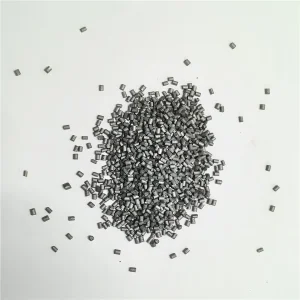
Custom High Concentration PE Silver Masterbatch
Custom High Concentration PE Silver Masterbatch Anti-fading High Weather Resistance
View Product Specs
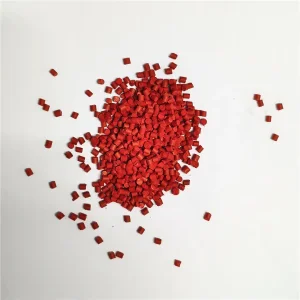
High Concentration PE Red Masterbatch
High-Quality High Concentration PE Red Masterbatch Bright Color 260°C Heat Resistant
View Product Specs
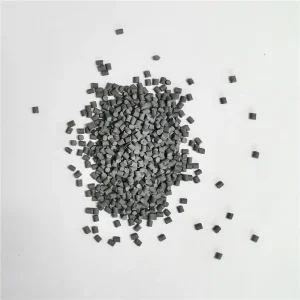
China High Concentration PE Grey Masterbatch
China High Concentration PE Grey Masterbatch Non-migration Heat Resistant
View Product Specs
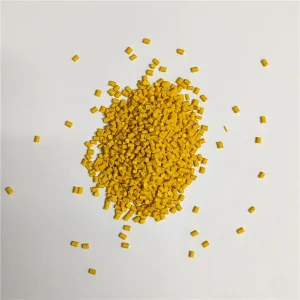
Custom PE Yellow Masterbatch
Custom High Concentration PE Yellow Masterbatch Non-toxic Anti-migration
View Product Specs
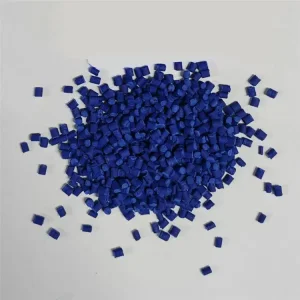
China High Concentration Blue Masterbatch
China High Concentration Blue Masterbatch PE Carrier for Plastic Injection Blowing
View Product Specs
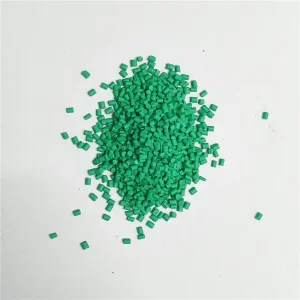
Custom High Concentration PE Green Masterbatch
Custom High Concentration PE Green Masterbatch Anti-fading Heat Resistant
View Product Specs
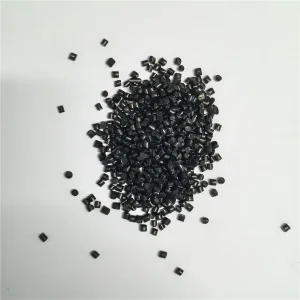
PE Black Masterbatch Eco-friendly
China High Concentration PE Black Masterbatch Eco-friendly 260°C Heat Resistant
View Product Specs
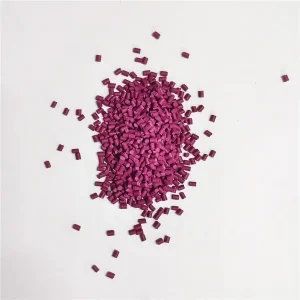
High Concentration PE Rose Red Masterbatch
Cheap High Concentration PE Rose Red Masterbatch Anti-fading Heat Resistant
View Product Specs
Global Procurement Analysis

Global Automotive PE Plastic Masterbatch Industry Landscape

Strategic insights into lightweighting trends, OEM specs, and polymer dispersion engineering driving modern automotive supply chains.

The global automotive polymer market is undergoing a seismic structural shift. Driven by aggressive vehicle lightweighting directives, stringent corporate average fuel economy (CAFE) standards, and the rapid expansion of Electric Vehicles (EVs), plastic components now constitute over 18% of total vehicle mass. Among polyolefins, Polyethylene (PE)—encompassing High-Density Polyethylene (HDPE), Linear Low-Density Polyethylene (LLDPE), and specialized metallocene grades—has evolved from low-load packaging applications into critical structural, under-the-hood, and interior/exterior automotive modules.

However, processing automotive-grade PE parts presents extreme engineering challenges. Unfilled or poorly pigmented polyethylene resins suffer from degradation due to thermal oxidation, ultraviolet radiation exposure, photo-chemical chalking, and color migration. Tier-1 automotive suppliers and direct OEM component manufacturers require high-concentration masterbatch formulations that deliver flawless pigment dispersion, lot-to-lot color consistency (ΔE < 0.30), zero VOC outgassing (VDA 278 compliance), and long-term mechanical stability over a 15-year vehicle operational lifespan.

16+
Years Manufacturing Excellence
6,000 m²
ISO 9001:2015 Plant Facilities
100+
Global Export Markets
260°C
High Thermal Resistance Stability

Key Procurement Benchmarks for Automotive Masterbatch Sourcing

When global procurement directors evaluate PE Auto Plastic Parts Masterbatch Companies & Suppliers, commercial decisions extend beyond raw unit pricing per kilogram. Quality assurance protocols must align with automotive APQP (Advanced Product Quality Planning) and PPAP (Production Part Approval Process) Level 3 requirements. Key operational pillars include:

  • Rheological Rheometer Matching: Carrier resin melt flow index (MFI) must match or exceed the base polymer matrix (e.g., 20 g/10min MFI for high-speed injection molding or 0.5–2.0 g/10min for blow-molded fuel tanks and wheel arch liners).
  • Zero Migration & Anti-Blooming Properties: Organic and inorganic pigments must be surface-treated with hydrophobic silanes to prevent pigment exudation or surface blooming during thermal cycling test regimes (-40°C to +125°C).
  • VOC & Fogging Emission Controls: Adherence to VDA 270 (Odor test) and VDA 278 (Thermal desorption analysis for VOC and FOG values below OEM threshold levels).
  • Circular Economy Integration: Compatibility with Post-Consumer Recycled (PCR) and Post-Industrial Recycled (PIR) PE polymers without inducing polymer chain scission.
Technical Roadmap & Innovation

PE Masterbatch Formulation Chemistry & Thermal Stability

In-depth analysis of twin-screw extrusion compounding, particle sizing, thermal endurance, and UV light stabilization.

Carrier Matrix Engineering

Utilizing high-purity virgin LLDPE/HDPE carrier resins with ultra-narrow molecular weight distribution (MWD). Ensures full encapsulation of organic pigments and zero melt-fracture during high-pressure injection molding cycles.

Nano-Dispersion Tech

Engineered using multi-stage co-rotating twin-screw extruders with an L/D ratio of 44:1. Dynamic shear distribution breaks down pigment agglomerates to under 1 micron, preventing filter clogging and surface streakiness.

260°C Heat Endurance

Incorporating heat-stable phthalocyanine blue/green, quinacridone red, and high-purity carbon black. Eliminates color degradation, thermal yellowing, or chemical decomposition under extreme processing temperatures up to 260°C.

To meet international automotive exterior standards such as SAE J2527 (Accelerated Xenon Arc Exposure) and ISO 4892-2, specialized additive masterbatches are compounded with Hindered Amine Light Stabilizers (HALS 944 / HALS 770) and UV absorbers (Benzotriazole derivative UV-328). This synergistic stabilization package prevents polymer chain photo-oxidation, retaining tensile strength, impact toughness, and gloss retention even after 3,000 hours of continuous artificial weathering.

Automotive Component Masterbatch Technical Specification Matrix

Automotive Application Recommended Polymer Carrier Key Performance Target Pigment Loading % Compliance Standards
Under-the-Hood Wiring Conduits & Engine Covers HDPE / PP Copolymer Thermal stability @ 260°C, Anti-cracking, Oil/Chemical resistance 30% - 50% Carbon Black / Color Pigment UL94 V-0, RoHS 3.0, REACH
Door Trims, Glove Boxes & Interior Dash Parts LLDPE / Metallocene PE Low VOC, Zero Odor (VDA 270 class < 3), Scratch resistance 40% - 70% Titanium Dioxide / Tonal Pigments GB 27630, VDA 278, OEM Specs
Wheel Arch Liners & Underbody Shields Recycled HDPE / Virgin LLDPE Impact strength retention, Moisture repellency, Cost efficiency 60% - 80% High Purity Fine CaCO3 / Filler Matrix ISO 178, ISO 179, IATF 16949
Fuel Tanks & Fluid Reservoirs High Molecular Weight HDPE (HMW-HDPE) Barrier properties, Hydrocarbon non-permeability, Color stability 25% - 40% Phthalocyanine / Solvent Fast Colors ECE R34, SAE J1241
Future Technology Outlook

Sustainable Masterbatch Innovations & Circular Economy (2026–2030)

Addressing EU End-of-Life Vehicles (ELV) directives through Near-Infrared sorting compatibility and carbon footprint reduction.

As the European Union updates its End-of-Life Vehicles (ELV) Directive mandating that new vehicles contain at least 25% recycled plastics (with 25% of that sourced from closed-loop automotive waste), traditional black masterbatches formulated with standard carbon black present a significant recycling bottleneck. Standard carbon black absorbs Near-Infrared (NIR) radiation, rendering automated optical sorting equipment in modern recycling facilities incapable of identifying the underlying PE resin type.

In response, leading Pe Auto Plastic Parts Masterbatch Companies & Suppliers such as Changzhou Jiazhou Plastic Products Co., Ltd. have pioneered NIR-Detectable Black & Dark Masterbatches. By replacing carbon black with specialized organic NIR-transparent pigments, dark automotive PE components (such as underbody cladding and bumper supports) can be effortlessly recognized and sorted by optical sensors, returning high-value PE back into the automotive manufacturing loop.

NIR-Detectable Sorting Tech

Enables modern recycling plants to sort dark PE automotive components with 99% accuracy using automated spectrophotometer sorting lines, ensuring full compliance with EU 2026+ circular economy mandates.

PIR/PCR Compatibilization

Formulated with integrated chain extenders and anti-oxidants that repair degraded polymer chains in post-consumer recycled PE, restoring tensile elongation and impact performance to near-virgin levels.

Quality & Compliance Guarantee

Global Supply Chain Resilience & ISO/IATF Compliance

How Changzhou Jiazhou Plastic Products delivers standardized quality, fast turnaround, and full regulatory traceability.

Operating out of a modern 6,000m² manufacturing facility in Changzhou, Jiangsu Province, Changzhou Jiazhou Plastic Products Co., Ltd. has served the global plastic compounding industry for over 16 years. Possessing ISO 9001:2015 quality management certifications, Jiazhou enforces strict lot-to-lot quality assurance protocol across all PE masterbatch batches destined for automotive Tier-1 assembly lines.

Every shipment undergoes rigorous laboratory testing before export approval, including:

  • Colorimetric Spectrophotometry: Datacolor spectrophotometer testing verifying Delta E (ΔE) tolerance limits < 0.3 against standard OEM master chips.
  • Melt Flow Index (MFI) Testing: ASTM D1238 / ISO 1133 testing to verify flow consistency for thin-walled automotive injection molding.
  • Thermogravimetric Analysis (TGA): Precise verification of pigment/filler loading percentage and thermal ash content.
  • Moisture Analysis: Karl Fischer titration ensuring moisture content remains strictly below 0.05% (500 ppm), eliminating splay marks and bubble defects during customer processing.

With an agile export infrastructure serving over 100 countries and regional B2B technical support teams, Jiazhou provides an industry-leading 15-day production lead time for custom automotive color matching and high-volume orders.

Technical Procurement FAQ

Frequently Asked Questions: Automotive PE Masterbatch Sourcing

Expert engineering answers to common technical queries raised by automotive purchasing leads and polymer process engineers.

How does carrier resin selection impact the processing of PE automotive components?
The carrier resin must match the chemical composition and melt flow rheology of the base resin matrix. Using an incompatible or lower-grade carrier resin (e.g., standard low-density PE carrier in a high-density structural PE part) can cause delamination, mechanical strength drop, localized thermal weakness, and poor surface finish. Jiazhou utilizes virgin LLDPE/HDPE carriers with controlled molecular weight to ensure seamless polymer integration.
What measures guarantee low VOC and low odor emissions for interior automotive PE parts?
Interior automotive plastics must comply with standards like VDA 278 (VOC < 50 μg/g, FOG < 250 μg/g) and GB 27630. We achieve this by selecting high-purity synthetic organic pigments, low-volatility processing aids, and high-vacuum degassing during twin-screw extrusion, effectively removing residual monomers, oligomers, and volatile solvent traces.
What is the typical let-down ratio (LDR) for high-concentration PE color masterbatch in injection molding?
Due to our ultra-high pigment dispersion concentration (up to 70% loading for titanium dioxide and 40% for organic colors), standard let-down ratios range from 1% to 4% depending on part wall thickness, opacity requirements, and target color shade. This low LDR drastically lowers raw material cost per part for plastic molders.
Can Jiazhou develop custom color matching for OEM color standards (e.g., RAL, Pantone, OEM specific codes)?
Yes. Our internal R&D laboratory utilizes computer-controlled spectrophotometers and pilot extrusion lines to match custom OEM color target samples within 48 to 72 hours. We provide physical masterbatch lab samples and molded plaques for customer spectrophotometer verification (ΔE < 0.3) prior to mass production approval.
How does CaCO3 filler masterbatch benefit automotive PE component cost structures?
Incorporating ultrafine calcium carbonate (CaCO3) filler masterbatch (at 10% to 35% addition rates) in non-visible automotive parts like inner mudguards, trunk liners, and air ducts significantly reduces raw resin consumption. Beyond cost reduction, it increases dimensional stability, reduces molding shrinkage, improves thermal conductivity, and accelerates cooling cycle times.
Complete Masterbatch Series

Explore Our Full Range of PE Color & Functional Masterbatches

Premium high-concentration colorants engineered for high-temperature blown film, injection molding, and complex automotive extrusions.
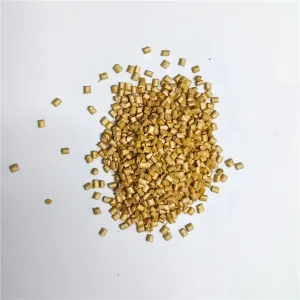
High Concentration PE Gold Masterbatch
High-Quality High Concentration PE Gold Masterbatch Anti-fading Heat Resistant
View Product Specs
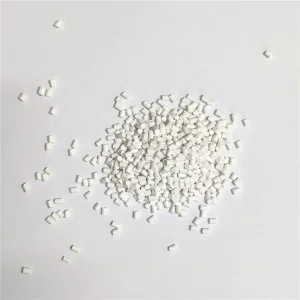
PE White Masterbatch Non-toxic Weather Resistant
Custom High Concentration PE White Masterbatch Non-toxic Weather Resistant
View Product Specs
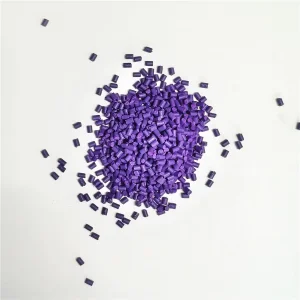
PE Purple Masterbatch Anti-fading Stable Color
Cheap High Concentration PE Purple Masterbatch Anti-fading Stable Color
View Product Specs
Custom PE Silver Masterbatch
Custom High Concentration PE Silver Masterbatch Anti-fading High Weather Resistance
View Product Specs
PE Black Masterbatch Eco-friendly
China High Concentration PE Black Masterbatch Eco-friendly 260°C Heat Resistant
View Product Specs
High Concentration PE Red Masterbatch
High-Quality High Concentration PE Red Masterbatch Bright Color 260°C Heat Resistant
View Product Specs
China High Concentration PE Grey Masterbatch
China High Concentration PE Grey Masterbatch Non-migration Heat Resistant
View Product Specs
China High Concentration Blue Masterbatch
China High Concentration Blue Masterbatch PE Carrier for Plastic Injection Blowing
View Product Specs