Engineered for extreme environmental resilience, blow molding integrity, and zero-defect melt extrusion processing.
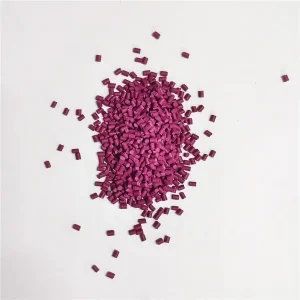
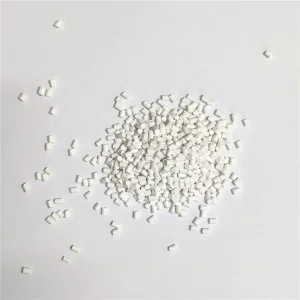
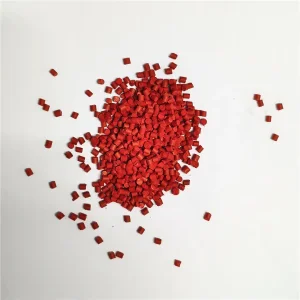
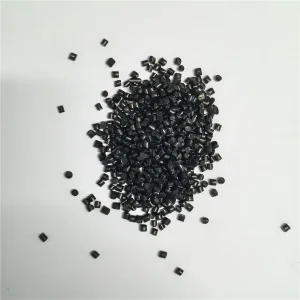
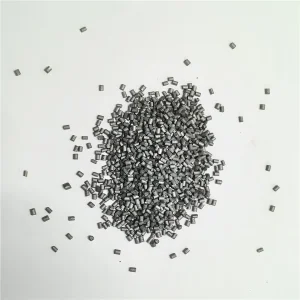
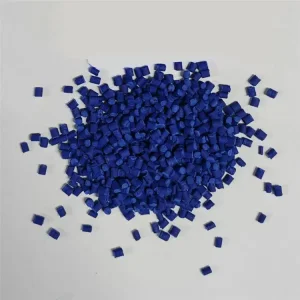
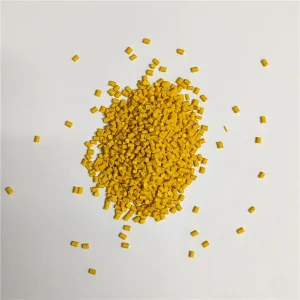
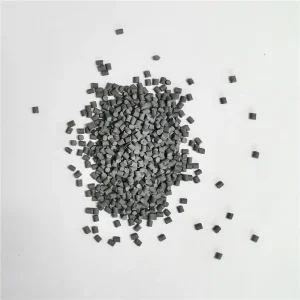
Addressing the rigorous chemical resistance, drop-impact durability, and UV-stabilization demands of hazardous material containers.
Standard industrial black masterbatch formulations frequently fail in chemical container applications due to micro-agglomeration, melt flow mismatching, and catastrophic loss of Environmental Stress Crack Resistance (ESCR). Selecting a specialized PE chemical bucket black masterbatch company guarantees compounding with high-structure furnace carbon black, narrow molecular weight distribution PE carriers, and specialized antioxidant packages engineered specifically for UN-certified chemical pails and drums.
Polyethylene chemical buckets—ranging from 5-liter jerricans to 200-liter open-head drums and 1000-liter Intermediate Bulk Containers (IBCs)—are subjected to extreme mechanical stresses, aggressive chemical reagents, hydraulic pressure spikes, and long-term outdoor exposure. The colorant system cannot function merely as an aesthetic additive; it must act as a functional structural matrix modifier.
When selecting a high-quality PE chemical bucket black masterbatch company, chemical container molders must evaluate compounding chemistry at a molecular level. Inferior masterbatches with coarse pigment dispersion or mismatched carrier resins create micro-voids and localized stress concentration points within the High-Density Polyethylene (HDPE) polymer lattice. Under environmental stress cracking agents (such as surfactants, organic solvents, or agrochemical concentrates), these micro-voids propagate into catastrophic structural failures during drop testing or multi-tier stacking storage.
The performance of a black masterbatch in blow-molded industrial pails depends primarily on three core scientific factors:
| Property Parameter | Standard Commercial Masterbatch | High-Quality Chemical Bucket Grade | Testing Standard / Protocol |
|---|---|---|---|
| Carbon Black Type | Regular Furnace / Off-grade | P-Type High Purity Specialty Carbon Black | ASTM D1765 Classification |
| Carrier Resin | Lamination LLDPE / Recycled PE | Virgin HDPE / Fractional MFI LLDPE Blend | ISO 1133 (MFI Matching) |
| Dispersion Rating | Grade 3 (Occasional agglomerates) | Grade 1 (Flawless sub-micron dispersion) | ISO 18553 Microscope Method |
| ESCR Retention Rate | < 65% of virgin resin | > 98% of virgin resin baseline | ASTM D1693 (10% Igepal CO-630) |
| Filter Pressure Value (FPV) | > 1.5 bar/gram (Coarse) | < 0.15 bar/gram (Ultra-fine) | EN 13900-5 Standard |
Next-generation chemical container additive technologies driven by circular economy mandates and Industry 4.0 automation.
Traditional carbon black absorbs Near-Infrared (NIR) radiation, rendering black chemical pails invisible to automated recycling sorting machines. Next-generation masterbatch solutions utilize specialized non-absorbing pigments or modified carbon structures, allowing post-industrial and post-consumer chemical pails to be accurately sorted and recycled into high-value closed-loop polyolefin streams.
With global regulations mandating 30%+ Post-Consumer Recycled (PCR) content in industrial packaging, advanced masterbatches now integrate hyper-functional compatibilizers and chain extenders. These additives rebuild degraded polymer chains during extrusion, neutralizing contaminant-induced embrittlement in recycled HDPE chemical pails.
For chemical buckets containing volatile organic compounds (VOCs) or flammable solvents, static buildup poses severe fire hazards. Advanced masterbatches incorporate conductive carbon nanotubes or multi-layer graphene nanoplatelets, lowering surface resistivity down to 106 – 109 Ω/sq without compromising tensile strength.
Tailored compounding architectures addressing distinct global market regulations and heavy industrial application environments.
Containers designed for transport of dangerous goods (UN Mark Group I, II, and III) undergo stringent drop testing at -18°C and hydraulic internal pressure testing up to 250 kPa. Masterbatches must maintain impact ductility under freezing conditions, preventing micro-fissuring around sidewalls and bottom chimes.
Pesticides, herbicides, and active organic compounds are prone to permeation and container paneling. Masterbatch formulas designed for multi-layer co-extrusion blow molding (Co-ex 3-layer and 5-layer drums) ensure pristine interfacial adhesion between barrier layers (EVOH/Nylon) and outer HDPE structural skins.
Open-yard chemical storage subjects buckets to persistent high-intensity UV radiation and thermal cycling. Masterbatches featuring synergistic HALS (Hindered Amine Light Stabilizers) guarantee UV-8 to UV-20 rating compliance, preserving structural integrity for 5+ years in harsh equatorial environments.
How Changzhou Jiazhou Plastic Products Co., Ltd. leverages state-of-the-art extrusion lines and digitized quality control to deliver global cost advantages.
Our 6,000m² facility utilizes fully automated loss-in-weight gravimetric feeding systems. This guarantees precision raw material metering within ±0.1% accuracy, eliminating batch-to-batch color density variation and ensuring exact carbon black dispersion consistency.
Equipped with L/D ratio 48:1 co-rotating twin-screw extruders featuring specialized kneading and dispersion segments. The process operates under controlled vacuum degassing to remove volatiles, moisture, and low-molecular impurities, preventing pinholes in blown containers.
Online pellet inspection systems continuously analyze pellet geometry, size uniformity, and surface contamination. Batches containing non-conforming pellet shapes or un-dispersed pigment specks are automatically segregated, ensuring zero-defect shipment to global buyers.
Rigorous international certification standards backed by rapid technical service networks across 100+ countries.
All masterbatches fully comply with EU REACH regulation (EC No 1907/2006), RoHS 3.0 Directive (EU 2015/863), and heavy metal containment standards (EN 71-3). Food-grade chemical bucket options comply with FDA 21 CFR 177.1520 guidelines.
Our Changzhou R&D laboratory provides 24-hour custom shade and rheology matching. Whether adapting to specific high-molecular-weight HDPE grades or adjusting tinting strength for cost optimization, our polymer engineers tailor solutions to your exact machine specifications.
With 15-day standardized production lead times and proximity to Shanghai and Ningbo ports, Changzhou Jiazhou guarantees rapid global deployment under FOB, CIF, CFR, or DDP terms with full ocean-grade moisture-proof pallet packaging.
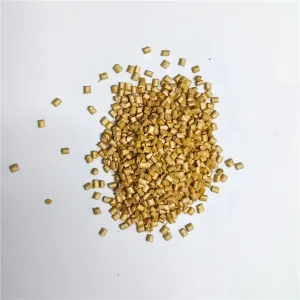
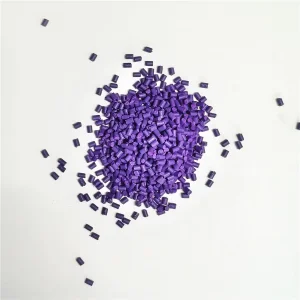
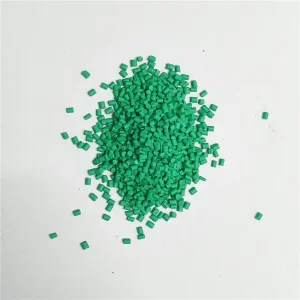
High-concentration pigment masterbatches engineered for injection molding, blown film, and extrusion coloring.
Expert answers addressing critical procurement, engineering, and quality verification concerns for global chemical pail manufacturers.
Carbon black agglomerates larger than 5 microns act as notch-like stress concentrators within the HDPE polymer matrix. When the bucket is filled with stress-cracking agents like liquid detergents or agrochemical surfactants, micro-fractures initiate at these agglomerate sites. A specialized high-quality PE chemical bucket black masterbatch guarantees dispersion levels where 99.9% of particles are below 1 micron, preserving 98%+ of the virgin resin's baseline ESCR (ASTM D1693).
For standard 40%–50% carbon black concentration masterbatches, a let-down ratio (LDR) of 2% to 4% is typical. For containers requiring high UV protection (UV-8 rating for multi-year outdoor storage), a 3% to 4% addition rate ensures a final carbon black content of 1.5% to 2.0% in the finished container wall, satisfying international UN hazardous packaging guidelines.
Chemical buckets are typically blow molded using fractional MFI High-Density Polyethylene (MFR between 0.1 and 0.5 g/10min). If the masterbatch carrier has an excessively high MFI (e.g., MFI 20 standard injection grade LLDPE), it creates viscosity phase separation inside the accumulator head. This leads to wall thickness variations, streakiness, drop impact failures at cold temperatures, and seam line weakness during blow molding.
Filter Pressure Value (measured in bar/gram according to EN 13900-5) measures the purity and dispersion quality of masterbatch melts as they pass through a fine screen mesh (e.g., 25 micron). An FPV below 0.15 bar/g indicates exceptional de-agglomeration, guaranteeing that the masterbatch will not clog melt filters, cause pinholes in thin-walled containers, or cause continuous screen changes during 24/7 extrusion runs.
Yes. We supply specialized food-contact grade black masterbatches formulated with P-Type carbon black that features low Polycyclic Aromatic Hydrocarbons (PAH < 0.2 ppm) and heavy metal contents complying with FDA 21 CFR 177.1520 and EU Regulation (EU) No 10/2011.
We integrate computerized gravimetric feeding systems on all extrusion lines, paired with spectrophotometer color testing (CIE L*a*b* delta E < 0.3 tolerance) and regular laboratory melt-flow and filter pressure testing. Every production batch is issued a Certificate of Analysis (COA) prior to dispatch.
Standard production lead time is 10 to 15 days for full container loads (FCL 20GP/40HQ). With close proximity to Shanghai Port, ocean transit times range from 7 to 30 days depending on the destination port worldwide.