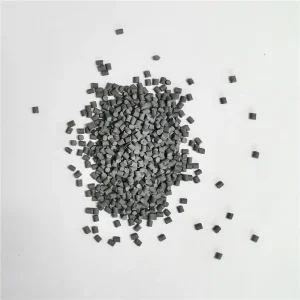
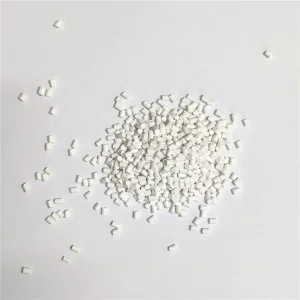
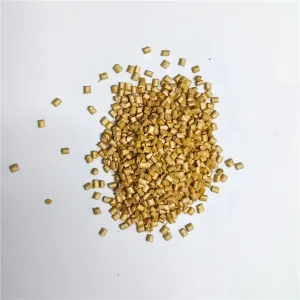
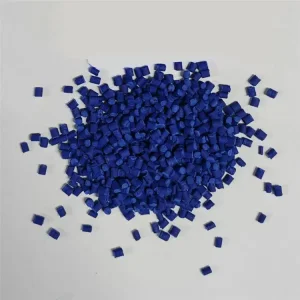
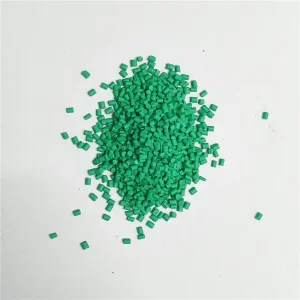
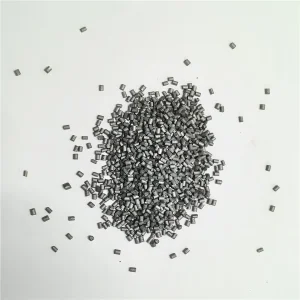
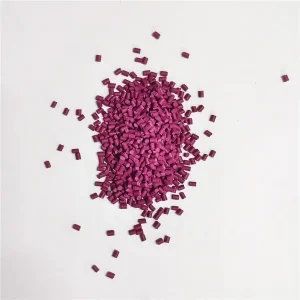
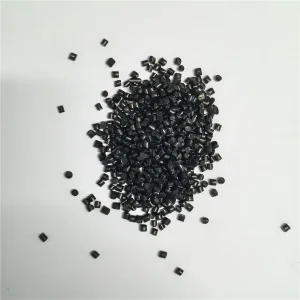
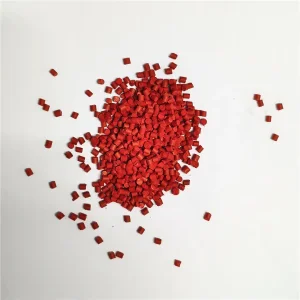
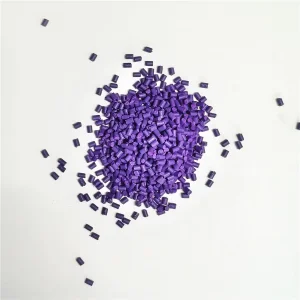
High-concentration PE carrier formulations engineered for supreme color dispersion, heat resistance up to 260°C, and non-migratory structural performance.
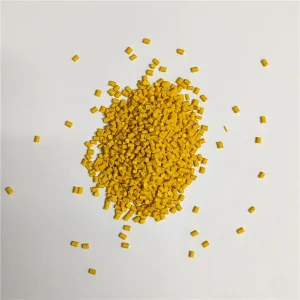
Understanding the rheological mechanics, Polyisobutylene (PIB) migration kinetics, and linear low-density polyethylene (LLDPE) matrix integration.
In modern polyolefin film processing, Polyethylene (PE) Cling Film Masterbatch represents a highly specialized category of functional polymer additives. Designed to impart self-tackiness, optical clarity, puncture resistance, and controlled peel strength to plastic packaging films, these masterbatches solve a fundamental engineering challenge: how to homogeneously incorporate liquid or high-viscosity tackifiers into solid polyolefin extrusions without compromising resin processability, bubble stability, or optical transparency.
The primary active ingredient in high-performance cling masterbatches is Polyisobutylene (PIB), typically loaded at concentrations ranging from 40% to 60% within a tailored Linear Low-Density Polyethylene (LLDPE) or Low-Density Polyethylene (LDPE) carrier matrix. Because pure PIB is a viscous, tacky liquid at room temperature, direct liquid injection into extrusion barrels requires expensive specialized dosing equipment and often causes screw slippage, feed-throat surging, and non-uniform tack distribution. A masterbatch carrier system encapsulating PIB pellets allows converters to feed additive granules directly through standard volumetric or gravimetric dosers into existing blown or cast film lines.
When blown film or cast film solidifies during extrusion, the crystalline domains of LLDPE organize into lamellar structures, forcing the high-molecular-weight PIB phase into amorphous interstitial zones. Over time, thermodynamic incompatibility between the non-crystalline PIB chains and the semi-crystalline PE matrix drives PIB molecules to exude upward toward the film surface.
Comprehensive laboratory specification table comparing industrial-grade PE Cling Film Masterbatch against global standard plastic color & functional concentrates.
| Property Parameter | Test Method Standard | PE Cling Film Masterbatch Spec | High-Concentration PE Color Masterbatch Spec |
|---|---|---|---|
| Active Component / Pigment Content | ISO 3451-1 / TGA Analysis | 50% – 60% Active Liquid PIB Concentrate | 30% – 70% Organic/Inorganic Pigment |
| Carrier Resin Polymer | FTIR Spectroscopy | 100% Virgin LLDPE / mLLDPE Blend | High-Flow PE / PP Carrier System |
| Melt Flow Index (190°C / 2.16 kg) | ASTM D1238 / ISO 1133 | 2.5 – 6.5 g / 10 min | 5.0 – 25.0 g / 10 min |
| Thermal Processing Limit | Differential Scanning Calorimetry (DSC) | Up to 240°C Continuous | Up to 260°C – 300°C Heat Resistance |
| Cling Migration Period (Equilibrium) | ASTM D5458 (Peel Cling Test) | 24 – 72 Hours (Controlled exuding) | Non-Migratory / Non-Blooming |
| Pellet Bulk Density | ASTM D1895 | 0.92 – 0.95 g/cm³ | 0.95 – 1.85 g/cm³ (Color Dependent) |
| Food Contact Compliance | FDA 21 CFR 177.1520 / EU 10/2011 | Compliant (Food Grade Available) | REACH, RoHS, Heavy-Metal Free |
Engineered to maintain high peel cling forces even under low-temperature cold storage environments (down to -20°C in food wrap applications) without crystallizing or flaking off.
Utilizes continuous co-rotating twin-screw extrusion with multi-stage liquid injection technology, preventing agglomeration and guaranteeing ultra-smooth film surface aesthetics.
Special anti-caking surface treatment prevents masterbatch pellets from sticking together in storage hoppers or silos during hot summer transport conditions.
16 years of manufacturing excellence, state-of-the-art infrastructure, and end-to-end quality assurance for global B2B procurement leaders.
Located in the heart of China’s advanced polymer manufacturing hub in Changzhou, Jiangsu Province, Changzhou Jiazhou Plastic Products Co., Ltd. has spent over 16 years perfecting the synthesis, compounding, and global distribution of high-concentration masterbatch solutions. Operating out of a modernized 6,000 m² ISO-certified production facility, Jiazhou Plastic combines rigorous chemical engineering principles with industrial scale to deliver world-class products at competitive factory-direct pricing.
Producing high-grade PE cling film masterbatch demands sophisticated compounding infrastructure. Standard single-screw extruders fail to homogenize high-viscosity PIB with LLDPE carrier resins, leading to phase separation. Jiazhou Plastic solves this via specialized twin-screw compounding lines:
As an exporter serving over 100 countries worldwide, Changzhou Jiazhou Plastic adheres to strict international quality standards. Every production run undergoes multi-stage laboratory verification before dispatch:
100% inspection of virgin polyethylene resins, pigments, and PIB feedstocks for purity, moisture content (<0.05%), and viscosity index.
Continuous monitoring of melt temperature profile, die pressure, and automated pellet size sorting to guarantee uniform bulk density.
Sample batches are blown into 15-micron test films on lab co-extrusion lines to verify peel cling force (ASTM D5458), optical haze, and dart impact strength.
Navigating the transition toward mono-material recyclable films, stringent food-contact safety compliance, and automated packaging lines.
The global plastic flexible packaging market is undergoing a structural transition driven by sustainability mandates, regulatory scrutiny, and technological automation. Modern masterbatch suppliers must innovate beyond simple color matching and basic cling additive blending.
Traditionally, multi-material laminates (e.g., PE/PET or PE/PA) provided high oxygen barrier and cling functionality, but were virtually unrecyclable in standard municipal plastic waste streams. Global brands are aggressively transitioning to 100% Polyethylene (PE) Mono-Material Structures.
High-grade PE Cling Film Masterbatch plays a pivotal role in this transition. By allowing LLDPE stretch wraps and food-grade PE cling films to achieve exceptional self-tack without multi-layer material mixing, converters can produce fully recyclable packaging films that comply with global Circular Economy initiatives and ISO 14001 guidelines.
For food packaging converters producing meat wrap, fresh produce cling film, and commercial catering film, chemical safety is non-negotiable. Jiazhou Plastic’s food-grade PE masterbatches are formulated strictly using non-toxic, heavy-metal-free, and phthalate-free ingredients:
Optimizing processing parameters across Cast Film Extrusion, Blown Film Co-extrusion, and Silage Wrap Manufacturing.
High-speed 5-layer or 7-layer cast film extrusion lines producing stretch film for pallet load unitization. Requires precise 1.5% to 3.0% dosage in the cling layer to prevent unwind noisy resonance and guarantee tight pallet bundling.
Dosage Recommendation: 1.5% - 3.0%Double-bubble blown film lines producing ultra-thin food wrap (8 to 12 microns). Formulated with food-compliant PIB masterbatch to maintain crystal transparency, low haze (<1.0%), and instant peel adhesion to containers.
Dosage Recommendation: 4.0% - 8.0%Heavy-duty 25-micron blown films designed for wrapping round hay bales outdoors. Masterbatch is combined with UV stabilizer concentrates to withstand intense solar radiation for 12 to 24 months without cling degradation.
Dosage Recommendation: 5.0% - 10.0%To prevent thermal degradation of the PIB tackifier and ensure uniform blending, film converters should adhere to the following optimized temperature profiles on standard LLDPE extruders:
| Extruder Zone | Blown Film Line (°C) | Cast Stretch Line (°C) | Engineering Recommendation |
|---|---|---|---|
| Feed Zone (Zone 1) | 150°C – 165°C | 170°C – 180°C | Keep feed throat cool to prevent premature pellet softening and bridge formation. |
| Compression Zone (Zone 2-3) | 175°C – 190°C | 200°C – 220°C | Ensure high mixing shear without excessive localized friction heating. |
| Metering Zone & Adaptor | 190°C – 205°C | 220°C – 235°C | Maintain homogeneous melt viscosity matching base resin MFR. |
| Die Head Zone | 195°C – 210°C | 230°C – 245°C | Inspect die lips regularly; clean with brass scrapers if additive build-up occurs. |
Total Cost of Ownership (TCO) evaluation, containerized export logistics, and batch-to-batch repeatability for international plastic convertors.
For international B2B buyers, purchasing polymer additives from China involves balancing unit price against long-term supply stability, freight economics, and quality consistency. Changzhou Jiazhou Plastic provides structured procurement frameworks designed to eliminate risk for global clients:
Expert answers to common engineering questions regarding PE Cling Film Masterbatch dosing, migration control, and extrusion performance.
Explore our full line of specialized color masterbatches, weather-resistant pigments, and functional PE additives manufactured in China.