Engineered for high thermal stability, non-migratory color brilliance, and seamless integration with low-density polyolefin extrusion systems.
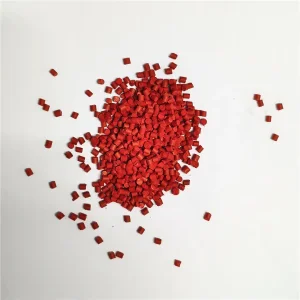
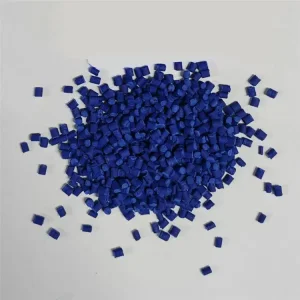
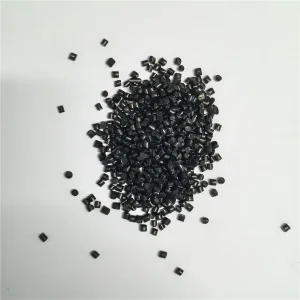
Polyethylene (PE) foam sheet manufacturing via direct gas injection or chemical expansion relies heavily on precision masterbatch formulation. As a primary PE Foam Sheet Masterbatch Manufacturer, our formulation architecture addresses the thermodynamic instabilities inherent in physical and chemical foaming processes, particularly low-density polyethylene (LDPE) and linear low-density polyethylene (LLDPE) extrusions.
The primary bottleneck in expanded polyethylene (EPE) foam sheet extrusion is maintaining optimal melt elasticity and visco-elastic resistance during rapid gas expansion. Without high-purity nucleating masterbatch agent addition, injected blowing agents—such as butane, isobutane, or supercritical CO₂—undergo uncontrolled bubble coalescence. This leads to large, uneven cell geometries, surface skin rupture, and severe post-extrusion structural collapse.
Our specialized foam masterbatch integrates nano-sized inorganic nucleators (Talc / Hydrotalcite / Synthetic Silica) with organic carrier resins boasting tailored Melt Flow Indexes (MFI from 2.0 to 7.0 g/10min at 190°C/2.16kg). This ensures ultrafine dispersion, lowering activation energy barriers for gas bubble formation during extruder barrel pressure drop.
Pioneering next-generation polymer additization: From bio-based polyolefin carriers to PFAS-free processing aids and smart nano-nucleators.
With global environmental mandates phasing out fluoroelastomers, our R&D hub has introduced non-fluorinated processing aids (PPA) within our foam sheet masterbatches. These offer ultra-low die buildup and zero surface shark-skinning during high-speed extrusion.
Aligning with global decarbonization goals, our future-ready masterbatches utilize ISCC PLUS certified bio-polyethylene derived from sugarcane waste, achieving up to 85% reduced cradle-to-gate carbon footprint without sacrificing mechanical ductility.
Engineered for physical foaming lines shifting away from volatile organic compounds (VOCs) like butane, our nucleating masterbatches feature micro-dispersion channels specifically optimized for supercritical N₂ and CO₂ solubility.
Tailored masterbatch formulations solving distinct physical property challenges across demanding industrial sectors.
| Target Sector | Key Industry Challenge | Masterbatch Functional System | Achieved Technical Outcome |
|---|---|---|---|
| Protective Electronics Packaging | Electrostatic discharge (ESD) damaging sensitive microchips; foam shrinkage causing dimensional distortion. | Anti-Static + Nucleating PE Masterbatch (Permanent Non-migratory ESD formulation) | Surface resistivity of 109 – 1011 Ω/sq; absolute dimensional stability after 24h gas replacement. |
| Automotive Acoustics & Liners | High thermal exposure leading to color degradation, fogging, and odor emissions inside passenger cabins. | 260°C Heat-Resistant UV + High-Dispersion Color Masterbatch (VOC compliant) | Passes VDA 278 thermal desorption testing; zero color drift under continuous UV exposure (ISO 4892-2). |
| Building Insulation & Underlayment | Strict fire safety regulations requiring low smoke density and self-extinguishing characteristics. | Halogen-Free Flame Retardant (FR) + Nucleating Masterbatch System | Achieves EN 13501-1 Class B-s1,d0 rating; maintains low thermal conductivity (λ ≤ 0.034 W/m·K). |
| Marine & Athletic Goods | Cell rupture under cyclic compressive loading causing water absorption and buoyancy loss. | High-Melt-Strength Polymer Network Nucleator Masterbatch | Closed-cell ratio > 98%; compressive stress recovery > 92% after 1,000 load cycles. |
Based in Changzhou's high-tech manufacturing zone, Changzhou Jiazhou Plastic Products Co., Ltd. operates a 6,000m² state-of-the-art compounding plant. Utilizing continuous twin-screw compounding extruders equipped with loss-in-weight gravimetric feeders, our facility eliminates human error in chemical loading.
For global procurement teams seeking a reliable PE Foam Sheet Masterbatch Manufacturer, our digital quality assurance framework ensures every pellet conforms strictly to narrow delta E (ΔE < 0.5) color tolerances and tight density variance parameters.
Direct factory sourcing eliminates intermediary markups while offering customizable OEM/ODM formulation services tailored to your extrusion equipment specifications (e.g., tandem foam extrusion lines, single-screw high L/D systems).
Full international chemical compliance ensuring frictionless customs entry and consumer safety across North America, Europe, and Asia-Pacific.
Formulated strictly without Substances of Very High Concern (SVHC), heavy metals (Pb, Cd, Hg, Cr VI), or restricted phthalates, adhering to EU Directive 2015/863.
Specific grades engineered using food-grade PE carriers and GRAS-approved pigments suitable for direct-contact food packaging, fruit cushion netting, and beverage liners.
Dedicated regional technical service engineers assisting with on-site trial runs, screw profile calibration, melt temperature optimization, and troubleshooting.
Key parameters for polymer engineers and procurement managers when selecting foaming masterbatches.
| Evaluation Parameter | Standard Market Masterbatch | Jiazhou High-Gain Masterbatch | Procurement Business Impact |
|---|---|---|---|
| Active Nucleator Concentration | 15% – 25% inorganic loading | 40% – 55% Micro-dispersed active system | Lower addition rates required (0.8%-1.5% vs 3%), directly reducing raw material cost per metric ton of foam. |
| Carrier Resin Compatibility | Generic reprocessed PE carriers | 100% Virgin Prime LDPE/LLDPE (Tailored MFI) | Eliminates polymer phase separation, maintaining high tensile strength and tear resistance in thin sheets. |
| Anti-Collapse Cell Stability | Requires separate liquid GMS injection | Pre-compounded GMS / Anti-Shrink Synergist | Simplifies liquid dosing hardware setups, preventing sheet post-extrusion shrinkage and corrugation. |
| Thermal Stability Window | Degrades above 220°C (gas discoloration) | Thermally stable up to 260°C – 280°C | Enables faster screw rotation speeds and higher extrusion output without color scorching or off-gassing. |
The standard recommended let-down ratio ranges between 1.0% and 2.5% by weight, depending on the target foam density and sheet thickness (e.g., 0.5mm micro-sheets vs. 10mm heavy insulation planks). For fine microcellular structures using direct physical gas injection (butane/isobutane), an LDR of 1.2% to 1.8% delivers maximum bubble density without increasing melt viscosity excessively.
Shrinkage in expanded PE sheets occurs when the blowing agent gas diffuses out of the closed cells faster than ambient air can permeate inward. Our foaming masterbatches integrate finely balanced anti-aging / anti-collapse agents (such as high-purity GMS) along with uniform nucleating sites. This balances internal cell gas pressure during the critical 48-hour curing phase, maintaining flat, wrinkle-free sheet geometry.
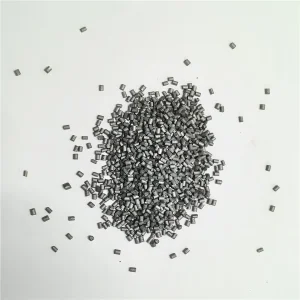
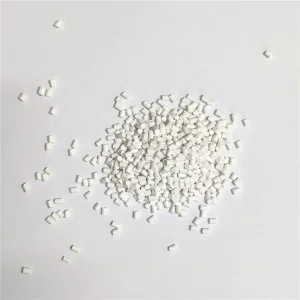
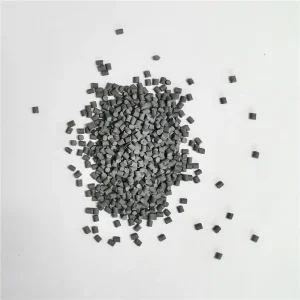
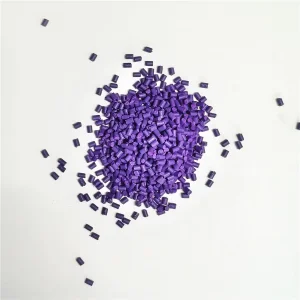
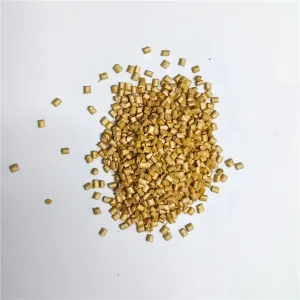
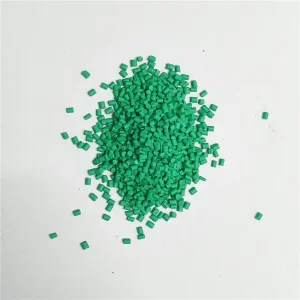
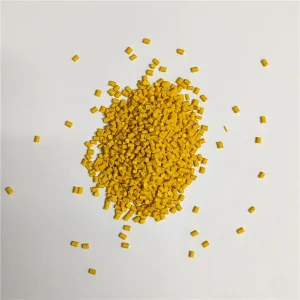
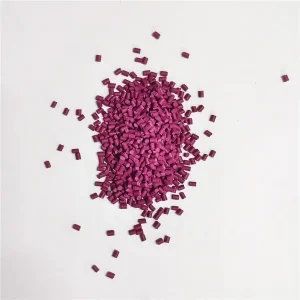
Yes. All our PE color masterbatches (including Black, White, Red, Blue, Grey, Gold, Green, and Silver) feature organic/inorganic pigments with heat resistance rated up to 260°C – 280°C. They undergo specialized dispersion processing to guarantee that color additives do not act as un-controlled coarse nucleators, which could otherwise cause localized cell popping or surface blemishes.
Absolutely. Our masterbatch formulations contain targeted chain extenders and melt-strength enhancers that stabilize fluctuating melt flow indexes in post-consumer recycled (PCR) and post-industrial recycled (PIR) polyolefins, restoring bubble wall strength and ensuring uniform cellular foam formation even with 30%-50% recycled feedstocks.
When stored in dry, cool conditions away from direct sunlight in unopened original heavy-duty moisture-barrier packaging, our masterbatches have a certified shelf life of 24 months. Recommended storage temperatures are between 15°C and 35°C with relative humidity below 60%.
Direct factory supply of high-concentration PE pigment masterbatches engineered for extrusion, blown film, and injection processes.