Engineered for high-speed continuous compression molding, injection sealing, and extrusion blow molding applications across global markets.
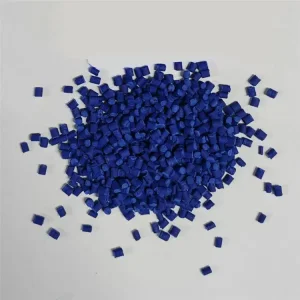
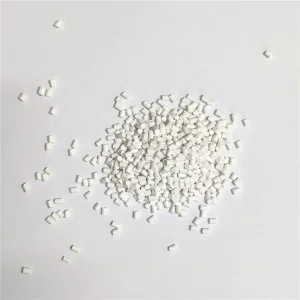
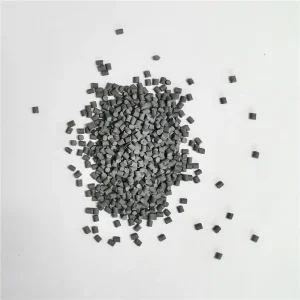
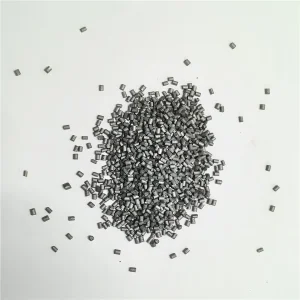
Analyzing the evolution of sealing integrity, stringent food-contact regulations, and high-speed automated closure manufacturing.
In the modern global packaging packaging ecosystem, the performance of closure liners, container seals, and industrial gaskets is fundamentally dictated by the chemical architecture of the masterbatch. Polyethylene (PE) plastic gaskets—widely deployed across carbonated soft drinks (CSD), bottled water, dairy packaging, agrochemicals, pharmaceuticals, and household chemicals—demand a masterbatch carrier system that balances mechanical resilience with extreme chemical purity.
Global procurement teams at multinational cap-making facilities (utilizing SACMI, Husky, or Sumitomo Demag systems) face increasingly complex operational constraints. A masterbatch designed for gasket applications is not merely a colorant; it is a multi-functional additive matrix that directly influences torque retention, removal force, gas barrier properties, compression set recovery, and organoleptic (taste/odor) neutrality.
For beverage closures (especially natural spring water and sensitive milk-based drinks), even trace amounts of low-molecular-weight volatile organic compounds (VOCs) or degraded slip agents can alter the beverage's sensory profile. Premium PE gasket masterbatch formulations eliminate low-boiling paraffin waxes and use high-purity virgin LLDPE/POE carriers tested via Headspace Gas Chromatography-Mass Spectrometry (GC-MS).
Modern closure production lines operate at speeds exceeding 1,200 to 1,800 caps per minute. Masterbatch compounds must melt uniformly at lower thermal budgets without causing plate-out, die buildup, or melt fracture during the in-shell compression lining of liners or gaskets.
Industrial chemical closures and agricultural pesticide container liners require high barrier performance against aggressive solvents, surfactants, and hydrocarbons. Our PE color and functional masterbatches rely on inorganic pigments and high-pigment-loading technologies that prevent color migration and environmental stress cracking (ESCR).
Comprehensive engineering breakdown of polymer carriers, pigment dispersion mechanics, and specialized additive integration.
Developing an industrial-grade PE Gasket Masterbatch requires rigorous selection of base resins, pigment selection, dispersion agents, and functional additives. Below is an engineering comparison matrix highlighting how tailored masterbatch chemistry impacts key physical and chemical metrics of molded gaskets.
| Technical Parameter | Standard Commercial Masterbatch | Jiazhou Precision PE Gasket Masterbatch | Engineering Significance |
|---|---|---|---|
| Carrier Resin Type | Generic Commodity LDPE / LLDPE | High-MFI Virgin LLDPE / POE Elastomer Blend | Ensures perfect phase compatibility with EVA, HDPE, & TPE gaskets. |
| Filter Pressure Value (FPV) | > 2.5 bar/g (14 micron mesh) | < 0.8 bar/g (14 micron mesh) | Eliminates pinholes, seal voids, and filter clogging in high-speed extrusion. |
| Organoleptic Index (TOC) | Detectable plasticizer/wax odor | Strict Zero-Odor (Passes DIN 10955) | Prevents beverage off-flavor in mineral water and carbonated drinks. |
| Heat Stability Rating | 200°C - 220°C | 260°C - 280°C Continuous | Prevents thermal degradation during long residence melt processing. |
| Pigment Dispersion Quality | Agglomerates < 50 µm present | Sub-Micron (Agglomerates < 5 µm) | Guarantees uniform tensile strength and consistent compression recovery. |
| Heavy Metal & Compliance | Standard RoHS compliant | FDA 21 CFR, EU 10/2011, REACH SVHC Free | Global regulatory clearance for direct food contact and pharma. |
The primary point of failure in plastic gaskets is non-uniform pigment agglomeration, which acts as a stress concentration point under cyclic compression. When a cap is torqued onto a bottle finish, the seal liner undergoes shear stress and normal compressive force. If pigment particles are poorly dispersed, micro-cracks form along the pigment interface, leading to slow CO2 leakage or oxygen ingress.
Changzhou Jiazhou Plastic Products Co., Ltd. utilizes twin-screw extruders with high L/D ratios (44:1 to 48:1) equipped with specialized kneading block elements. This thermal-mechanical process breaks down organic and inorganic pigment aggregates into sub-micron dimensions while ensuring that the melt temperature is kept below the degradation threshold of sensitive primary antioxidants.
Engineered solutions tailored for specific closure systems, regulatory demands, and mechanical stress environments.
For one-piece and two-piece HDPE/PP closures with molded PE gaskets. Formulated with ultra-pure inorganic white, blue, and transparent masterbatches that withstand gas retention pressures up to 4.5 volumes of CO2 without liner creep or taste distortion.
Compliant with USP Class VI, ISO 10993, and European Pharmacopoeia standards. Utilizes non-migratory pigment carriers capable of withstanding Ethylene Oxide (EtO) sterilization and gamma irradiation without discoloring or releasing extractable substances.
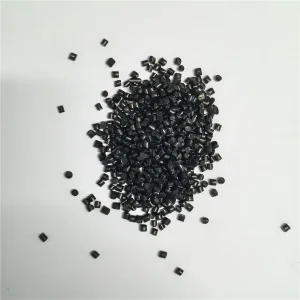
Designed for heavy-duty PE gaskets requiring extreme Environmental Stress Crack Resistance (ESCR). Features high concentrations of carbon black or specialized colored pigments with built-in UV stabilizers to prevent degradation from sun exposure and volatile solvents.
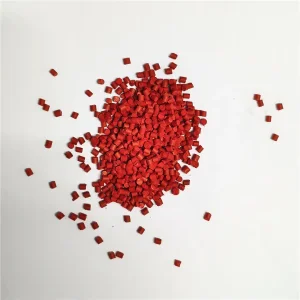
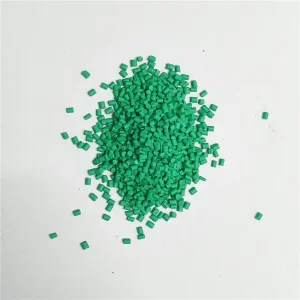
Delivers high aesthetic value (metallic silver, custom pearl tones, vibrant red/green hues) without compromising seal soft-touch elasticity or introducing interaction with essential oils, alcohol, and cosmetic lotions.
Building E-E-A-T (Experience, Expertise, Authoritativeness, Trustworthiness) through rigorous analytical standards and dedicated customer care.
As a 16-year B2B manufacturing powerhouse operating a modern 6,000m² factory in Changzhou, China, Changzhou Jiazhou Plastic Products Co., Ltd. enforces strict quality assurance protocols at every phase of production. We recognize that for enterprise buyers, a minor variance in color shade (Delta E) or additive concentration can lead to batch rejections and costly production line downtime.
We supply comprehensive regulatory dossier packages with every shipment, supporting your quality assurance audits and global distribution requirements:
Pioneering eco-friendly PE gasket formulations, recycled plastic compatibility, and next-generation barrier masterbatches.
The global plastics industry is undergoing a paradigm shift towards circular economy models and carbon footprint reduction. Gasket masterbatches are evolving to meet these sustainability mandates without sacrificing mechanical performance or food safety standards.
Our latest R&D breakthroughs focus on carrier resins that passivate odor and volatile contaminants present in PCR HDPE/LLDPE resin streams, enabling cap manufacturers to incorporate up to 30%-50% recycled content into non-food gaskets.
Integrating active chemical absorbers into the PE carrier matrix to actively capture residual head-space oxygen in beer, wine, and fruit juice bottles, extending shelf-life by up to 300% compared to passive barrier gaskets.
Developing temperature-sensitive thermochromic and tamper-evident masterbatches for high-security closure gaskets, providing visual verification of seal breach or thermal exposure during transport.
Select from our core range of high-concentration color and functional masterbatches engineered for injection molding, blown film, and gasket extrusion.
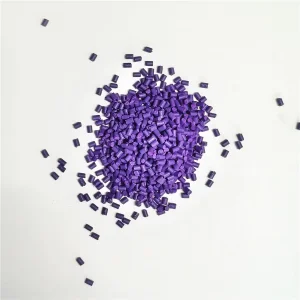
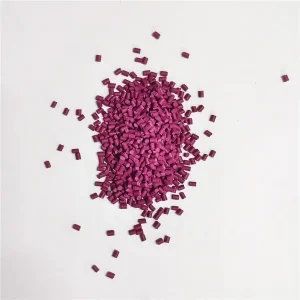
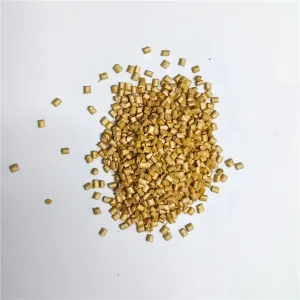
Addressing core engineering questions regarding PE gasket masterbatch selection, processing parameters, and food contact compliance.