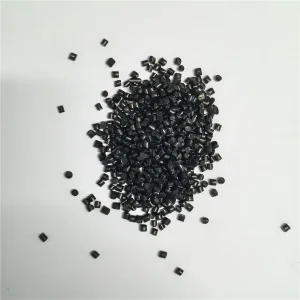
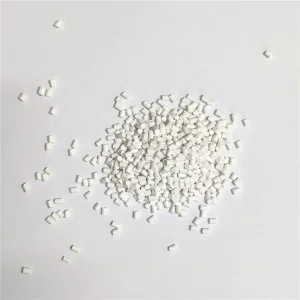
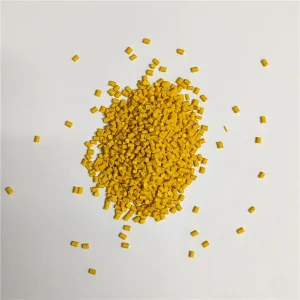
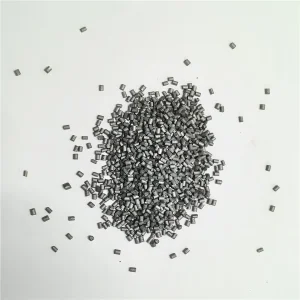
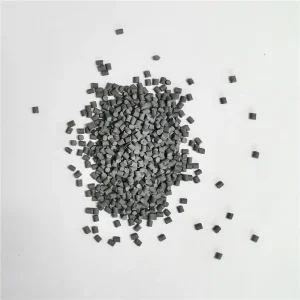
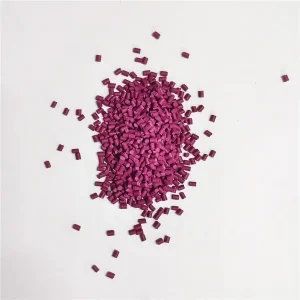
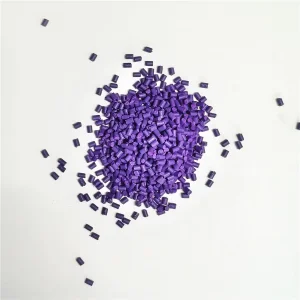
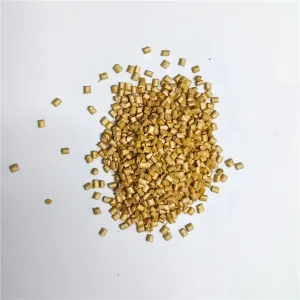
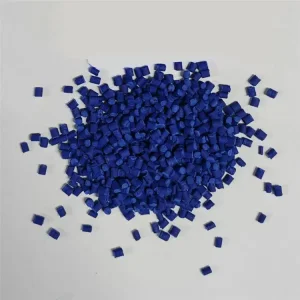
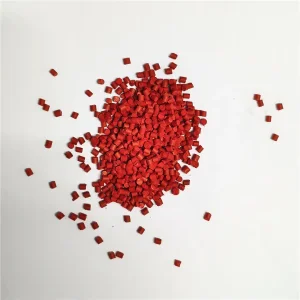
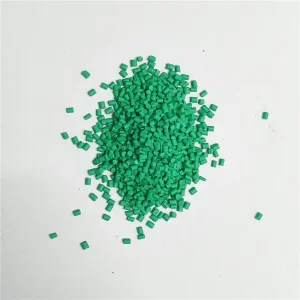
High-concentration pigment dispersion formulations designed for injection molding, film blowing, and continuous extrusion processes.
Understanding Polyethylene Matrix Compatibility, Melt Flow Indexing, and Pigment Micro-Dispersion
In modern polymer processing, Polyethylene (PE) Carrier Masterbatch serves as the foundation for color consistency, opacity control, and functional additization across global conversion lines. The primary advantage of utilizing Polyethylene (LDPE, LLDPE, or HDPE) as a carrier resin lies in its intrinsic rheological flexibility, chemical inertness, and universal compatibility with polyolefin substrates. Top-tier masterbatch factories design color concentrates by meticulously matching the Melt Flow Index (MFI) of the carrier resin to the target base polymer. This ensures that during high-shear twin-screw extrusion or injection molding, the colorant particles encapsulate uniformly without inducing phase separation or mechanical weakness in the final plastic matrix.
Advanced manufacturing processes demand rigorous control over particle size distribution. Organic and inorganic pigments—such as Phthalocyanine Blue, Rutile Titanium Dioxide ($TiO_2$), and High-Surface-Area Carbon Black—must undergo complete de-agglomeration down to sub-micron scales. Premier Chinese masterbatch factories implement specialized dispersants, polyethylene waxes, and coupling agents to coat pigment surfaces. This engineered surface modification prevents re-agglomeration during thermal processing at temperatures exceeding 260°C, delivering flawless surface aesthetics in thin-gauge blown films and complex injection-molded components.
Tailoring carrier melt rates (from 2 to 50 g/10min) to prevent viscosity mismatch, ensuring zero streakings in high-speed extrusion operations.
Utilizing triple-stage twin-screw extrusion technology to break pigment agglomerates, protecting filter packs down to 15 microns.
Formulated with high-heat resistant organic compounds to prevent thermal degradation during long-cycle plastic processing.
Vertical Raw Material Integration, Scalable Economies, and Unmatched Production Capacity
Global plastic converters and B2B buyers increasingly rely on Chinese plastic PE masterbatch manufacturers to maintain competitive cost structures without sacrificing performance. The concentration of chemical production ecosystems in regions like Jiangsu, Zhejiang, and Guangdong creates an unmatched supply chain advantage. Direct integration with major petrochemical refineries provides instant access to virgin polyolefin carriers (LDPE, LLDPE, HDPE, PP) and bulk industrial pigments ($TiO_2$, Carbon Black, Calcium Carbonate $CaCO_3$).
Modern Chinese masterbatch factories operate ultra-automated compounding facilities equipped with gravimetric loss-in-weight feeders, continuous side-feeders, and underwater pelletizing systems. This high degree of automation ensures batch-to-batch color consistency (Delta E < 0.5) while lowering labor overhead. Furthermore, robust logistics infrastructure adjacent to major seaports (Shanghai, Ningbo, Shenzhen) enables rapid containerized export to over 100 countries with standardized 10-to-15-day lead times.
Meeting Stringent Market Directives: REACH, RoHS, Food Contact FDA 21 CFR, and Halogen-Free Mandates
International procurement directors and quality assurance managers must navigate an increasingly complex landscape of environmental and consumer safety regulations. A high-quality PE masterbatch company must offer fully traceable, eco-compliant color solutions verified by third-party testing laboratories such as SGS, Intertek, or TÜV Rheinland. Compliance is not merely a documentation step; it is embedded directly into the formulation architecture.
For applications in food packaging, agricultural films, and medical devices, PE masterbatches must conform strictly to FDA 21 CFR 177.1520 and European Commission Regulation (EU) No 10/2011 regarding heavy metals, primary aromatic amines (PAAs), and overall migration limits (OML). Furthermore, under regulations like EU REACH and RoHS 3.0, toxic heavy metals (Pb, Cd, Hg, $Cr^{VI}$) and hazardous flame retardants (PBBs, PBDEs, Phthalates) are completely eliminated from pigment formulations, ensuring total consumer safety and unhindered global exportability.
| Compliance Directive | Target Application | Key Testing Criteria / Metrics | Masterbatch Qualification |
|---|---|---|---|
| FDA 21 CFR 177.1520 | Food Packaging & Beverage Bottles | Overall Migration Limits (OML), Heavy Metal Extractables | Certified Non-Toxic / Food-Grade Carrier |
| EU REACH & RoHS 3.0 | Consumer Electronics & Home Appliances | Substances of Very High Concern (SVHC) < 0.1% w/w | 100% Heavy-Metal Free & Halogen-Free |
| EN 71-3 Safety of Toys | Children's Toys & Childcare Articles | Migration of 19 Specific Heavy Elements | Ultra-Low Heavy Metal Pigment Grade |
| ISO 4892-2 Weatherability | Outdoor Geomembranes & Agricultural Films | Xenon-Arc Accelerated Weathering (Delta E < 2.0 after 3000h) | HALS & UV Stabilized PE Carrier |
Customized Polyethylene Color Formulations Engineering for Specific Processing Methods
Designed for shopping bags, courier sacks, and multi-layer agricultural mulch film. Requires ultra-fine particle dispersion to prevent pinholes, film tearing, and bubble instability during high-speed blowing lines (up to 40m/min).
Targeted at household plastics, automotive interiors, and electronic enclosures. Features exceptional melt liquidity and anti-warping characteristics, mitigating dimensional shrinkage in complex mold geometries.
High-loading PE Black Masterbatch formulated with P-type or P-H-type Carbon Black ($< 25nm$) to deliver exceptional UV protection, thermal oxidative stability, and long-term hydrostatic strength in HDPE utility pipes.
The Evolution of Circular Economy Plastics, Nano-Smart Dispersion, and Multi-Functional Concentrates
As the plastics industry pivots toward sustainability, the masterbatch sector undergoes rapid technological transformation. Leading factories are pioneering Post-Consumer Recycled (PCR) PE Carrier Masterbatches, designed to color recycled resins seamlessly without introducing degradation or odorous volatiles. Advanced Compatibilizer Technology allows masterbatch compounds to bridge property gaps between mismatched polymers in circular recycling streams.
Furthermore, modern B2B buyers are moving away from single-function colorants toward Combo / Multi-Functional Masterbatches. These advanced concentrates blend vibrant pigments with performance additives—such as Hindered Amine Light Stabilizers (HALS UV protection), permanent anti-static agents, anti-fog additives, and slip agents—into a single uniform pelletized system. This single-dosing strategy simplifies raw material inventory, eliminates dosing equipment errors, and lowers overall processing energy consumption.
Explore our full spectrum of specialized PE masterbatch products engineered for global industrial demands.
Expert Answers to Critical Engineering Questions Regarding Masterbatch Selection and Processing Optimization