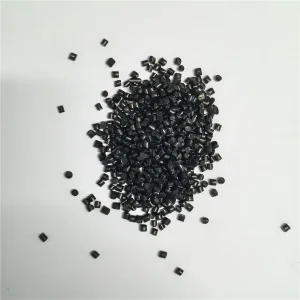
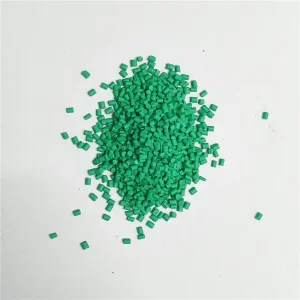
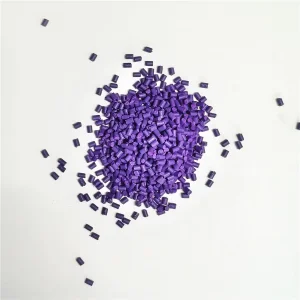
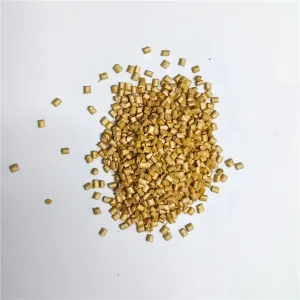
High-concentration PE carrier pigment formulations engineered for film blowing, injection molding, and continuous extrusion.
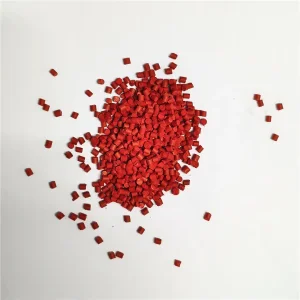
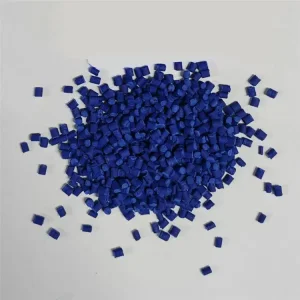
Understanding the interfacial surface tension, refractive index matching, and sub-micron pigment dispersion parameters.
In high-end polyolefin conversion, sourcing from top-tier transparent PE color masterbatch companies & suppliers requires evaluating core material chemistry beyond basic shade matching. Transparent polyethylene (PE) masterbatches represent a delicate balance of chemical engineering. Unlike opaque masterbatches—which rely on light-scattering agents such as titanium dioxide ($\text{TiO}_2$) or high-structure carbon black—transparent color masterbatches demand complete optical light transmission through the polymer matrix. Achieving crystal-clear chromaticity without visual haze requires precise matching of the carrier resin's refractive index ($n_d \approx 1.51-1.54$ for LLDPE/LDPE) with ultra-fine organic dye molecules or nanoscale organic pigment dispersions.
Optical haze occurs when pigment agglomerates exceed 400 nm in diameter, scattering visible light waves. Premier manufacturers utilize multi-stage twin-screw extrusion with specific length-to-diameter ($L/D \ge 44:1$) ratios to break pigment clusters down to sub-micron levels ($< 100\text{ nm}$), guaranteeing light transmission values exceeding 88% according to ASTM D1003 standards.
A frequent point of failure in blown film and injection molding processing is carrier resin mismatch. When selecting a transparent color masterbatch, the melt flow index (MFI) of the masterbatch carrier must closely align with or slightly exceed the MFI of the virgin base polymer (e.g., LLDPE film grade MFI $1.0 - 2.0\text{ g/10min}$ at $190^\circ\text{C}/2.16\text{kg}$). If the carrier resin exhibits poor shear thinning properties or thermal degradation, phase separation occurs at the die exit, leading to melt fracture, fisheyes, and localized opacity variation. Professional manufacturers synthesize custom low-density polyethylene (LDPE) or metallocene LLDPE (mLLDPE) carriers modified with low-molecular-weight processing aids to guarantee instantaneous thermal homogenization.
Analyzing shift toward tinted transparent packaging, regulatory mandates, and supply chain logistics.
The global market for transparent PE color masterbatch is expanding rapidly, driven by shifting consumer preferences in fast-moving consumer goods (FMCG), luxury cosmetics packaging, medical diagnostics, and greenhouse agricultural films. B2B buyers across Europe, North America, and Southeast Asia are increasingly moving away from fully opaque containers toward semi-transparent, tinted polyolefins that showcase the internal product while maintaining brand identity and shielding contents from light degradation.
Strict adherence to EU 10/2011 food contact rules and REACH SVHC regulations. Demand is surging for transparent masterbatches compatible with mechanical PCR recycling streams without cross-color contamination.
High emphasis on FDA 21 CFR 177.1520 compliance for direct food and beverage contact, requiring non-migratory, organoleptically neutral transparent formulations with high UV stability.
Rapid expansion in industrial extrusion, greenhouse agricultural films, and high-volume daily household goods manufacturing requiring cost-efficient, high-concentration masterbatches.
As environmental policies mandate higher recycling rates, global converters require masterbatches that do not interfere with automated NIR (Near-Infrared) sorting facilities. Modern transparent masterbatches developed by leading Chinese supply hubs utilize specialized dye structures that allow sorting sensors to identify the underlying PE resin, preventing plastic packaging from being misclassified as un-recyclable waste.
Pioneering next-generation polymer additive solutions for circular economy integration.
| Technology Pillar | Current Industry Benchmark | 2026–2028 Innovation Target | Key Benefiting Sectors |
|---|---|---|---|
| Nano-Pigment Dispersions | Particle size $200\text{ nm} - 500\text{ nm}$ | Sub-50 nm ultra-dispersion via fluid-jet milling | Optical lenses, ultra-thin blow-molded bottles |
| PFAS-Free Process Aids | Fluoropolymer-based PPAs | Bio-based siloxane and ester-based PPA chemistry | Food contact packaging, EU/US regulatory compliance |
| Bio-PE Carriers | Petroleum-based LLDPE/LDPE | 100% sugarcane-derived ISCC Plus Bio-PE carriers | Sustainable cosmetics, carbon-neutral supply chains |
| Laser-Markable Additives | Surface printing / traditional dyes | Transparent near-infrared light absorbers for indoor coding | Pharma packaging, high-speed trace-and-track logistics |
| Smart Tinting & Anti-UV | Single-function organic tint | Synergistic HALS (Hindered Amine) + Transparent UV blockers | Agricultural greenhouse films, outdoor polyolefin storage |
The trajectory of masterbatch chemical development is shifting toward multi-functional additive masterbatches. Converters no longer accept masterbatches that perform purely decorative roles. Future formulations integrate anti-static additives, slip agents, and optical brighteners directly into the transparent color masterbatch matrix. This single-pellet dosing system eliminates feed hopper stratification in plastic processing machinery, ensuring consistent concentration throughout long production runs.
Real-world implementation parameters across high-precision polyolefin processing sectors.
Challenge: Agricultural growers require color-tinted films (such as transparent blue or yellow) to filter specific light spectrum wavelengths, promoting crop growth while retaining photosynthetically active radiation (PAR). Conventional masterbatches often suffer from pigment migration and severe haze accumulation.
Engineering Solution: Masterbatch suppliers synthesize high-dispersion transparent PE masterbatch containing light-stabilized organic pigments. Dosed at 1.5% to 2.5% in 150-micron LLDPE film blowing lines, the film achieves 90%+ total light transmittance with zero pigment blooming under continuous outdoor UV exposure.
Challenge: Cosmetic squeezable tubes and beverage bottles require high-gloss tinting without imparting odor or taste transfer (organoleptic degradation) to sensitive formulas.
Engineering Solution: Formulated using ultra-pure medical grade carrier resins processed under strict ISO 13485 cleanroom standards. Dyes undergo vacuum degassing to eliminate volatile organic compounds (VOCs). The resulting masterbatch yields flawless, high-gloss transparent containers that meet strict food contact mandates.
Challenge: Intravenous (IV) fluid bags, blood collection tubes, and diagnostic cartridges require strict color-coding for medical safety while retaining visual clarity to inspect fluid purity and bubble formation.
Engineering Solution: Heavy-metal-free, low-extractable transparent masterbatch engineered to withstand ethylene oxide (EtO) and gamma radiation sterilization without yellowing or cracking.
Challenge: Pneumatic lines, fuel transport hoses, and chemical transfer tubing require color-coded visibility for maintenance technicians without sacrificing burst pressure or mechanical yield strength.
Engineering Solution: High-density polyethylene (HDPE) compatible transparent masterbatches formulated with specific anti-oxidants to prevent polymer chain scission during thick-wall profile extrusion.
Why leading global converters partner with Changzhou Jiazhou Plastic Products Co., Ltd. for strategic OEM/ODM masterbatch sourcing.
Selecting top transparent PE color masterbatch companies & suppliers requires evaluating direct manufacturing capabilities and supply chain resilience. Changzhou Jiazhou Plastic Products Co., Ltd., founded in 2010, represents the modern standard of Chinese chemical manufacturing excellence. Situated in the heart of Jiangsu Province's industrial chemical cluster, Jiazhou leverages vertical integration, localized raw material sourcing, and advanced automated extrusion lines to deliver unmatched supply reliability to global B2B procurement officers.
Equipped with multi-strand twin-screw extruders, continuous gravimetric feeders, and computer-controlled temperature control units ensuring batch-to-batch consistency.
Operating under ISO 9001 quality management systems. Every production batch undergoes Filter Pressure Value (FPV) testing, melt flow analysis, and spectrophotometric spectrophotometry.
Proximity to Shanghai and Ningbo ports enables fast export container loading. Dedicated export specialists oversee customs clearance for over 100 destination countries.
By maintaining direct procurement contracts with tier-one resin manufacturers (such as Sinopec and PetroChina) and international dye producers, Changzhou Jiazhou eliminates intermediary distributor markups. Our specialized color-matching laboratory can replicate target RAL, Pantone, or physical plastic samples within 48 hours, providing B2B clients with tailored formulations at competitive direct-from-factory pricing.
Rigorous lab verification guaranteeing non-toxicity, environmental safety, and thermal durability.
Compliance is non-negotiable when importing masterbatches for food packaging, toys, or medical devices. Professional suppliers provide comprehensive documentation packages for every batch dispatched.
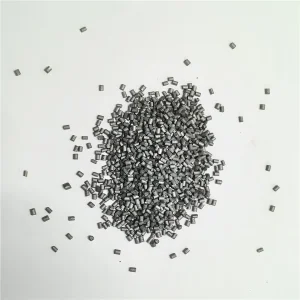
Explore our complete range of specialized pigment masterbatches engineered for maximum coloring efficiency.
Expert technical answers addressing common challenges in transparent masterbatch processing and procurement.
The standard let-down ratio for transparent PE masterbatch typically ranges between 1.0% and 3.0% by weight, depending on the wall thickness of the final plastic product. For thin agricultural or packaging films ($20 - 50\text{ microns}$), a 2.0% to 3.0% dosage ensures intense tinting without sacrificing optical clarity. For thicker injection-molded parts ($> 2\text{ mm}$), a lower dosage of 0.8% to 1.5% is sufficient to achieve vibrant, haze-free coloration.
Standard opaque masterbatches contain inorganic pigments (such as titanium dioxide or iron oxide) that actively reflect and scatter light waves, creating a solid, non-see-through appearance. Transparent masterbatches utilize organic dyes or nanoscale organic pigments that dissolve or disperse seamlessly at sub-micron levels within the PE carrier, allowing light to pass directly through without refraction or scattering.
While PE-carrier masterbatches can occasionally be used in PP processing due to polyolefin compatibility, it is generally recommended to match the carrier polymer to the base resin. Using a PE carrier in PP can slightly lower the clarity or heat deflection temperature of PP parts. For PC, PET, or PS, specialized styrenic or acrylic carrier masterbatches should be selected to avoid polymer immiscibility and hazing.
Visual haziness or splay marks are primarily caused by three factors: 1) Excess moisture in the masterbatch or raw resin (resolved by pre-drying or using desiccant additives); 2) Mismatch between base resin MFI and masterbatch MFI; or 3) Inadequate melt temperature leading to incomplete pigment melting. Ensuring processing temperatures reach the masterbatch's optimal window ($200^\circ\text{C} - 260^\circ\text{C}$) resolves dispersion splay.
Every shipment from Changzhou Jiazhou Plastic Products Co., Ltd. includes a formal Certificate of Analysis (COA), Technical Data Sheet (TDS), Safety Data Sheet (SDS), and compliance declarations for FDA 21 CFR, EU 10/2011, REACH SVHC, and RoHS 3 upon request.