High-Quality White PE Masterbatch Companies & Manufacturers

Technical Whitepaper & Global Sourcing Guide: High-Opacity Rutile TiO₂ Dispersions, Polyethylene Carrier Rheology Optimization, and Industrial Processing Solutions

Featured Industrial Masterbatch Product Portfolio

Engineered with premium Polyethylene (PE) carriers for superior dispersion, non-migration color stability, and thermal resistance up to 260°C across film blowing, extrusion, and injection molding applications.
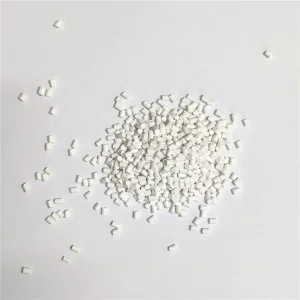
Custom High Concentration PE White Masterbatch
Custom High Concentration PE White Masterbatch Non-toxic Weather Resistant
View Product Details
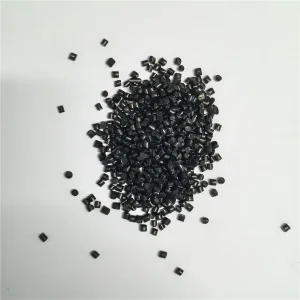
China High Concentration PE Black Masterbatch
China High Concentration PE Black Masterbatch Eco-friendly 260°C Heat Resistant
View Product Details
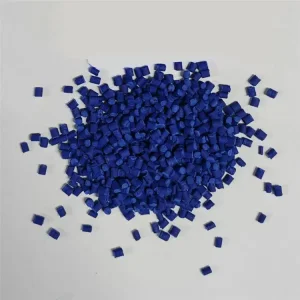
China High Concentration Blue Masterbatch PE Carrier
China High Concentration Blue Masterbatch PE Carrier for Plastic Injection Blowing Film
View Product Details
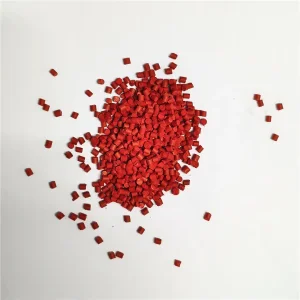
High-Quality High Concentration PE Red Masterbatch
High-Quality High Concentration PE Red Masterbatch Bright Color 260°C Heat Resistant
View Product Details
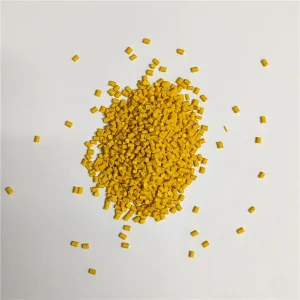
Custom High Concentration PE Yellow Masterbatch
Custom High Concentration PE Yellow Masterbatch Non-toxic Anti-migration
View Product Details
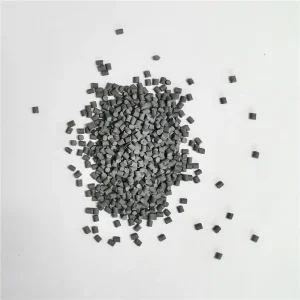
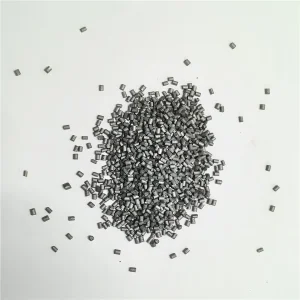
China High Concentration PE Grey Masterbatch
China High Concentration PE Grey Masterbatch Non-migration Heat Resistant
View Product Details
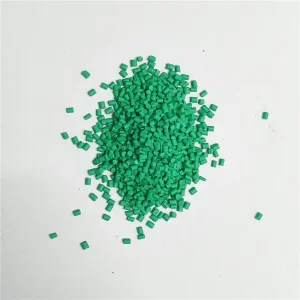
Custom High Concentration PE Green Masterbatch
Custom High Concentration PE Green Masterbatch Anti-fading Heat Resistant
View Product Details
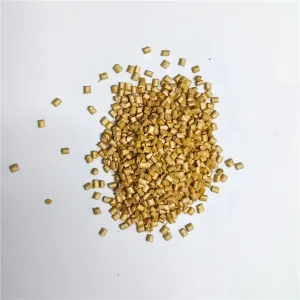
High Concentration PE Gold Masterbatch
High-Quality High Concentration PE Gold Masterbatch Anti-fading Heat Resistant
View Product Details
16+
Years Manufacturing E-E-A-T
70-75%
Max Rutile TiO₂ Loading
6,000m²
ISO Certified Workshop
100+
Global B2B Export Destinations

Macro Industrial Landscape & Polymer Chemistry Foundations

An in-depth evaluation of global manufacturing trends, titanium dioxide pigment selection, and carrier polyolefin compatibility for high-performance plastics.

In modern industrial polymer processing, the global market demand for premium Polyethylene (PE) White Masterbatch has evolved far beyond basic color opacity. As plastic converters transition toward ultra-thin film blowing, high-speed automated injection molding, and complex multilayer barrier structures, the performance metrics expected from white masterbatch manufacturers and suppliers have escalated dramatically. Changzhou Jiazhou Plastic Products Co., Ltd., leveraging over 16 years of direct B2B manufacturing expertise, delivers technical solutions that resolve core engineering bottlenecks—such as filter pressure value spikes, pinhole defects, die-lip buildup, and premature yellowing under high thermal processing history.

Titanium Dioxide (TiO₂) Selection: Rutile vs. Anatase Polymorphs

The primary functional constituent driving opacity, tinting strength, and UV scattering efficiency in PE white masterbatch is Titanium Dioxide ($TiO_2$). However, professional masterbatch compounding requires a precise chemical distinction between the two primary crystalline polymorphs: Rutile and Anatase.

  • Rutile Titanium Dioxide: Characterized by a tetragonal crystal system with a high refractive index of 2.73, Rutile TiO₂ exhibits superior light scattering efficiency, extreme opacity, and high chemical stability. Furthermore, its crystal structure provides substantially superior weather resistance and lower photochemical activity when exposed to solar ultraviolet radiation. Leading PE white masterbatch companies utilize inorganic surface treatments—typically dense silica ($SiO_2$) and alumina ($Al_2O_3$) encapsulation—to neutralize surface hydroxyl groups and prevent photo-catalytic degradation of Polyethylene polymer chains.
  • Anatase Titanium Dioxide: With a refractive index of 2.55, Anatase provides a bluer white undertone but possesses significantly higher photo-reactivity. It is prone to chalking and rapid polymer degradation under outdoor weathering. While lower in raw material cost, Anatase-based masterbatches are generally restricted to indoor, short-lifespan commodity packaging.

Rheological Compatibility & Carrier Resin Architecture

A critical engineering failure in plastic converting is carrier incompatibility. When a white masterbatch utilizes a carrier polymer with a significantly different Melt Flow Index (MFI) or density than the target virgin resin (e.g., LLDPE, LDPE, HDPE, or PP), macro-dispersion flaws occur. This leads to color streaks, optical haze, and compromised mechanical tensile strength.

At Changzhou Jiazhou Plastic Products Co., Ltd., our formulation matrix pairs ultra-pure Rutile TiO₂ with prime-grade Low-Density Polyethylene (LDPE) or Linear Low-Density Polyethylene (LLDPE) carriers tailored to specific customer processing conditions. By matching the rheological shear viscosity of the masterbatch melt with the base polyolefin matrix, complete interfacial wet-out and sub-micron pigment de-agglomeration are achieved during extrusion compounding.

Technical Pillars of Jiazhou White PE Masterbatch

Core engineering advantages that distinguish Changzhou Jiazhou Plastic Products Co., Ltd. as an industry-leading B2B compounding factory.

Ultra-High Rutile Loading (up to 75%)

Compounded with high pigment loading without sacrificing pellet flowability or melt dispersion. Enables minimal let-down ratios (LDR of 1% to 3%), drastically cutting freight cost and unit usage for global converters.

Low Filter Pressure Value (FPV)

Rigorously tested to EN 13900-5 standards, achieving FPV below 0.5 bar/gram. Guarantees long production runs without clogging fine screen packs during ultra-thin film blowing (<10 microns) or spunbond non-woven extrusion.

Zero Lacing & Hydrophobic Purity

Advanced vacuum-degassing twin-screw compounding eliminates moisture pick-up. Completely prevents high-temperature die-lip lacing, void formation, and surface pinholes during high-speed extrusion coating (>300°C).

White PE Masterbatch Technical Grade Comparison Table

Comprehensive engineering specifications across Jiazhou’s white masterbatch formulations for blown film, injection molding, and sheet extrusion.

Grade Series TiO₂ Content (%) TiO₂ Type Carrier Resin MFI (g/10min, 190°C/2.16kg) Heat Stability (°C) Primary Industrial Applications
JZ-WHITE 7050 50% Rutile (Al/Si Coated) LDPE 15.0 ± 3.0 260°C General Injection Molding, Household Plasticware
JZ-WHITE 7060 60% Premium Rutile LLDPE / LDPE 10.0 ± 2.0 280°C Multilayer Packaging Film, Shopping Bags, Agriculture
JZ-WHITE 7070 Premium 70% Super-Fine Rutile Prime LLDPE 6.0 ± 1.5 300°C Ultra-Thin Blown Film (<12µm), Milk Pouches, Lamination
JZ-WHITE 7075 High-Opacity 75% Inorganically Treated Rutile PE / Processing Aid 4.5 ± 1.0 300°C Cast Film, Extrusion Coating, Geomembranes
JZ-WHITE 8000 Medical 65% US-FDA Grade Rutile HDPE / LLDPE 8.0 ± 2.0 280°C Pharma Packaging, Food Contact Containers, Blow Molding

Localized Application Scenarios & Global Regulatory Compliance

Bridging chemical performance with real-world plastic conversion across key global manufacturing hubs.

High-Speed Multilayer Blown Film & Flexible Food Packaging

In high-output blown film co-extrusion lines (3-layer to 7-layer ABA/ABC structures), white masterbatch serves a dual role: providing high optical density to protect light-sensitive liquids (such as fresh milk and edible oils) and enhancing puncture resistance. Jiazhou’s JZ-WHITE 7070 series utilizes sub-micron Rutile TiO₂ processed via multi-stage shear mixing. This prevents pinholes, bubble instability, and gel buildup, ensuring continuous extrusion speed exceeding 400 kg/hr without screen pack clogging.

Heavy-Duty Agricultural Mulch & Geomembrane Liners

Outdoor agricultural plastics require white PE masterbatches equipped with synergistic UV light stabilizers (HALS) and anti-oxidants. Tropical and arid agricultural regions (such as the Middle East, Southeast Asia, and Latin America) subject PE films to extreme solar radiation and ambient temperatures over 45°C. Jiazhou’s outdoor-grade white masterbatch incorporates hydrophobic surface treatments that prevent titanium dioxide from reacting with agricultural pesticides, maintaining UV protection and mechanical film integrity over multi-year cycles.

Global Regulatory Assurance & Quality Certificates

For international buyers importing white masterbatches into North America, the European Union, and Asia-Pacific markets, chemical compliance is non-negotiable. Changzhou Jiazhou Plastic Products Co., Ltd. maintains a complete regulatory portfolio verified by independent testing laboratories (SGS, TUV, Intertek):

  • US FDA 21 CFR 177.1520: Certified safe for direct food contact packaging applications.
  • EU Regulation (EU) No 10/2011 & EC 1935/2004: Fully compliant regarding specific migration limits (SML) and heavy metal restrictions.
  • RoHS 3 (Directive 2015/863) & REACH SVHC: Free from heavy metals (Lead, Cadmium, Mercury, Hexavalent Chromium), Phthalates, and Polybrominated Diphenyl Ethers.
  • ISO 9001:2015 Quality Management System: Ensures lot-to-lot color tolerance within $\Delta E \le 0.5$ using X-Rite spectrophotometric analysis.

Technology Roadmap & Future Outlook (2026–2030)

Pioneering eco-friendly compounding, circular economy compatibility, and next-generation nano-dispersion tech.

PCR & PIR Recycled PE Compatibility

Development of specialized white masterbatches engineered to re-whiten and re-stabilize Post-Consumer Recycled (PCR) and Post-Industrial Recycled (PIR) PE streams, mitigating yellowing and odor in recycled plastics.

Bio-Polyethylene (Bio-PE) Carriers

Expanding sustainable options by utilizing 100% sugarcane-derived Bio-PE carrier resins, offering zero net carbon footprint while maintaining identical processing properties to fossil-fuel polyolefins.

NIR-Reflective Heat Shielding

Incorporating Near-Infrared (NIR) reflective titanium dioxide technology into PE masterbatches to minimize heat buildup in agricultural films, outdoor storage tanks, and construction plastics.

Complete Masterbatch Series & Complementary Color Solutions

Explore our full range of color and special-effect masterbatches manufactured under strict ISO quality controls in Changzhou, China.

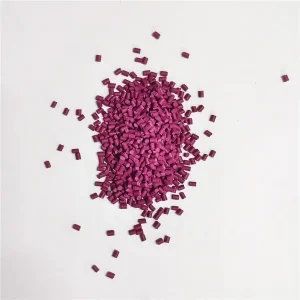
PE Rose Red Masterbatch
Cheap High Concentration PE Rose Red Masterbatch Anti-fading Heat Resistant
View Product Details
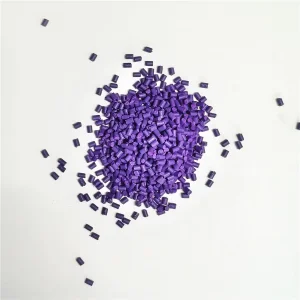
PE Purple Masterbatch
Cheap High Concentration PE Purple Masterbatch Anti-fading Stable Color
View Product Details
PE Silver Masterbatch
Custom High Concentration PE Silver Masterbatch Anti-fading Weather Resistance
View Product Details
PE Black Masterbatch
China High Concentration PE Black Masterbatch Eco-friendly 260°C Heat Resistant
View Product Details
PE Grey Masterbatch
China High Concentration PE Grey Masterbatch Non-migration Heat Resistant
View Product Details
PE White Masterbatch
Custom High Concentration PE White Masterbatch Non-toxic Weather Resistant
View Product Details
PE Green Masterbatch
Custom High Concentration PE Green Masterbatch Anti-fading Heat Resistant
View Product Details
PE Red Masterbatch
High-Quality High Concentration PE Red Masterbatch Bright Color 260°C Heat Resistant
View Product Details

Technical & Sourcing Frequently Asked Questions (FAQ)

In-depth engineering answers compiled by Jiazhou’s senior polymer chemists and global technical support direct team.

What factors cause "lacing" or pinholes in high-temperature extrusion coating and blown film?
Lacing and pinholes primarily result from moisture absorbed by titanium dioxide particles or volatile low-molecular-weight additives evaporating when processing temperatures exceed 280°C. Changzhou Jiazhou solves this issue by applying hydrophobic organic surface coatings to Rutile TiO₂ and conducting multi-stage vacuum degassing during twin-screw extrusion compounding, guaranteeing moisture levels below 0.05%.
How does TiO₂ concentration impact the Melt Flow Index (MFI) of the white masterbatch?
As inorganic TiO₂ loading increases (e.g., from 50% to 75%), the melt viscosity increases, which lowers the overall MFI. To preserve proper dispersion and avoid high torque load on customer extruders, Jiazhou carefully balances the carrier resin melt viscosity using specialized PE waxes and processing aids. This maintains optimal fluidity without inducing shear degradation.
Why is Rutile Titanium Dioxide preferred over Anatase for agricultural films?
Rutile TiO₂ possesses a denser crystal structure with a higher refractive index (2.73 vs 2.55) and substantially lower photochemical reactivity under sunlight UV rays. Anatase acts as a photo-catalyst under outdoor exposure, causing rapid breakdown of the polyolefin matrix (chalking, cracking, and loss of tensile strength). Jiazhou exclusively utilizes silica/alumina surface-passivated Rutile TiO₂ for outdoor agricultural grades.
What is the standard recommended Let-Down Ratio (LDR) for Jiazhou White Masterbatch?
Depending on target opacity and film thickness, recommended LDR ranges between 1% and 4%. For standard injection molding, 1%–2% is typically sufficient. For ultra-thin blown films (<15 microns) or high-barrier milk pouches requiring complete light-blocking efficiency, an LDR of 3%–5% using our high-concentration 70% or 75% Rutile series is recommended.
How does Jiazhou guarantee lot-to-lot color consistency and opacity?
Every production batch undergoes continuous inline X-ray Fluorescence (XRF) testing to verify exact TiO₂ concentration. Final pellet samples are injection-molded and blown into test films, followed by colorimetric analysis via spectrophotometers to ensure color deviation stays strictly within $\Delta E \le 0.5$ compared to standard master samples.
Are Jiazhou white masterbatches suitable for food contact applications?
Yes. Our food-grade white PE masterbatches comply fully with FDA 21 CFR 177.1520 and EU Regulation No 10/2011. Formulations are certified free of heavy metals, toxic plasticizers, and aromatic amines, making them safe for food containers, beverage bottle caps, and dairy film packaging.
Can white PE masterbatch be processed with Polypropylene (PP) resins?
While PE masterbatch is generally compatible with PP at low addition rates (1%–2%), optimal performance in PP injection molding or fiber extrusion requires matching carrier resin chemistry. Jiazhou offers dedicated PP-carrier white masterbatches or optimized universal polyolefin carriers to eliminate interfacial haze and mechanical weakness.
What is Filter Pressure Value (FPV) and why is it critical for film extruders?
FPV measures the buildup of melt pressure behind a standard fine filter mesh (EN 13900-5 test). High FPV indicates pigment agglomeration, which leads to frequent filter screen changes, film breakage, and surface defects. Jiazhou white masterbatches maintain an FPV under 0.5 bar/g, ensuring continuous, high-efficiency film extrusion.
What are the recommended storage conditions to prevent masterbatch deterioration?
Masterbatch should be stored in original sealed moisture-proof packaging in a cool, dry, well-ventilated warehouse away from direct sunlight and heat sources. When stored under proper ambient conditions (<35°C), shelf life exceeds 24 months without loss of pigment quality or carrier flowability.
How can global B2B buyers request custom color matching and free samples from Jiazhou?
Global buyers can submit technical specifications (target base polymer, MFI, wall thickness, process method, color target, or standard sample) directly to Changzhou Jiazhou Plastic Products Co., Ltd. Our engineering lab provides rapid color matching within 48 hours and dispatches test samples globally with full technical datasheets (TDS) and safety datasheets (MSDS).