Direct factory-grade masterbatch engineered with extreme thermal stability up to 260°C and optimal pigment dispersion for blown film and injection molding.
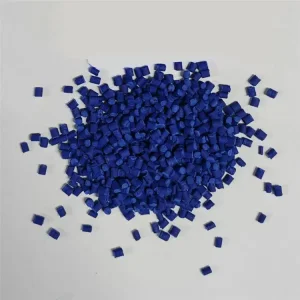
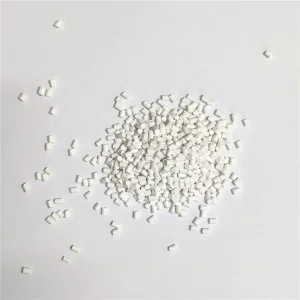
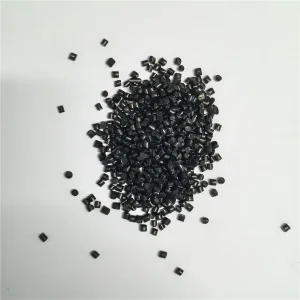
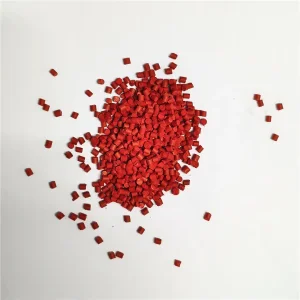
Kuwait's industrial economy is undergoing a historic structural shift under the banner of Kuwait Vision 2035 ("New Kuwait"). Historically dominated by upstream oil extraction, the state is aggressively expanding its downstream petrochemical infrastructure, centered around mega-complexes such as the Al-Zour Refinery and integrated petrochemical projects. This transition has unlocked immense production capacities for virgin resins, specifically High-Density Polyethylene (HDPE), Linear Low-Density Polyethylene (LLDPE), and Polypropylene (PP). Consequently, Kuwait’s domestic plastic conversion industry—spanning agricultural packaging, industrial container manufacturing, civil infrastructure piping, and construction consumables—is scaling rapidly.
However, local plastic converters face a dual commercial challenge: balancing the demand for cost-effective sourcing ("Cheap Products Suppliers") with the mandatory requirement for high-specification additive materials capable of surviving Kuwait's hyper-arid climate. Cheap procurement in polymer processing cannot mean compromising on active pigment loading, thermal stability, or carrier resin purity. When evaluating suppliers serving the Kuwait market, local manufacturers must navigate complex supply chain dynamics, import tariffs, freight logistics, and stringent quality benchmarks enforced by regional standards organizations like the Public Authority for Industry (PAI) and GCC Standardization Organization (GSO).
Kuwait presents one of the most chemically aggressive outdoor environments in the world for synthetic polymers. Plastic products deployed in Kuwait—ranging from agricultural mulching films in Abdali to heavy-duty HDPE water tanks in Al-Ahmadi—are subjected to three primary degradation forces simultaneously:
Ultraviolet radiation (UVA 315-400nm and UVB 280-315nm) photolytically cleaves carbon-carbon bonds in polyolefin backbones, initiating photo-oxidation, embrittlement, and surface chalking within weeks if unstabilized.
Peak summer temperatures accelerate thermal degradation rates. Masterbatch formulations supplied to Kuwait must incorporate thermal-oxidative stabilization packages to prevent melt-flow variance during extrusion.
Particulate impact during dust storms degrades surface gloss. Concurrently, airborne saline particulates near coastal industrial zones like Shuaiba necessitate non-reactive, anti-migration organic and inorganic pigments.
To combat these factors, Changzhou Jiazhou Plastic Products Co., Ltd. custom engineers its PE color masterbatches and filler masterbatches with optimized carrier resins (matching the exact Melt Flow Index / MFI of the client's substrate) and high-load organic/inorganic pigments. For instance, our High-Concentration White Masterbatch utilizes rutile Titanium Dioxide ($TiO_2$) treated with silica/alumina surface coatings, offering superior opacity, weather resistance, and thermal dispersion up to 260°C without risk of die build-up or pinhole formation in blown films.
When Kuwaiti procurement managers search for "cheap products suppliers," evaluating only the initial metric cost per kilogram ($/kg) often leads to false economy. In polyolefin compounding, low-cost masterbatch formulated with low-purity calcium carbonate ($CaCO_3$), recycled off-spec carrier resins, or unrefined carbon black leads to catastrophic operational costs downstream:
| Performance Parameter | Sub-Standard "Cheap" Suppliers | Jiazhou Optimized B2B Masterbatch | Impact on Kuwait Processors |
|---|---|---|---|
| Pigment Concentration | Low (15% - 25% Active Loading) | Ultra-High (40% - 75% Active Loading) | Reduces Let-Down Ratio (LDR) from 4% to 1%, cutting freight & storage cost by 60%. |
| Dispersion Purity | Agglomerated Particles (>25 µm) | Filtered Twin-Screw Micro-Dispersion (<5 µm) | Prevents filter-net clogging, bubble breaking in blown films, and surface streaking. |
| Thermal Stability | Degrades at < 200°C (Causes odor/gas) | Guaranteed Stable up to 260°C - 300°C | Eliminates polymer degradation during high-speed hot runner injection molding. |
| Carrier Compatibility | Generic Low-Grade Regrind Carrier | 100% Virgin LLDPE / HDPE / PP Matched | Maintains mechanical tensile strength, ESCR, and impact resistance of final product. |
By utilizing advanced twin-screw extruders and online melt pressure testing systems, Jiazhou ensures every batch of color and filler masterbatch delivers consistent dispersion. This allows Kuwaiti factories to achieve maximum color strength at lower Let-Down Ratios (LDR), effectively driving down the real cost per finished unit while enhancing structural integrity.
The technological evolution of masterbatch manufacturing relies heavily on surface chemistry and melt compounding physics. Jiazhou's research laboratory continuously advances carrier-to-pigment interfacial bonding to serve high-end industrial applications across the Middle East. Key technological pillars include:
Utilizing chemical dispersants (polyethylene waxes, zinc stearate, and coupling agents) to break pigment agglomerates down to primary particle sizes (< 100nm), maximizing tinctorial yield and preventing die lip buildup.
Incorporating polymeric HALS combined with UV absorbers (Benzotriazoles) directly into color masterbatches, neutralizing free radicals generated during outdoor exposure in desert regions.
Utilizing sub-micron ultra-fine calcium carbonate treated with stearic acid coating. Boosts flexural modulus and thermal conductivity in polypropylene extrusion while lowering resin consumption costs.
To address specific manufacturing sectors within Kuwait’s main industrial zones—such as Sabhan, Shuaiba, and Shuwaikh—Jiazhou provides engineered compound formulations tailored to end-use performance requirements:
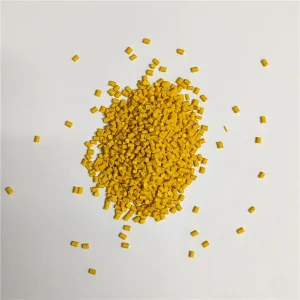
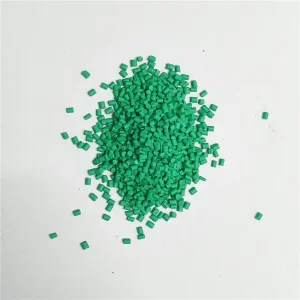
Greenhouses in Kuwait’s agricultural centers (Wafra and Abdali) require high clarity, light diffusion, and extreme anti-dripping/anti-fogging properties. Our light-stable Yellow, Green, and Clear masterbatches contain UV-stabilizer packages tested for up to 7,000 continuous hours of intense radiation exposure (QUV accelerated weathering test).
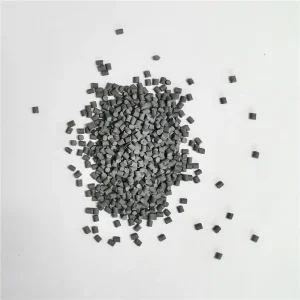
Kuwait’s vast oil and chemical export sector demands heavy-duty FFS (Form-Fill-Seal) bags, woven sacks, and stretch hood films. Jiazhou’s High-Concentration Black Masterbatch (containing 40%-50% P-type carbon black) provides unmatched UV protection, high opacity, and tear resistance under rough handling.
Infrastructure development in Kuwait requires municipal water mains and electrical conduit pipes rated for PE100 standards. Our PE Grey and Black masterbatches comply with stringent ISO 4427 / EN 12201 standards, ensuring uniform carbon black dispersion (< 2.5 grade rating) and long-term Environmental Stress Crack Resistance (ESCR).
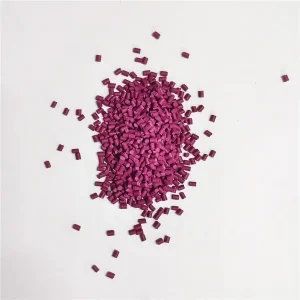
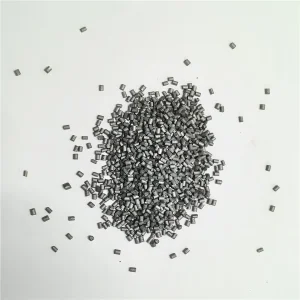
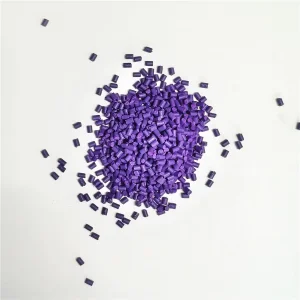
Explore our full line of specialized color masterbatches, weather-resistant pigments, and anti-fading formulations ready for shipment to Kuwait ports (Shuwaikh & Shuaiba).
In-depth technical answers addressing procurement, let-down ratios, thermal testing, and shipping logistics to Kuwait ports.
For high-concentration masterbatches supplied by Jiazhou (such as our White and Black PE masterbatches), the standard recommended Let-Down Ratio (LDR) ranges between 1% and 3% depending on film thickness. For micro-thin agricultural films (15–30 microns), an LDR of 2%–3% provides complete opacity and UV coverage. For thicker industrial liner bags (50+ microns), an LDR of 1%–1.5% is typically sufficient, significantly reducing raw material expenditure.
Our masterbatches utilize high-purity virgin LLDPE/HDPE carrier resins blended with heat-stable inorganic and organic pigments rated at DIN EN 12877 Class 7-8. During compound formulation, antioxidant packages (primary hindered phenols and secondary phosphites) are incorporated to inhibit thermal-oxidative degradation of the polymer matrix during long residence times inside high-temperature extruders.
If the masterbatch carrier resin has a mismatched Melt Flow Index (MFI) or chemical structure relative to the base polymer (e.g., using a high-density carrier in a low-density blown film grade), phase separation occurs. This manifests as color streaks, poor mechanical tensile strength, and reduced Environmental Stress Crack Resistance (ESCR). Jiazhou custom-matches the carrier MFI (e.g., MFI 2, 20, or 40 g/10min) to seamlessly integrate with your base resin.
All masterbatch formulations produced by Changzhou Jiazhou Plastic Products Co., Ltd. strictly comply with international regulatory benchmarks including EU REACH, RoHS 2.0, and FDA 21 CFR 177.1520 for food-contact plastics. This ensures that food containers, water bottles, and dairy packaging produced in Kuwait pass local PAI (Public Authority for Industry) compliance inspections.
Orders are dispatched directly from our 6,000m² factory in Changzhou, China. Standard production lead time is 10 to 15 days. Ocean freight shipments depart via Shanghai Port directly to Port of Shuwaikh or Port of Shuaiba, Kuwait, with a typical transit window of 18 to 24 days. Full Container Load (FCL) and Less than Container Load (LCL) options are both supported.
Contact our technical sales team for custom color matching, free sample requests, technical data sheets (TDS), and direct factory price quotations.
Send Inquiry Now