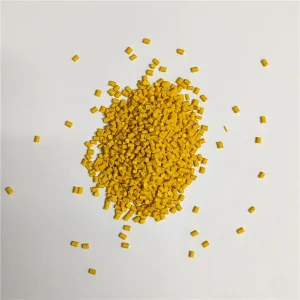
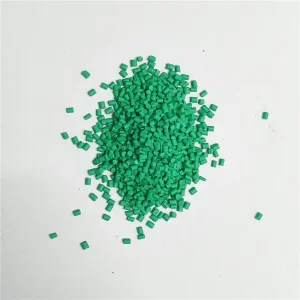
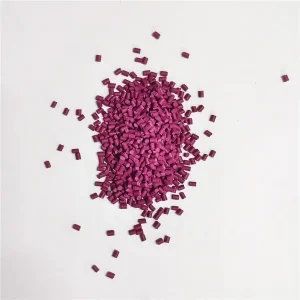
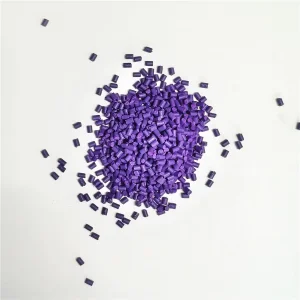
Engineered specifically to withstand the extreme ambient thermal processing conditions (up to 260°C–300°C) and solar radiation indices of the Arabian Peninsula, our core PE masterbatches serve as the foundational coloring benchmark for converters and plastic processing factories across Riyadh's 1st, 2nd, and 3rd Industrial Cities (MODON).
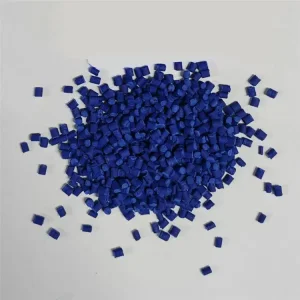
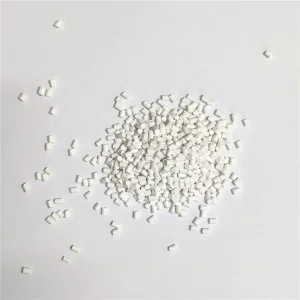
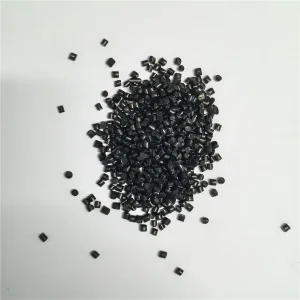
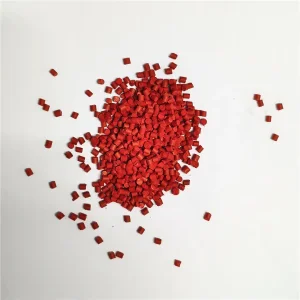
The Kingdom of Saudi Arabia, driven by the ambitious objectives of Saudi Vision 2030 and the National Industrial Development and Logistics Program (NIDLP), is undergoing an unprecedented structural expansion in non-oil manufacturing. At the absolute epicenter of this industrial evolution is the Greater Riyadh Metropolitan Area. Housing key industrial zones managed by the Saudi Authority for Industrial Cities and Technology Zones (MODON)—including Riyadh 1st, 2nd, and 3rd Industrial Cities—the region has developed into a high-capacity hub for plastic conversion, blow molding, film extrusion, and injection molding operations.
Saudi Arabia’s upstream petrochemical prowess, anchored by giants such as SABIC (Saudi Basic Industries Corporation), Tasnee, and Sipchem, supplies local convertors with massive quantities of base polyolefins—predominantly Polyethylene (LLDPE, LDPE, HDPE) and Polypropylene (PP). However, transforming raw, uncolored polyolefin resins into high-value engineered end products (such as agricultural drip irrigation lines, construction geomembranes, food packaging, and industrial chemical containers) requires advanced color compounding expertise and precision additive masterbatches.
Local Riyadh plastics factories face intensive competition to deliver products that meet strict technical benchmarks set by Saudi Aramco, SABIC, SASO (Saudi Standards, Metrology and Quality Organization), and international municipalities. To maintain profitability, factories in Riyadh demand ultra-high concentration color and filler masterbatches that optimize cycle times, prevent extruder screw wear, and provide complete color uniformity without streak defects even at ultra-low let-down ratios (LDR of 1% to 3%).
Masterbatch formulation for Riyadh factories requires deep chemical compatibility with regionally dominant virgin polymer grades such as SABIC LLDPE 118N, SABIC HDPE 5000H, and Tasnee PP grades. Masterbatch carrier resins must match the Melt Flow Index (MFI) and density profile of these base resins to prevent phase separation, die build-up, or mechanical degradation during high-speed extrusion processes.
The climatic environment of the central Najd region, where Riyadh is located, presents extreme physical challenges to synthetic polymers. Ambient summer temperatures frequently exceed 45°C–50°C, while direct sunlight generates surface temperatures up to 80°C on exposed plastic structures. Combined with intense ultraviolet (UV) radiation (reaching UV index levels of 12+), un-stabilized plastic products degrade rapidly via photo-oxidative chain scission, resulting in color fading, embrittlement, structural cracking, and loss of tensile strength.
| Riyadh Industrial Application | Predominant Base Resin | Environmental Exposure | Masterbatch Engineering Requirement |
|---|---|---|---|
| Agricultural Irrigation Drip Tape & Tubing (Al-Kharj / Riyadh Oasis) | LLDPE / HDPE blend | Direct UV exposure, high thermal cycling, contact with fertilizers | P-type Carbon Black (20–25 nm particle size) PE masterbatch for total opacity & UV stabilization. |
| Civil Construction Geomembranes & Tarpaulins (Mega Projects: NEOM, Qiddiya) | HDPE / LLDPE | High soil pressure, continuous desert UV radiation, thermal expansion | Anti-fading, high-dispersion weather-resistant Black/Grey masterbatch with HALS co-additives. |
| Rigid Chemical & Lubricant Containers (MODON 2nd/3rd Industrial Cities) | HDPE (Blow Molding) | ESCR (Environmental Stress Cracking) risk, chemical attack, stacking weight | High-concentration pigment loading using non-migrating, heat-stabilized color compounds. |
| Food Grade Flexible Packaging & Bottles (Panda, Almarai supply chains) | LDPE / LLDPE / PP | Cold storage, transport friction, food contact safety regulatory checks | FDA & SASO compliant non-toxic Titanium Dioxide White masterbatch with zero taste/odor migration. |
To combat photo-oxidation under the Saudi sun, modern custom masterbatch production utilizes optimized synergistic additive packages. These combine Hindered Amine Light Stabilizers (HALS), UV absorbers (Benzotriazoles), and high-opacity inorganic pigments (such as rutile titanium dioxide and micronized carbon black) to coat the polymer matrix, absorbing and scattering radiation before degradation can occur.
The production of world-class color masterbatches involves sophisticated solid-state dispersion physics. Pigment agglomerates must be mechanically broken down to their primary particle sizes during twin-screw extrusion compounding. Improperly dispersed pigments lead to filter pack clogging in blown film plants, pinholes in thin agricultural films, and visual streaks in high-finish injection-molded parts.
Our advanced manufacturing lines utilize high L/D (Length-to-Diameter ratio of 40:1 to 48:1) co-rotating twin-screw extruders equipped with specialized kneading blocks. This generates intense shear stress, ensuring that organic pigments (Phthalocyanines, Quinacridones) and inorganic metal oxides achieve nanometer-scale wet dispersion within the molten Polyethylene (PE) carrier resin matrix.
A critical failure mode in plastic coloring is carrier mismatch. If the carrier resin has an excessively high Melt Flow Index (MFI) compared to the base resin, phase separation occurs. Conversely, an MFI that is too low causes poor mixing. Formulations deployed to factories in Riyadh are systematically tuned using customized virgin PE carriers matching the exact MFI profile (typically 4 g/10min to 20 g/10min under 190°C/2.16kg test conditions) of local SABIC resins.
Our R&D lab provides 48-hour color matching services using Datacolor spectrophotometer systems. Send us your target sample or RAL/Pantone color code for immediate formulation development.
Request Custom Color FormulationWhile local compounders in Riyadh offer proximity, plastic convertors across Saudi Arabia frequently encounter limitations regarding specialized color shade availability, minimum order quantity (MOQ) restrictions, high domestic unit compounding fees, and raw material pigment supply disruptions. This is where China’s high-efficiency masterbatch supply chain delivers immense competitive advantage.
By partnering with large-scale, ISO-certified masterbatch manufacturers in China, Riyadh factories achieve a dual-sourcing model that secures volume pricing, elite quality control, and uninterrupted access to thousands of specialty pigment grades. Below is a comparative operational analysis for purchasing decision-makers in Saudi Arabia:
| Evaluation Parameter | Local Compounding Factories in Riyadh | China Direct Specialized Export Factory | Strategic Synergy Benefit for KSA Buyers |
|---|---|---|---|
| Pigment Sourcing Range | Standard color shade portfolio; limited specialty organic choices | Access to world-class chemical pigment supply chain; infinite shade range | Exact custom shade reproduction (Metallic, Pearl, Fluorescent, High Heat Red/Blue) |
| Compounding Economy of Scale | Higher local processing overheads & power tariffs for specialty runs | Massive automated production volume; low unit conversion costs | 15% to 30% lower Total Cost of Ownership (TCO) even after sea freight |
| Quality Control Infrastructure | Variable lab equipment across medium-sized local facilities | Dedicated ISO 9001/14001, RoHS, REACH testing, TGA & MFI certs per batch | Zero batch-to-batch color variance (Delta E < 0.5 verified) |
| Logistics & Delivery Flexibility | Immediate truck transport (24-48 hours) for standard colors | 15-day production lead time; direct shipments to Dammam / Jeddah / Riyadh Dry Port | Maintain 30-day buffer stock locally while saving significantly on long-term raw material costs |
Exporters of masterbatch products into the Kingdom of Saudi Arabia must strictly comply with Saudi Standards, Metrology and Quality Organization (SASO) technical regulations. Plastic end-use products sold within KSA are subject to SABER platform registration, conformity certification (CoC), and strict chemical safety audits.
Masterbatches destined for food packaging, beverage caps, milk containers, or food storage crates in Saudi Arabia undergo stringent overall migration testing (OMT). Formulations are guaranteed free of heavy metals (Lead, Cadmium, Hexavalent Chromium, Mercury), primary aromatic amines, and phthalate plasticizers.
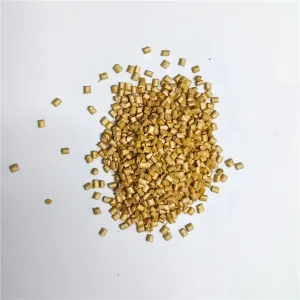
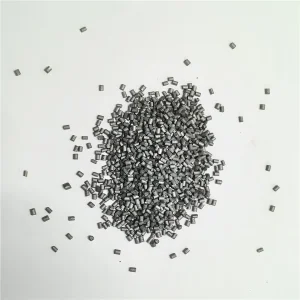
All custom color formulations (Yellow, Green, Red, Gold, Silver) utilize non-toxic, eco-friendly organic pigments and inorganic oxides. Full compliance documentation—including SDS (Safety Data Sheets), RoHS lab certificates, and REACH SVHC declarations—is provided to streamline customs clearance at King Abdulaziz Port in Dammam and Riyadh Dry Port.
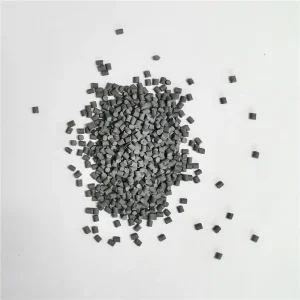
Explore our complete range of specialized pigment masterbatches engineered for injection molding, blown film extrusion, pipe manufacturing, and technical plastic processing across Saudi Arabia.
Below are direct expert responses to common technical, logistics, and procurement questions raised by plant directors, quality engineers, and purchasing officers in Saudi Arabia.
Connect directly with our senior application engineers and export specialists to discuss custom masterbatch compounding, bulk pricing, and technical support for your factory in Riyadh.
Send Inquiry Now