Engineered for high-throughput blow molding, film extrusion, and heavy-duty industrial pipe manufacturing across New Zealand.
New Zealand’s industrial landscape presents a unique, highly specialized polymer conversion market valued at over NZD $2.6 billion annually. Driven largely by primary sector exports—specifically dairy processing, horticulture, viticulture, meat packaging, and forestry—the demand for advanced polymer colorants, functional additives, and filler masterbatches has intensified. Manufacturers operating in hubs such as Auckland, Waikato, Canterbury, and Bay of Plenty face dual pressures: maintaining peak structural and aesthetic integrity under extreme environmental stress while adhering to rigorous national circular economy mandates.
Industrial buyers across the North and South Islands require polymer masterbatch suppliers who possess deep domain knowledge of regional standards. From food-contact compliant packaging for international dairy exports (governed by the Ministry for Primary Industries, MPI) to heavy-duty HDPE infrastructure piping requiring 50+ years of operational durability under AS/NZS 4020 specifications, polymer color choice is far more than a cosmetic design parameter—it is a core structural variable.
Achieving uniform color distribution and long-term functional performance in plastic extrusion and injection molding requires mastering pigment micro-dispersion within polyolefin matrices. For New Zealand masterbatch buyers, masterbatch formulations must address three core physics challenges: pigment agglomeration mitigation, thermal degradation during high-speed processing, and carrier resin melt flow index (MFI) compatibility.
Poorly dispersed pigments create microscopic stress concentration points, compromising the tensile strength and impact resistance of finished blown films and molded crates. Advanced compounding utilizes high-shear twin-screw extrusion technology, breaking pigment agglomerates down to sub-micron particle sizes (<0.5 µm). This process coats pigment particles in high-purity Polyethylene (PE) or Polypropylene (PP) carrier resins, eliminating melt fracture and die lip buildup during high-speed film extrusion.
Due to the ozone depletion phenomenon in Southern Latitudes, New Zealand experiences intense solar radiation. Inorganic pigments (such as Rutile Titanium Dioxide and High-Purity Carbon Black) are formulated with synergistic Hindered Amine Light Stabilizers (HALS) and UV absorbers. This multi-layered additive system neutralizes free radicals produced by UV radiation, preventing polymer chain scission, chalking, surface cracking, and color fading over extended outdoor exposure.
| Masterbatch Category | Primary Carrier Matrix | Pigment Loading Concentration | Thermal Resistance Threshold | Key New Zealand Application |
|---|---|---|---|---|
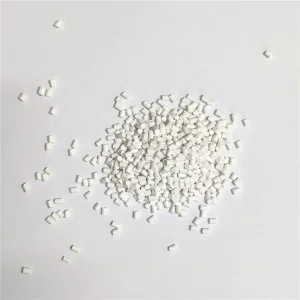
| PE White Masterbatch | LLDPE / LDPE (MFI 20-30) | 50% - 70% Rutile TiO₂ | 280°C - 300°C | Milk packaging films, Kiwifruit trays, Medical containers |
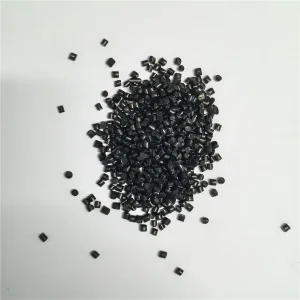
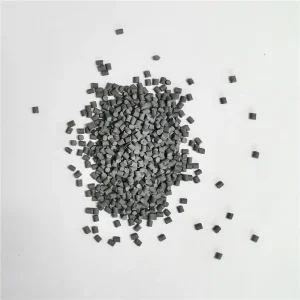
| PE Black Masterbatch | HDPE / LLDPE (MFI 5-15) | 30% - 50% Carbon Black | 260°C - 280°C | Agricultural irrigation pipes, Silage film, Geotextiles |
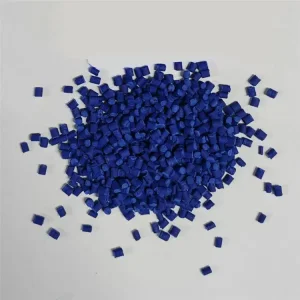
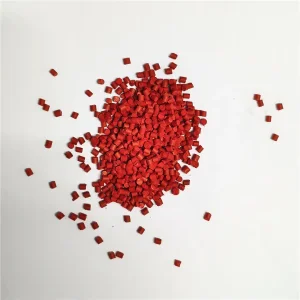
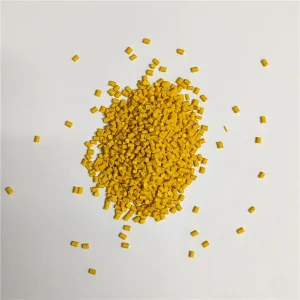
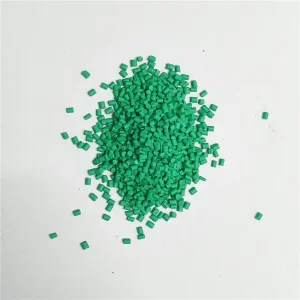
| Color Masterbatch Series | Universal PE / PP Co-polymer | 25% - 45% Organic/Inorganic | 240°C - 260°C | Dairy crates, Wheelie bins, FMCG caps & closures |
| CaCO₃ Filler Masterbatch | Linear Low-Density PE | 75% - 85% Fine CaCO₃ | 220°C - 260°C | Cost optimization for carry bags, industrial sacks & sheets |
Silage wrap, bale netting, greenhouse covers, and drip irrigation lines demand strict weatherproofing. Our PE Black and White masterbatches incorporate customized UV-stabilizer packages, ensuring structural integrity during multi-season outdoor farm deployment across Canterbury and Southland regions.
New Zealand’s dairy sector is globally renowned for purity. Our high-concentration white and custom-color masterbatches use non-migratory, heavy-metal-free pigments compliant with international food-contact standards, preserving product freshness without organoleptic contamination.
HDPE water mains, electrical conduits, and drainage pipes must comply with long-term mechanical stress tests. Our carbon black masterbatches ensure optimal light-blocking performance, preventing algae growth and environmental stress cracking in municipal pipeline systems.
Our technical lab offers spectrophotometer-based L*a*b* matching within 48 hours.
As a direct-from-factory manufacturing leader, Changzhou Jiazhou Plastic Products Co., Ltd. (operating a 6,000m² modern production base with 16 years of specialized masterbatch manufacturing expertise) bridges the gap between high-volume compounding efficiency and local New Zealand procurement needs.
Utilizing gravimetric loss-in-weight dosing systems and continuous twin-screw co-rotating extruders, our facility guarantees batch-to-batch consistency. Every batch undergoes strict quality testing for Melt Flow Index (MFI), moisture content (Karl Fischer titration), and colorimetric accuracy (CIELAB system).
Navigating South Pacific logistics requires flexible, highly responsive supply chains. We maintain established shipping corridors connecting Ningbo and Shanghai ports directly to Auckland, Tauranga, and Lyttelton. With rapid 15-day manufacturing lead times, local NZ buyers reduce warehouse holding costs while maintaining stock safety.
New Zealand operates strict environmental protection policies under the Environmental Protection Authority (EPA) and national waste minimization frameworks such as the ANZPAC Plastics Pact. Masterbatch solutions imported into the country must comply with international chemical safety registries and facilitate circular economy objectives.
All color formulations are certified free of heavy metals (Lead, Cadmium, Hexavalent Chromium, Mercury) and hazardous Phthalates, meeting stringent European and Oceanic environmental regulations.
Formulations targeting food packaging, beverage caps, and dairy processing containers utilize ingredients fully approved under US FDA 21 CFR and EU No 10/2011 plastics regulations.
Our carrier resins are engineered to blend seamlessly into mechanical recycling streams (HDPE #2, LDPE #4, PP #5), supporting New Zealand’s transition toward sustainable, closed-loop plastic utilization.
When procurement managers in New Zealand evaluate masterbatch manufacturers, purchasing price per kilogram is only one vector of the equation. Low-cost masterbatches formulated with inferior filler grades or poorly dispersed pigments frequently cause machine downtime, filter pack clogging, high scrap rates, and product failures in the field.
To maximize operational efficiency, technical procurement teams should audit masterbatch suppliers against five critical operational criteria:
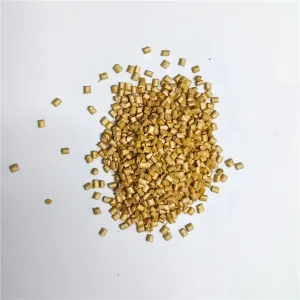
Explore our comprehensive spectrum of PE-carrier colorants, specialty metallic shades, and thermal-resistant formulations.
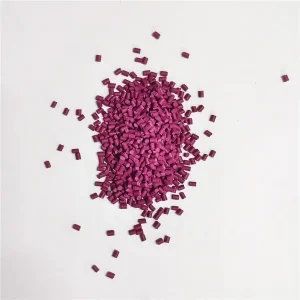
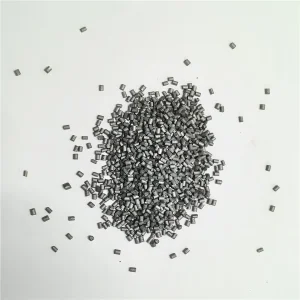
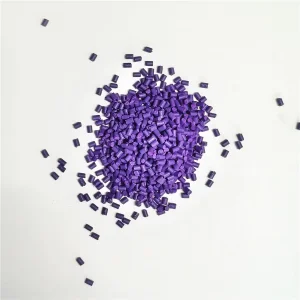
Our standard manufacturing lead time is 10 to 15 days upon order confirmation. Transit times via direct sea freight to main New Zealand ports (Auckland, Tauranga, Lyttelton) usually take between 14 to 20 days. We also offer buffer stock programs for high-volume repeat orders to guarantee uninterrupted plant operations.
We formulate specialized outdoor-grade masterbatches using light-fast inorganic pigments (Rutile TiO₂ and Carbon Black) combined with synergistic Hindered Amine Light Stabilizers (HALS). This additive package prevents photo-oxidative degradation, maintaining color vibrancy and mechanical tensile strength for years under Southern Hemisphere solar radiation.
Yes. Our food-grade masterbatch series is strictly formulated with non-heavy-metal pigments and food-approved polyolefin carrier resins. They comply fully with US FDA 21 CFR, EU 10/2011, and New Zealand MPI recommendations, ensuring zero pigment migration or organoleptic alteration in milk, cheese, and food containers.
Absolutely. Our R&D laboratory features advanced spectrophotometers and color-matching software. Customers can provide RAL/Pantone color codes or physical plastic target samples. We generate precise L*a*b* matches and dispatch free trial samples for your technical evaluation within 48-72 hours.
Our micro-fine calcium carbonate (CaCO₃) filler masterbatch replaces a portion of expensive virgin PE/PP base resin (addition rates typically between 10% to 30%). Thanks to sub-micron particle surface treatment, it enhances thermal conductivity (reducing cooling cycle times), increases stiffness, and significantly reduces raw material cost per unit without sacrificing film tear resistance.
Our standard MOQ is 1,000 kg per formulation, though initial trial batches can be arranged for custom color developments. All products are packaged in 25kg moisture-proof, heavy-duty PE woven or aluminum foil bags, stacked on export-standard pallet arrays to withstand trans-oceanic shipping.