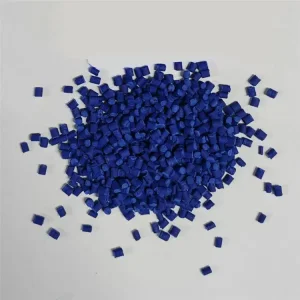
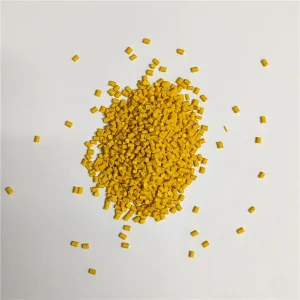
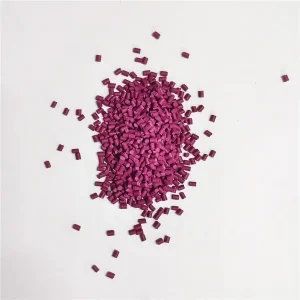
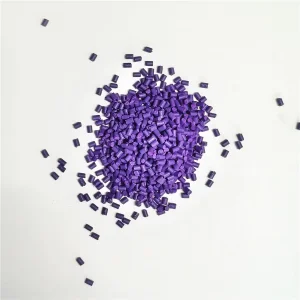
High-concentration color and additive masterbatches tailored for immediate deployment across Gyeonggi-do and Seoul Metropolitan manufacturing facilities.
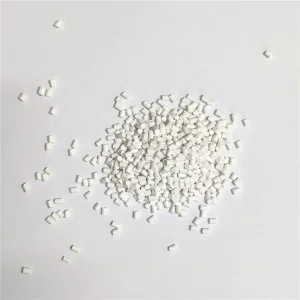
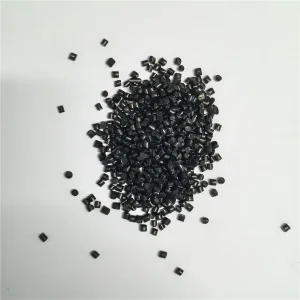
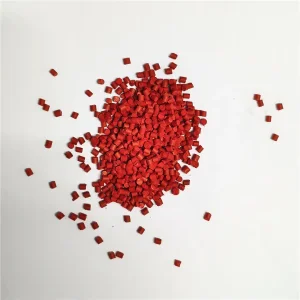
The Seoul Capital Area (comprising Seoul Special City, Incheon Metropolitan City, and Gyeonggi Province) represents one of the world's most sophisticated and technologically integrated industrial corridors. Housing over 25 million people and driving South Korea's high-tech manufacturing sector, this metropolitan ecosystem requires advanced polymer inputs that adhere to zero-defect standards, stringent environmental directives (K-REACH), and micro-precision thermal stability.
As tier-1 suppliers and direct factories servicing the Korean peninsula, our masterbatch formulations are precision-engineered to meet the strict processing windows of high-speed injection molding, ultra-thin blown film extrusion, and multi-layer structural sheet extrusion. By replacing generic colorants with carrier-matched, high-pigment-density PE/PP masterbatches, enterprise buyers across Seoul, Suwon, Ansan, and Incheon achieve up to 35% reduction in total dosage while enhancing structural melt strength and spectral consistency.
Understanding the intent of procurement officers, polymer engineers, and factory managers within the Seoul Metropolitan Region requires an in-depth mapping of localized industrial verticals. The demand profile in Seoul is distinct from traditional commodity plastic markets; it demands functionalized additives, pristine optical purity, and non-migratory organic pigments.
Seoul is the nerve center for global tech giants (including Samsung Electronics and SK Hynix). The local packaging supply chain in Yongin and Pyeongtaek requires anti-static black and high-purity blue PE masterbatches with controlled surface resistivity ($10^6 - 10^9 \, \Omega/\text{sq}$) to prevent electrostatic discharge during wafer and component transit.
With Hyundai Motors' R&D centers located in Namyang and extensive auto-part manufacturing in Hwaseong, the regional demand calls for UV-stabilized, high-weatherability masterbatches. Silver, metallic grey, and deep black compounds must withstand intense xenon arc light exposure without color fading or polymer degradation.
South Korea’s world-renowned cosmetics sector demands flawless visual appeal. Masterbatches supplied to Seoul cosmetic container molders feature microscopic dispersion of pearls, anti-migration pigments, and non-yellowing white TiO2 bases engineered for complex SAN, PET, and PE blow-molded bottles.
Over 60% of South Korea’s plastic processing and masterbatch compounding infrastructure is concentrated within Gyeonggi Province (surrounding Seoul). Procurement strategies must account for rapid just-in-time (JIT) dispatching, short container transit times from major eastern ports, and consistent batch-to-batch color repeatability to avoid costly line shutdowns.
Achieving superior information gain requires examining the molecular chemistry and physical properties of polymer masterbatches. Our manufacturing lines utilize triple-screw and high-torque twin-screw continuous extruders equipped with underwater pelletizing systems. This ensures uniform particle geometry, zero dust contamination, and optimal carrier resin compatibility.
| Property Parameter | Test Standard / Method | Specification Range | Industrial Value Proposition |
|---|---|---|---|
| Pigment Concentration | ISO 3451-1 / TGA Analysis | 30% - 75% Active Loading | Lower let-down ratios (LDR), reducing shipping volume and storage footprint. |
| Heat Resistance | DIN EN 12877-2 | 220°C - 260°C (Dwell Time 5 min) | Prevents thermal color degradation during high-speed injection molding. |
| Color Difference ($\Delta E*$) | CIE L*a*b* (Spectrophotometer) | $\Delta E \le 0.50$ vs. Target Master | Guarantees seamless color matching across multiple production lots. |
| Melt Flow Index (MFI) | ASTM D1238 (190°C / 2.16 kg) | 12 - 45 g / 10 min (Tailored) | Matches host resin viscosity to prevent filter clogging and screw slip. |
| Light Fastness & Weatherability | ISO 105-B02 (Blue Wool Scale) | Grade 7 to 8 (Maximum Rating) | Prevents yellowing, chalking, and mechanical embrittlement outdoors. |
| Heavy Metal & SVHC Compliance | ICP-OES / GC-MS Screening | RoHS 3.0 / REACH SVHC Free | Full compliance with South Korean environmental laws (K-REACH). |
South Korea’s commitment to achieving carbon neutrality by 2050 has accelerated green manufacturing mandates across the Seoul metropolitan industrial zone. Polymer converters are rapidly transitioning toward Post-Consumer Recycled (PCR) resin blends and bio-based carriers. Our R&D center has developed next-generation masterbatch solutions designed specifically to bridge performance gaps in recycled materials.
Recycled PE and PP often exhibit dark discoloration and residual un-saturated volatile organic compounds. Our specialized white, grey, and charcoal masterbatches mask background contaminants while odor-scavenging additives neutralize volatile compounds, enabling high-grade circular reuse in Seoul.
Standard carbon black absorbs Near-Infrared (NIR) radiation, making black plastics invisible to automated recycling sorters in Korean waste facilities. Our NIR-reflecting black masterbatches allow automatic optical sorting, helping Seoul plastic manufacturers achieve 100% recyclability compliance.
To offset surging virgin resin costs, our ultra-fine calcium carbonate (CaCO3) filler masterbatches utilize sub-micron surface-treated particles. They can be added at levels up to 40% in PE blown film and injection molding without sacrificing tensile strength or clarity.
Navigating chemical import regulations in South Korea demands strict adherence to domestic environmental policies. Importing raw polymer materials into Incheon Port or Busan Port requires comprehensive documentation and certified testing protocols.
Every shipment delivered to our clients in Seoul and Gyeonggi-do is backed by complete compliance dossiers, including:
Explore our full range of color masterbatch formulations engineered for blown film, injection molding, profile extrusion, and compound manufacturing.
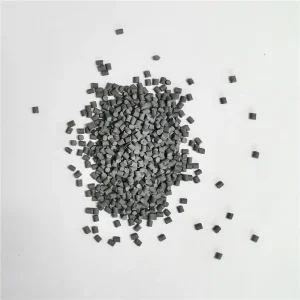
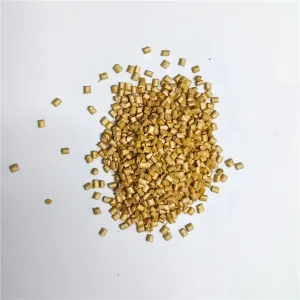
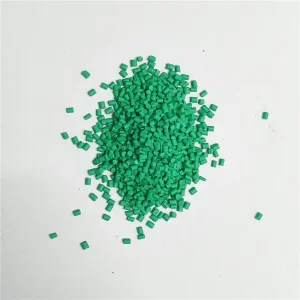
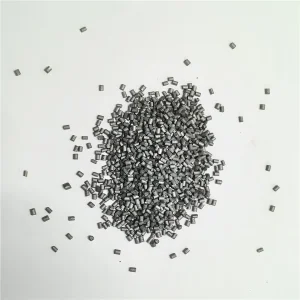
Real-world engineering metrics demonstrate the tangible economic and operational benefits delivered by our masterbatch formulations across Korean production facilities.
Challenge: A major packaging supplier in Incheon experienced frequent film tearing and gel specks on 15-micron LLDPE stretch film lines using standard black masterbatch.
Solution: Implemented our ultra-dispersed PE Black Masterbatch (50% high-purity carbon black loading). Gel count dropped by 94%, allowed 2% reduction in LDR, and increased extrusion line speed by 18%.
Challenge: Color drift ($\Delta E > 1.2$) between different injection molding shifts caused high scrap rates for white home appliance housings.
Solution: Converted factory to custom PE White Masterbatch with rutile TiO2 and specialized optical brighteners. Achieved tight $\Delta E < 0.35$ tolerance across 500,000 production cycles.
Challenge: Weathering failure and color fading under accelerate QUV testing for exterior automotive trim parts.
Solution: Supplied UV-Stabilized Silver & Grey Masterbatches containing HALS (Hindered Amine Light Stabilizers). Passed 3,000-hour QUV exposure with zero cracking or chalking.
Addressing key technical inquiries from South Korean purchasing directors, polymer engineers, and factory managers.
Elevate your plastic product quality, reduce let-down costs, and secure reliable JIT delivery for your manufacturing plants in Seoul and across South Korea.