High-concentration carrier-matched color masterbatch formulations engineered for blowing film, injection molding, and high-speed extrusion lines across Turkish industrial hubs.
Analyzing the rapid expansion of polymer processing in Istanbul, Gaziantep, Bursa, and Izmir, and the critical role of standardized masterbatch inputs.
The Republic of Turkey has firmly established itself as the second-largest plastic processor in Europe and the seventh-largest globally. Driven by a robust manufacturing foundation in sectors spanning flexible packaging, agricultural films, automotive components, white goods, and civil infrastructure piping, the demand for high-performance masterbatch and additive concentrates in Turkey has experienced exponential compound annual growth. Industrial zones such as the PAGEV Plastic Industrial Estate in Gebze, the massive manufacturing ecosystem of Gaziantep in Southeastern Anatolia, and the automotive-oriented plastics processors in Bursa represent pivotal nodes in global polymer supply chains.
SEO & Sourcing Insights: For Turkish plastics manufacturers seeking competitive advantages in export markets across the EU, MENA, and Eurasia, masterbatch sourcing is no longer merely about cost per kilogram—it is fundamentally governed by dispersion quality, Filter Pressure Value (FPV), pigment loading percentage, and compliance with stringent environmental standards such as REACH, RoHS, and EU Food Contact regulations.
As Turkey’s export orientation accelerates under nearshoring trends, local masterbatch companies and compounding factories face mounting pressure to maintain strict color consistency (CIELAB ΔE < 0.5) across long production runs. Substandard masterbatch formulations often suffer from poor carrier resin compatibility, high moisture absorption, micro-agglomeration, and pigment migration. These defects lead to film blowing bubble instability, filter clogging in extrusion machinery, surface streaking in injection-molded products, and premature mechanical degradation under Anatolian UV exposure conditions.
Advanced twin-screw co-rotating compounding systems ensuring uniform dispersion, high tinting strength, and thermal resilience up to 260°C.
Utilizing high melt flow index (MFI) prime LLDPE, LDPE, and PP carriers tailored specifically to match base resins, preventing delamination and mechanical weakness during processing.
Formulations containing up to 70% Rutile Titanium Dioxide for White Masterbatch and up to 50% high-surface-area Carbon Black, dramatically lowering required let-down ratios (LDR).
Incorporating Hindered Amine Light Stabilizers (HALS) and primary/secondary antioxidants to protect agricultural mulches and outdoor packaging against UV degradation.
| Masterbatch Grade | Pigment Content (%) | Carrier Base | Melt Flow Index (190°C/2.16kg) | Key Applications in Turkey |
|---|---|---|---|---|
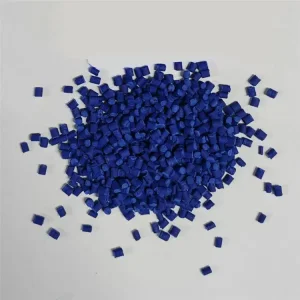
| PE Blue Masterbatch | 30% - 45% Organic Blue | LLDPE / LDPE | 15 - 25 g/10min | Injection Molded Crates, Water Tanks, Blow Film Packaging |
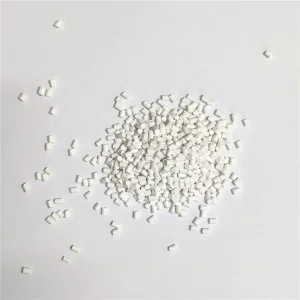
| PE White Masterbatch | 50% - 70% TiO2 Rutile | LDPE Prime | 8 - 18 g/10min | Lamination Films, Milk Pouches, Hygiene Film Layers |
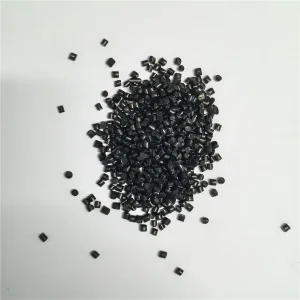
| PE Black Masterbatch | 40% - 50% Carbon Black | PE / Universal | 5 - 12 g/10min | Geomembranes, Irrigation Pipes, Silage Bag Film |
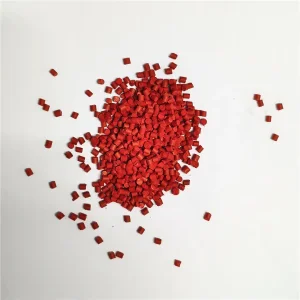
| PE Special Colors | 25% - 40% Mixed Pigment | PE / PP Compatible | 12 - 30 g/10min | Consumer Electronics, Decorative Caps, Toys, Textiles |
Navigating regulatory benchmarks for Turkish exporters to European Union and Middle Eastern destination markets.
Procurement directors in Turkish manufacturing plants must navigate complex global trade frameworks. When sourcing masterbatch from international factories, verifying compliance credentials is essential for protecting downstream supply chains. Products destined for the European market through Turkey’s customs union must strictly adhere to Regulation (EC) No 1907/2006 (REACH) and Regulation (EU) No 10/2011 on plastic materials intended to come into contact with food.
Heavy-metal-free and phthalate-free formulation guarantees ensuring compliance with EU safety directives and Turkish KKDIK environmental regulations.
FDA 21 CFR and EU 10/2011 food-grade certificates provided for masterbatches used in food packaging, beverage closures, and medical disposables.
Optimized freight transit times directly servicing Ambarli Port (Istanbul), Mersin, and Izmir, supported by full documentation (CoA, MSDS, Certificate of Origin).
Enabling post-consumer recyclate (PCR) upgrading and Near-Infrared (NIR) sorting compatibility for modern circular economy demands.
The global shift toward a circular economy has profoundly affected the Turkish plastics industry. With the EU’s upcoming Green Deal regulations and plastic packaging tax mandates, converters across Turkey are rapidly increasing the proportion of Post-Consumer Recyclate (PCR) resin in their products. However, incorporating PCR introduces challenges such as baseline discoloration, thermal degradation, and unpleasant odor profiles.
Next-generation masterbatch solutions address these technical hurdles through specialized additive suites. NIR-detectable black masterbatches replace traditional carbon black, allowing automatic optical sorters at recycling plants to distinguish and classify black plastic packaging. Furthermore, high-opacity white and specialty color masterbatches mask color inconsistencies inherent in recycled resins, enabling Turkish converters to increase PCR content up to 70% while maintaining premium visual aesthetics.
Expert answers regarding masterbatch selection, dosage ratios, processing parameters, and international delivery to Turkey.
For our high-concentration PE color masterbatches, the typical recommended Let-Down Ratio (LDR) ranges between 1% and 4%, depending on the required opacity, wall thickness, and pigment loading of the specific color grade. For thin blown films (under 25 microns), a 2% to 3% dosage ensures complete visual coverage without clogging extruder screen packs.
Using a masterbatch with an incompatible carrier resin (e.g., using a PS carrier in a PE matrix) causes phase separation, surface delamination, severe reduction in impact strength, and visual weld line flaws. Our PE carrier masterbatches use high-MFI polyolefin bases that blend seamlessly into LDPE, LLDPE, HDPE, and PP polymer matrices.
Heat resistance is tested according to DIN EN 12877 standards by subjecting masterbatch-colored polymer samples to incremental temperature steps inside an injection molding barrel for 5-minute dwell times. Color shift is measured using spectrophotometers; a ΔE < 1.5 indicates heat stability up to 260°C without thermal degradation or hue drift.
Standard production lead times are 10 to 15 days from order confirmation. Direct ocean freight shipping from our factory to Turkish ports (such as Istanbul Ambarli, Izmir, or Mersin) typically takes 20 to 28 days under FOB, CIF, or CFR terms, accompanied by complete customs clearance paperwork.
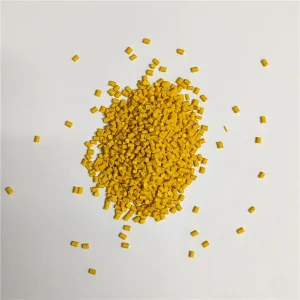
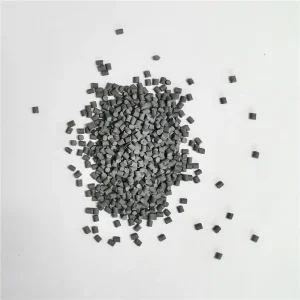
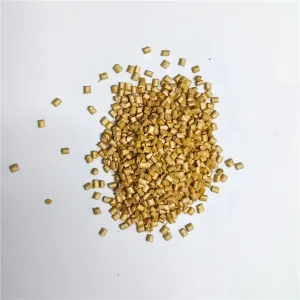
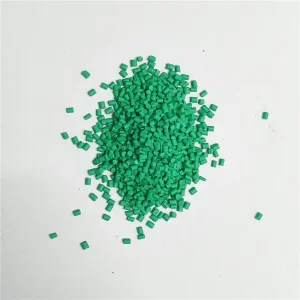
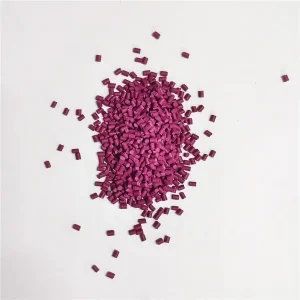
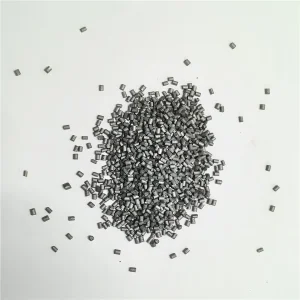
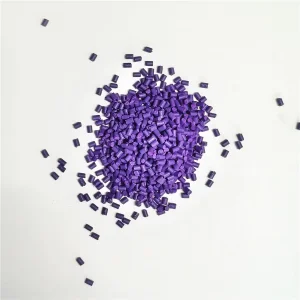
Browse our comprehensive array of custom high-concentration masterbatches formulated for injection molding, extrusion, and blowing film applications in Turkey.
Connect with our senior technical engineering team today for technical data sheets, custom color matching, or free sample requests delivered to your facility in Turkey.
Send Inquiry Now