An executive intelligence report on how advanced masterbatch technology empowers Uruguayan plastic converters, agricultural exporters, and industrial manufacturers across Montevideo, Canelones, and Salto.
Uruguay has emerged as one of South America's most stable, technologically progressive, and environmentally conscious economies. With strong industrial clusters located around the Montevideo Metropolitan Area, San José, and Canelones, the national plastics converting industry plays a critical role in supporting the country's primary economic engines: agricultural exports (beef, dairy, soy, and forestry), food processing, beverage bottling, and civil infrastructure construction.
To maintain competitiveness within the MERCOSUR trade block and satisfy strict international export standards (such as EU food contact regulations and ISO standards), Uruguayan plastic processors demand high-performance raw materials. High-concentration color and additive masterbatches serve as the vital link—enabling converters to produce lightweight, highly durable, UV-resistant, and aesthetically superior polyolefin products while minimizing raw material costs.
The Uruguayan plastic sector operates under unique environmental climatic conditions and rigorous municipal regulatory frameworks. Key factors shaping local masterbatch consumption include:
Engineered for high-throughput injection molding, blown film extrusion, and pipe manufacturing in South American climate conditions.
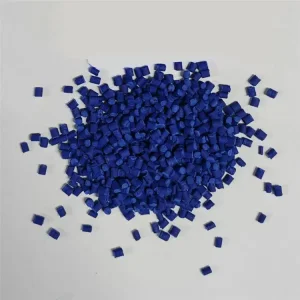
Vibrant blue coloration with PE carrier, optimized for water pipe extrusion, agricultural irrigation, and blown film packaging in Uruguay.
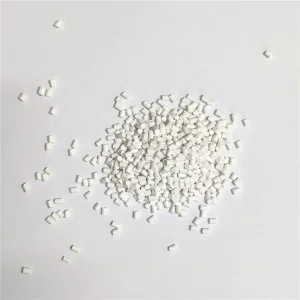
High TiO2 concentration delivering exceptional opacity, whiteness index, and UV weather resistance for Uruguayan food contact packaging.
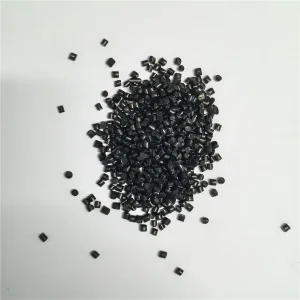
Premium carbon black loading providing deep jetness, high thermal stability, and maximum UV protection for agricultural mulch & geomembranes.
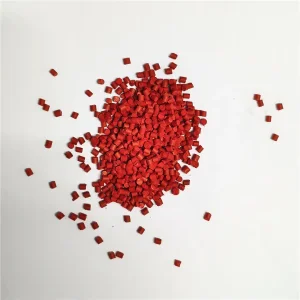
Anti-migration red pigment masterbatch engineered for high-visibility industrial crates, caps, closures, and warning films across Uruguay.
The performance of a masterbatch during high-speed extrusion or injection molding is governed by fundamental polymer physics and interface chemistry. For plastic manufacturers operating in Uruguay, avoiding filter mesh clogging, screen pack pressure spikes, and visual surface defects (such as streaks, pinholes, or fish eyes) requires an intimate understanding of pigment dispersion mechanics and carrier resin melt flow indexes (MFI).
Using virgin low-density polyethylene (LDPE) or linear low-density polyethylene (LLDPE) carrier resins guarantees chemical compatibility with base polymers. Matching the MFI of the masterbatch carrier slightly higher than the substrate resin ensures rapid, homogeneous melting during twin-screw processing.
Incorporating ultra-low molecular weight polyethylene waxes (PE Wax) and specialized surfactant dispersants lowers interfacial tension between organic/inorganic pigments and the molten polymer matrix, ensuring zero pigment agglomeration during processing.
High-temperature extrusion processes require colorants and additive chemistry that resist thermal breakdown. Our formulations maintain hue fidelity and structural integrity under prolonged barrel residence times at temperatures exceeding 260°C.
| Technical Property | Standard Commodity Grade | Jiazhou Premium Export Grade | Impact on Uruguayan Converters |
|---|---|---|---|
| Pigment Concentration | 15% - 30% | 40% - 75% High Density | Lower let-down ratios (LDR), significantly reducing freight & storage cost per ton. |
| Filter Pressure Value (FPV) | > 2.5 bar/g | < 0.8 bar/g (Ultra-Clean) | Extends screen-pack lifespan, prevents bubble breakage in high-speed film lines. |
| Heat Resistance Rating | 200°C - 220°C | 260°C - 300°C Continuous | Prevents color fading, gas marks, and polymer chain degradation during high-speed injection. |
| Weathering / Lightfastness | Blue Wool 4 - 5 | Blue Wool 7 - 8 (Max UV) | Prevents yellowing and embrittlement under intense South American UV radiation. |
Tailor-made additive and masterbatch combinations optimized for specific end-use plastic products.
Uruguay's massive livestock and grain industries rely heavily on multi-layer silage wrap films, grain bags (silobolsas), and green-house covers. Our high-white and black masterbatches incorporate Hindered Amine Light Stabilizers (HALS) to guarantee 12-24 months of outdoor life in rural agricultural zones.
Serving Uruguay's premier beef and dairy processing plants requires strict food contact compliance (FDA & EU 10/2011). Our non-migrating white, red, and custom shade masterbatches deliver high oxygen-barrier support and high opacity for shrink films, vacuum pouches, and dairy tubs.
Civil engineering projects in Montevideo and inland irrigation networks utilize HDPE pressure pipes and corrugated conduit lines. Our carbon black masterbatch ensures P-type dispersion class rating, protecting water lines from hydrostatic stress failure and UV deterioration.
How next-generation color and additive technologies are shaping sustainable manufacturing in South America.
Development of Near-Infrared (NIR) transparent black and dark masterbatches that allow automated sorting systems in recycling plants to identify and sort black plastics.
Specialized additive masterbatches containing polymer chain extenders and reactive compatibilizers to allow up to 70% post-consumer recycled content incorporation without loss of mechanical strength.
Transition towards fully compostable and bio-based carriers (PLA/PBAT) for organic waste bags and agricultural mulch films, aligning with global zero-plastic waste mandates.
Integration of real-time spectral feedback systems on extrusion lines, automatically adjusting masterbatch dosing percentages to correct color drift in real time.
As global supply chains place greater emphasis on ESG (Environmental, Social, and Governance) compliance, Uruguayan plastic converters face a dual challenge: lowering production costs while adhering to strict eco-tax policies and plastic reduction mandates. Masterbatch technology provides the most effective pathway to achieving both goals simultaneously.
By using high-concentration CaCO3 (Calcium Carbonate) filler masterbatches, converters can replace up to 40% of virgin polyolefin resin. This significantly lowers overall electricity consumption during processing due to the higher thermal conductivity of mineral fillers, while reducing the net carbon footprint per manufactured unit.
Explore our specialized color spectrum engineered with high temperature resistance, anti-fading chemistry, and anti-migration properties.
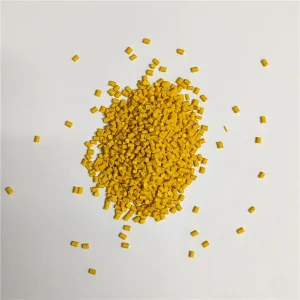
Vibrant yellow hue formulated with non-toxic pigments, ideal for Uruguayan consumer containers and film extrusion.
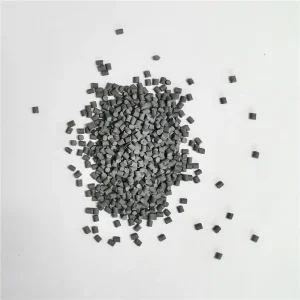
Heat-resistant grey shade engineered for industrial storage bins, electronic housings, and conduit pipes in South America.
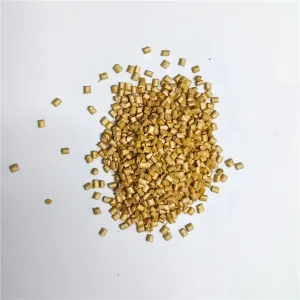
Luxurious metallic luster formulation designed for high-end cosmetic bottles, cap closures, and decorative containers.
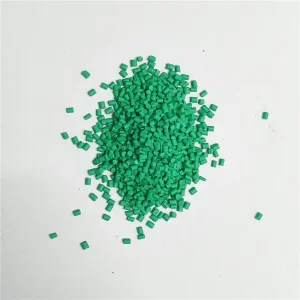
High-dispersion green colorant designed for agricultural netting, shade cloths, and garden tools deployed in Uruguay.
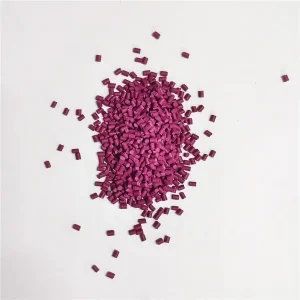
Cost-effective rose red shade offering high thermal stability up to 260°C for household consumer plastics.
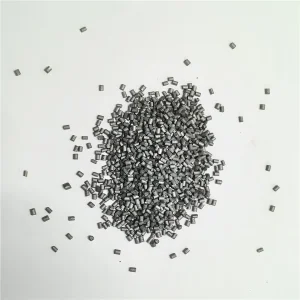
Premium metallic silver effect with anti-fading weather resistance for automotive components and luxury packaging.
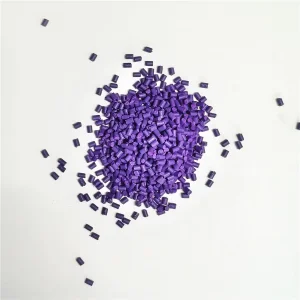
Rich purple masterbatch engineered for precise color consistency across large-volume blow molding lines.
Engineered specifically for heavy-duty profile extrusion and industrial film applications requiring zero migration.
Securing a reliable, direct-from-factory masterbatch supply line is critical for maintaining uninterrupted manufacturing in Uruguay. Changzhou Jiazhou Plastic Products Co., Ltd. provides a complete end-to-end export infrastructure designed to eliminate supply chain friction for South American buyers.
From our 6,000m² manufacturing facility, we manage strict quality batch testing, moisture-proof palletized packaging, customs documentation, and ocean freight routing directly to the Port of Montevideo. Our standard lead time from order confirmation to port dispatch is under 15 days.
Get instant answers regarding masterbatch processing, chemical compliance, shipping logistics, and custom shade development.
Our high-concentration masterbatches typically operate at a 1% to 4% Let-Down Ratio (LDR) depending on the target opacity, wall thickness, and base polymer transparency. For blown films, a 2% LDR is usually optimal, significantly reducing cost per kilogram of finished product.
Yes. All of our food-grade white and color masterbatches use heavy-metal-free, non-toxic pigments and virgin PE carrier resins compliant with US FDA regulations and European Union EU No 10/2011 standards for direct food contact.
We incorporate high-grade HALS (Hindered Amine Light Stabilizers) and UV absorbers into our outdoor-grade black, white, and color masterbatches. This prevents polymer photo-oxidation, surface chalking, and loss of tensile strength under intense solar radiation in Uruguay.
Direct ocean shipping from Ningbo/Shanghai port to Montevideo typically takes between 35 to 42 days. Order manufacturing and loading require approximately 10-15 days, allowing Uruguayan importers to plan inventory replenishment efficiently.