
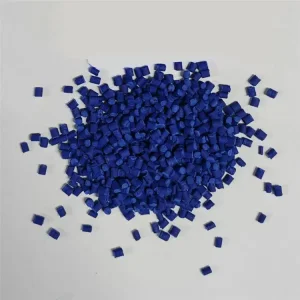
Direct factory supply with expedited container shipping to Cat Lai Terminal & ICD Transimex serving VSIP, Tan Binh, and Le Minh Xuan Industrial Parks.
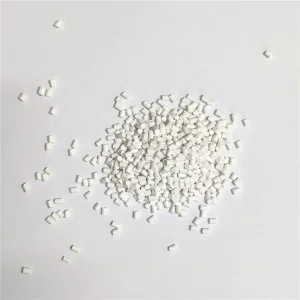
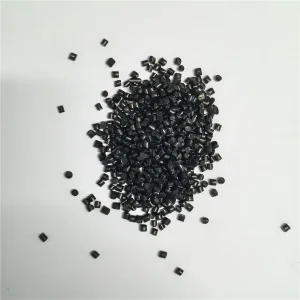
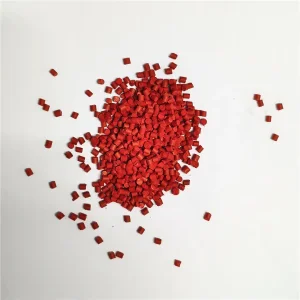
Our engineering lab formulates custom color matches within 48 hours for Ho Chi Minh City enterprises.
Send Inquiry NowAn in-depth white-paper analysis on raw material dynamics, processing challenges, and supply chain demands across Southern Vietnam's economic engine.
Ho Chi Minh City (HCMC), encompassing major industrial clusters such as Tan Thuan Export Processing Zone, Tan Binh Industrial Park, Le Minh Xuan, Hiep Phuoc, and the nearby Vietnam-Singapore Industrial Parks (VSIP I & II in Binh Duong), represents the epicenter of Vietnam’s plastics conversion and polymer processing industry. Contributing over 45% of the nation's total plastics output, HCMC-based manufacturers serve critical sectors including food & beverage flexible packaging, consumer electronics housings, agricultural greenhouse films, and industrial piping.
As international brands expand their OEM/ODM footprint under global supply-chain diversification, plastic converters operating within HCMC face stringent technical mandates. From high melt flow consistency to strict non-migration properties under tropical humidity, polymer masterbatch quality directly governs factory productivity and yield rates.
The demand profile for industrial raw materials—specifically Polyethylene (PE) carrier masterbatches, Polypropylene (PP) compounds, and Calcium Carbonate (CaCO₃) fillers—in Ho Chi Minh City is shaped by four macro vectors:
Addressing the exact procurement challenges faced by Chief Engineers, Plant Managers, and Quality Assurance Directors in Southern Vietnam.
Poorly dispersed pigments cause filter clogging, frequent screen pack replacements, and micro-pinholes in blown films (particularly thin-gauge shopping bags and agricultural mulch). Masterbatch formulations supplied to HCMC factories undergo twin-screw continuous compounding, achieving particle dispersion below 5 microns and ensuring extended extruder run times without pressure spikes.
Southern Vietnam’s tropical monsoon climate exposes stored raw materials to high ambient humidity (averaging 75%-85%). Moisture absorption leads to die droop, silver streaks in injection molding, and bubbles in blown film. Our PE carrier masterbatches are processed with hydrophobic dispersing agents and moisture-baring seal packaging to maintain sub-0.1% moisture retention.
With HCMC serving as an export launchpad to Japan, the US, and EU markets, masterbatches must strictly comply with heavy metal thresholds (Pb, Cd, Hg, Cr VI) and non-migration mandates. Organic and inorganic pigments are selected to prevent dye bleeding when exposed to fats, oils, and environmental weathering.
Comprehensive engineering matrix matching carrier resins, pigment loadings, and thermal limits to target end-use applications.
| Masterbatch Grade | Carrier Resin | Pigment Loading | Thermal Stability | Primary HCMC Application Scenarios | Regulatory Certifications |
|---|---|---|---|---|---|
| High-Opacity White | LLDPE / LDPE | 50% - 70% TiO₂ (Rutile) | 280°C | Milk bags, laminated food films, courier satchels in Tan Binh IP | FDA 21 CFR, REACH, RoHS |
| Deep Tint Black | HDPE / LLDPE | 30% - 50% Carbon Black | 260°C - 300°C | HDPE agricultural drip pipes, geomembranes, trash liners | ISO 9001, RoHS 3.0 |
| Chromatic Blue / Red | PE / PP Universal | 30% - 40% Organic Pigment | 260°C | Injection molded crates, industrial buckets, beverage caps | EN71-3, Non-Toxic Pass |
| Specialty Metallic (Gold/Silver) | EVA / PE | 15% - 25% Mica/Aluminium | 240°C | Cosmetic packaging, premium blow molded containers (SHTP zone) | REACH SVHC, Halogen-Free |
| CaCO₃ Filler Masterbatch | Homo PP / LLDPE | 75% - 82% Ultrafine Calcite | 260°C | Woven sacks (raffia), sheet extrusion, injection housewares | Food-grade compliance |
Understanding the polymer physics behind high dispersion performance, melt flow optimization, and color consistency.
A critical failure mode in masterbatch utilization occurs when the melt flow index (MFI) of the masterbatch carrier does not align with the base virgin resin. If the masterbatch carrier has a lower MFI than the matrix resin, incomplete melting occurs, resulting in visible "fish-eyes", un-melted specs, and streakiness in finished blown films.
Our formulations specifically designed for Southern Vietnam processing plants utilize high-flow Linear Low-Density Polyethylene (LLDPE) carriers with an MFI ranging from 15 g/10min to 30 g/10min (at 190°C/2.16kg). This ensures rapid viscosity breakdown during the plasticizing section of single-screw extruders, producing seamless color homogenization without reducing the mechanical tensile strength of the end product.
Agglomeration is the inherent tendency of fine pigment powders (such as phthalocyanine blue, quinacridone red, or furnace carbon black) to clump together due to high surface energy. To overcome this, our manufacturing facility employs high-torque co-rotating twin-screw extruders equipped with specialized kneading blocks.
Pigment particles are coated with hyper-dispersants and low-molecular-weight polyethylene waxes. This micro-encapsulation lowers interfacial tension between the pigment surface and the polymer melt, guaranteeing that pigment agglomerates are broken down below the critical 5-micron threshold.
Vietnam’s geographical location results in high solar UV index levels throughout the year (UV index frequently exceeding 10 in Ho Chi Minh City). Unprotected polyolefin products experience photo-oxidative degradation, leading to chalking, discoloration, and embrittlement.
Our outdoor-grade color masterbatches integrate Hindered Amine Light Stabilizers (HALS) and UV absorbers (such as Benzotriazoles). This additive synergy scavenges free radicals generated by solar irradiation, extending the outdoor service life of agricultural films, woven geotextiles, and stadium seating manufactured in Vietnam by up to 5 years.
Every production batch undergoes spectrophotometric evaluation (CIELAB ΔE < 0.5), filter pressure testing (FPI), and moisture analysis prior to export packaging in moisture-proof aluminum-laminated bags.
Aligning polymer inputs with Decree 08/2022/ND-CP, Extended Producer Responsibility (EPR), and global circular economy requirements.
Vietnam’s Law on Environmental Protection mandates strict regulations regarding single-use plastics and packaging recyclability. Our masterbatches are formulated without hazardous heavy metal pigments (lead chromate, cadmium sulfide free), enabling HCMC plastic manufacturers to produce fully recyclable mono-material packaging compliant with national green growth directives.
As global brand owners operating in Vietnam commit to using 25%-50% PCR content, plastic processors face color variability challenges from recycled scrap feedstocks. Our high-tinting strength masterbatches effectively mask baseline gray/yellow hues, enabling consistent brand colors across recycled PE and PP bottles and containers.
For plastic packaging suppliers serving the vibrant food processing sector in HCMC and the Mekong Delta, our food-grade masterbatches strictly adhere to FDA 21 CFR 177.1520 and EU Regulation No 10/2011. Migration test certificates and safety data sheets (MSDS) are provided with every delivery shipment.
Explore our full range of color concentrates, metallic effects, and functional additives available for immediate shipping to Ho Chi Minh City ports.
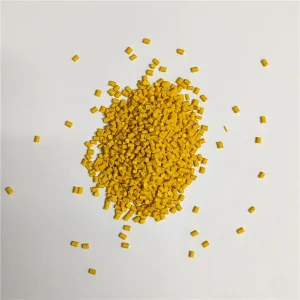
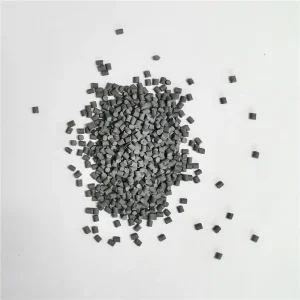
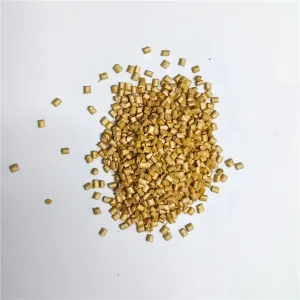
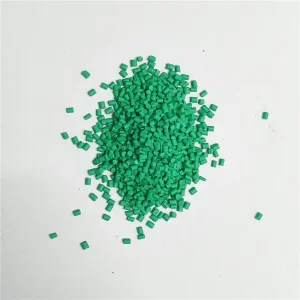
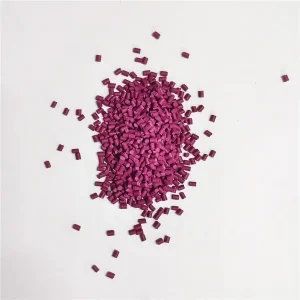
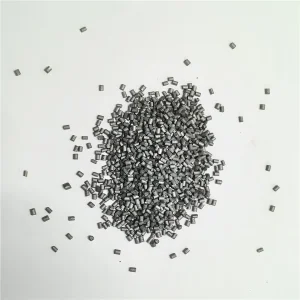
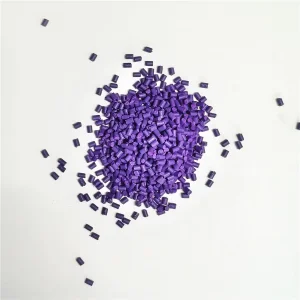
Evaluating masterbatch pellets versus raw pigment powder blending for plastic converters in Ho Chi Minh City.
Clear engineering and logistical answers for purchasing managers and plant directors in Southern Vietnam.
Standard direct container shipments from our manufacturing facility to Cat Lai Terminal (HCMC) take approximately 7 to 10 days ocean transit. Customs clearance and inland trucking to industrial parks like Tan Binh, VSIP, or Le Minh Xuan typically require an additional 2 to 3 business days.
For high-concentration PE color masterbatches, the recommended LDR typically ranges from 1% to 3% depending on wall thickness and required opacity. For CaCO₃ filler masterbatches, addition rates can range from 5% up to 30% depending on mechanical property thresholds. Our technical team provides exact dosage charts based on your machine specifications.
Yes. Our computerized spectrophotometric color-matching laboratory develops custom masterbatch formulations matching Pantone, RAL, or physical plastic target samples within 48 hours. Trial samples (1kg - 5kg) are shipped via express courier directly to your factory in Vietnam.
We manufacture specialized carrier masterbatches utilizing carrier resins engineered for compostable polymers (PBAT/PLA/PBS). These specialty grades ensure full compliance with EN 13432 and ASTM D6400 industrial composting standards.
All food-grade masterbatches are accompanied by comprehensive compliance certificates, including FDA 21 CFR statements, EU 10/2011 overall migration analysis, Heavy Metal Test Reports (RoHS), and REACH SVHC declarations required by Vietnam customs and international auditors.
Masterbatches are packed in 25kg heavy-duty moisture-proof PE/PP laminated valve bags. They should be stored in a dry, ventilated warehouse off the floor on wooden or plastic pallets. If opened bags are left unused during humid weather, pre-drying at 70°C for 1 to 2 hours prior to extrusion is recommended.
Partner with a 16-year B2B masterbatch manufacturer delivering superior color consistency, certified regulatory compliance, and dependable supply chain logistics across Southern Vietnam.