Optimized for high-speed blown film lines, precision injection machinery, and industrial profile extruders operating across the Valle de México manufacturing corridors.
An in-depth analysis of the polymer processing landscape, nearshoring catalysts under USMCA/T-MEC, and raw material demand across Mexico's central economic core.
The Metropolitan Area of Mexico City (Valle de México), encompassing the Federal District (CDMX), the State of Mexico (Edomex), and key perimeter industrial corridors like Cuautitlán Izcalli, Tlalnepantla, Naucalpan, Iztapalapa, and the nearby Lerma-Toluca basin, represents one of Latin America's largest polyolefin consumption hubs. As global manufacturing supply chains undergo unprecedented realignments driven by nearshoring dynamics and USMCA (T-MEC) rules of origin, plastics processors and product factories across Greater Mexico City face rising standards for product quality, operational efficiency, and environmental compliance.
Factories in Mexico City specialize in four primary downstream sectors: fast-moving consumer goods (FMCG) flexible packaging, agricultural films for the Bajío-Central plateau, industrial pipe extrusion (HDPE/PP for urban infrastructure upgrade), and automotive components destined for North American assembly lines. To maintain international competitiveness, local polymer compounders and molders are transitioning from raw pigment powders to high-concentration PE carrier color masterbatches and ultra-fine calcium carbonate (CaCO₃) filler masterbatches. This technological shift resolves pigment agglomeration issues, reduces machine downtime, and minimizes volatile emissions on plant floors.
Export-oriented manufacturers in Cuautitlán and Toluca must comply with strict physical-chemical standards (FDA 21 CFR, REACH, and RoHS 3.0). Importing masterbatch formulated with virgin PE carriers matching exact Melt Flow Indexes (MFI ranging from 2.0 to 20 g/10min) prevents delamination and stress cracking under high-altitude low-humidity conditions specific to Mexico Valley (altitude ~2,240m).
Understanding how microscopic dispersion, carrier resin rheology, and thermal stabilizers dictate final plastic product performance under high-speed extrusion conditions.
Our masterbatches achieve FPV values below 0.8 bar/g (according to EN 13900-5), ensuring sub-micron pigment particle distribution that eliminates nozzle clogging in ultra-thin blown films (down to 12 microns).
Formulated specifically for the high solar radiation environments of Central Mexico (UV index up to 11+). Incorporates Hindered Amine Light Stabilizers (HALS) to prevent polymer chain scission and color fading.
Advanced molecular encapsulation prevents organic pigment blooming or bleeding in food-contact stretch films, pharmaceutical bottles, and multi-layer laminate structures.
Below is a technical evaluation matrix outlining key masterbatch parameters required by quality control departments in Mexico City manufacturing plants:
| Masterbatch Grade | Carrier Resin | Pigment Loading | Heat Resistance | Light Fastness (BWS) | Recommended LDR % |
|---|---|---|---|---|---|
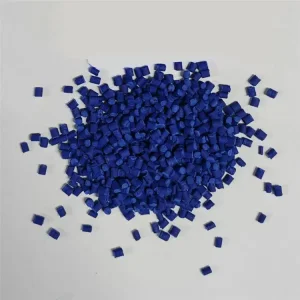
| High-Concentration Blue | PE / LLDPE | 40% - 50% Phthalo Blue | 260°C - 280°C | Level 7 - 8 | 1.0% - 3.0% |
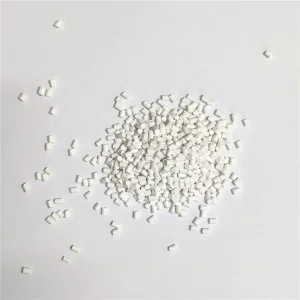
| Weather-Resistant White | PE / HDPE | 60% - 70% TiO₂ (Rutile) | 280°C - 300°C | Level 8 | 1.5% - 4.0% |
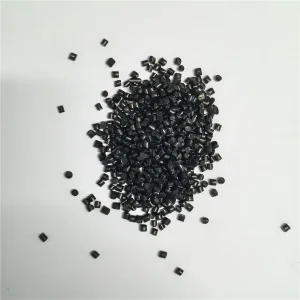
| Eco-Friendly Black | PE / Recycled PE | 30% - 50% Carbon Black | 260°C | Level 8 | 2.0% - 5.0% |
| CaCO₃ Filler Masterbatch | LLDPE / PP | 75% - 80% Micronized CaCO₃ | 240°C - 260°C | N/A | 10.0% - 35.0% |
| Specialty Metallic (Gold/Silver) | PE / Low Density PE | 20% - 35% Pearlescent/Aluminum | 220°C - 240°C | Level 6 - 7 | 2.0% - 5.0% |
Tailored polymer additives designed to solve real-world production bottlenecks for local factories and plastic converters.
Extrusion plants producing shopping bags, courier sacks, and agricultural mulch film face severe bubble instability when using low-quality masterbatch. Our high-dispersion white and color masterbatches utilize ultra-refined PE carriers that lower melt backpressure, increase bubble stability by 18%, and ensure uniform opacity without pinholes.
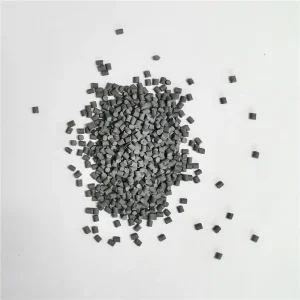
Tier 1 and Tier 2 automotive molders supplying OEM plants require heat resistance above 260°C to prevent thermal degradation during hot runner injection. Our technical-grade black and grey masterbatches contain anti-oxidants and specialized thermal stabilizers to maintain dimensional tolerances and color uniformity.
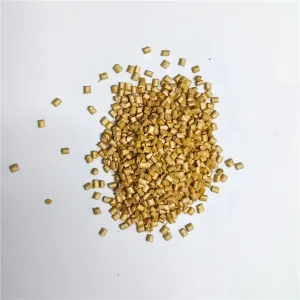
Rigid container manufacturers crafting blow-molded bottles and injection-molded closures rely on non-toxic, anti-fading PE yellow, red, gold, and silver masterbatches. These grades satisfy strict food-contact migration testing while providing metallic luster and high shelf-appeal.
HDPE corrugated pipe and conduit producers use high-load black masterbatches formulated with P-type and N-type carbon black. This delivers high UV absorption, weathering protection over 50-year service lifespans, and enhanced environmental stress crack resistance (ESCR).
Aligning with Mexico City’s waste reduction regulations and global zero-carbon sustainability initiatives.
In accordance with the Ley de Residuos Sólidos de la Ciudad de México and global ESG mandates, factories in Mexico are re-engineering products for circularity. Masterbatch engineering plays a pivotal role in this transition:
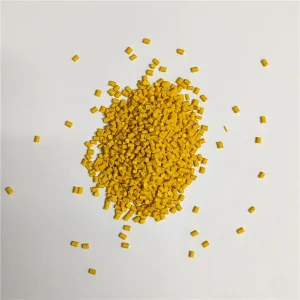
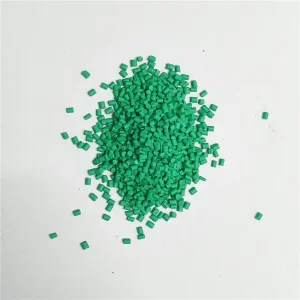
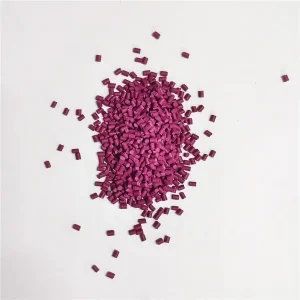
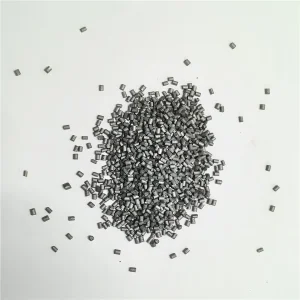
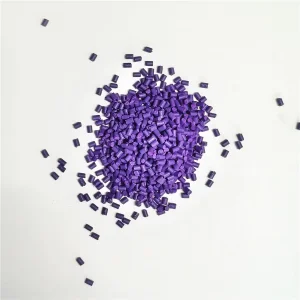
Explore our full line of high-concentration color masterbatches, tested and certified for seamless integration into North American manufacturing workflows.
Addressing technical, logistical, and import queries for purchasing directors and plant engineers in Mexico.
While local Mexican distributors offer shorter transit times, direct factory sourcing from high-capacity manufacturers provides a 20% to 35% cost reduction, consistent batch-to-batch color delta E (<0.5), and custom formulation capabilities. With established maritime routes directly to Manzanillo and Veracruz ports, total lead times are optimized for scheduled production planning.
Polyolefin masterbatches are typically classified under HS Code 3206.49 (Other coloring matter) or HS Code 3901.20 (Polyethylene in primary forms). Importers should verify applicable duties under Mexico's TIGIE tariff schedule and ensure proper certificate of origin documentation for smooth customs clearance through SAT.
To avoid dispersion streaks or resin separation, the carrier resin of the masterbatch must have a slightly higher MFI than the target processing resin. For instance, if extruding LLDPE film with an MFI of 1.0 g/10min, we supply masterbatch formulated on a PE carrier resin with an MFI of 4.0 to 10 g/10min.
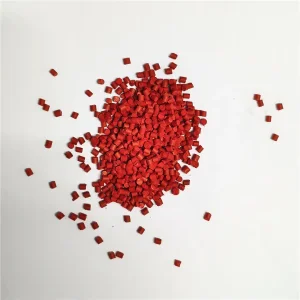
Yes. Our high-concentration black, red, blue, and white masterbatches are formulated with high-thermal-stability organic and inorganic pigments (Blue Wool Scale 7-8) that prevent pigment thermal decomposition, discoloration, or gas venting up to 280°C - 300°C.
For standard shopping bags and general packaging films, a Let-Down Ratio (LDR) of 10% to 25% is recommended. For heavy-duty industrial trash bags or agricultural films, addition rates can reach up to 35% without compromising dart drop impact resistance or tensile strength.
Yes. Our food-grade masterbatches strictly comply with FDA 21 CFR 177.1520 regulations as well as EU Regulation No 10/2011, making them suitable for food trays, caps, beverage bottles, and flexible food packaging films manufactured in Mexico.
Mexico City's high elevation (~2,240m) leads to elevated UV solar radiation. We incorporate synergistic HALS (Hindered Amine Light Stabilizers) and UV absorbers (such as UV-531 or UV-326) into our silver, green, and black masterbatches to extend outdoor plastic lifespan up to 3-5 years without embrittlement.
We offer flexible MOQs starting at 1,000 kg for standard color/filler grades, and provide free 1 kg - 5 kg lab test samples shipped directly via courier (DHL/FedEx) to industrial facilities across Mexico City, Estado de México, and Querétaro within 5-7 business days.
Our production facilities utilize continuous twin-screw extruders operating under high shear rates, combined with double-pass melt filtration screens (mesh 120-200). This guarantees uniform dispersion with no particle agglomerates exceeding 5 microns.
Absolutament. Our R&D lab utilizes spectrophotometers and computer-aided color matching systems. Buyers in Mexico can send physical plastic samples or Pantone/RAL color codes, and we produce exact masterbatch color matches within 72 hours.
Contact our engineering team today for technical data sheets (TDS), safety data sheets (SDS), and custom volume pricing tailored for factories in Mexico City.
Send Inquiry Now