Engineered specifically for blow molding, film extrusion, and high-speed injection molding plants across Greater London and international supply chains.
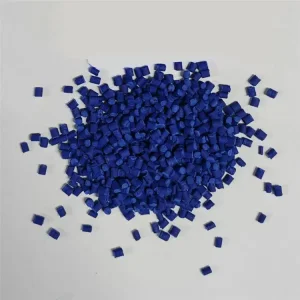
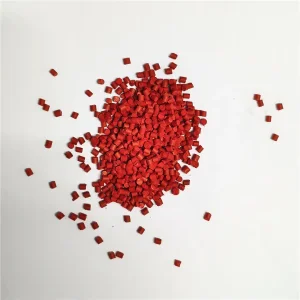
The manufacturing landscape serving the London metropolitan area and the broader South East economy is undergoing a massive transformation driven by stringent UK regulatory frameworks, carbon-neutral manufacturing mandates, and demanding consumer specifications. As one of Europe's largest logistics and consumption epicenters, London creates a unique operational climate for plastic converters, compounding plants, and polymer product manufacturers. From sustainable FMCG packaging hubs along the Thames Gateway to precision technical molders in Hertfordshire and Berkshire, the demand for highly reliable, ultra-dispersed, and eco-compliant polymer masterbatches has reached an all-time high.
Masterbatch technology—comprising precise concentrates of pigments, functional additives, and inorganic fillers encapsulated within matrix-compatible carrier resins—serves as the foundational backbone for modern plastic production. For manufacturing partners and factories delivering goods into London, raw resin coloration is no longer merely an aesthetic requirement; it is a complex engineering discipline involving thermal stability up to 260°C, zero-migration chemistry, regulatory compliance with the UK Plastic Packaging Tax (PPT), and Near-Infrared (NIR) sortability for automated UK recycling networks.
Formulations engineered to blend seamlessly with post-consumer recycled (PCR) resins, allowing London packaging producers to comfortably bypass the £217.85 per tonne tax levy threshold.
Advanced thermal stabilizer systems preventing pigment degradation, die build-up, and polymer chain scission during ultra-high-speed film blowing and blow molding runs.
Carbon-free black pigment systems enabling automated Material Recovery Facilities (MRFs) across Greater London to sort and recover rigid plastic waste efficiently.
This whitepaper provides an exhaustive technical and macroeconomic analysis of how high-concentration PE/PP color and filler masterbatches are manufactured, customized, and deployed to meet the rigorous quality standards expected by London enterprise procurement teams. By bridging advanced polymer chemistry with localized application constraints, manufacturing factories can secure a distinct competitive advantage in cost-efficiency, visual brilliance, and environmental stewardship.
The global masterbatch market is undergoing a structural pivot towards high-pigment load concentrates, multi-functional additive masterbatches, and sustainable bio-based carriers. Driven by volatile virgin polymer pricing and raw material supply chain disruptions, manufacturers serving the UK market are moving away from traditional liquid colorants and dry pigment powders. Dry powders create toxic dust environments, require extensive purging during machine color changes, and suffer from poor shear-induced dispersion. Liquid colorants, while precise, present pump degradation and shelf-life settling risks in humid European logistics environments.
In contrast, High-Concentration PE-Carrier Masterbatches engineered with twin-screw co-rotating extrusion technology deliver precise dosage accuracy (typically 1% to 4% let-down ratios), non-dusting clean room operation, and extended barrel life for processing equipment. The table below illustrates the micro-physical parameter comparison between standard masterbatches and our specialized London-market high-concentration masterbatch formulations:
| Technical Parameter | Standard Commercial Masterbatch | London-Spec High-Concentration Masterbatch | Industrial Impact for London Converters |
|---|---|---|---|
| Pigment Loading (%) | 20% – 35% Active Content | 50% – 75% Active Content | Reduces shipping weight, logistics carbon footprint & warehouse footprint. |
| Melt Flow Index (MFI g/10min) | Fixed (Unmatched Carrier) | Tailored (2 to 45 g/10min @ 190°C) | Eliminates viscosity drops, melt fracture, and delamination in thin films. |
| Dispersion Rating (Filter Pressure Value) | > 2.5 bar/g (Standard Mesh) | < 0.8 bar/g (Ultra-Fine Mesh) | Prevents pinholes, streaks, and bubble breaks in high-speed film lines. |
| Thermal Stability Range | Up to 200°C – 220°C | Up to 260°C – 300°C | Prevents thermal off-gassing and color shifting during high-temp injection. |
| Heavy Metal & REACH Status | Variable Compliance | 100% RoHS, REACH, FDA Compliant | Ensures smooth customs clearance through UK port authorities (Tilbury, Felixstowe). |
Factory buyers serving the UK must also navigate regional micro-trends, such as London's strict air quality mandates and industrial waste regulations. Factories utilizing low-grade masterbatch carriers often face volatile organic compound (VOC) emissions during processing, leading to environmental non-compliance. Our specialized polyolefin formulations ensure minimal thermal degradation VOCs, maintaining clean manufacturing environment standards inside UK processing facilities.
Quantifiable performance benchmarks driving global logistics and factory operations for London enterprise buyers.
The core challenge in color masterbatch manufacturing lies in overcoming the cohesive energy forces holding primary pigment agglomerates together. Inorganic pigments (such as Titanium Dioxide $TiO_2$ rutile grades, Ultramarine Blue, or Iron Oxides) and organic pigments (such as Phthalocyanine Blue/Green, Quinacridones, or Carbon Blacks) naturally form tight clusters during synthesis.
If these clusters are not de-agglomerated down to sub-micron particle sizes during masterbatch extrusion, the resultant plastic product will suffer from microscopic stress concentration points, surface pitting, streakiness, and reduced tensile strength. Our factory compounding process utilizes co-rotating twin-screw extruders with L/D ratios exceeding 48:1, equipped with specialized kneader elements and shear-inducing mixing blocks.
Furthermore, our factory engineers employ multi-stage underwater pelletization technology. This ensures perfectly spherical, dust-free masterbatch granules with uniform weight and size distribution, preventing bridging or feeding hesitation in gravimetric dosing units installed on European molding lines.
Different industrial sectors across Greater London demand targeted masterbatch formulations tailored to their specific mechanical, aesthetic, and regulatory criteria. Below are the core solutions engineered by our factory lines for regional converters:
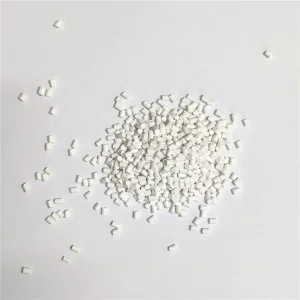
High-whiteness PE White Masterbatches ($TiO_2$ loading up to 70%) providing exceptional opacity, high gloss, and full compliance with UK/EU food-contact regulations for milk bottles, food trays, and barrier films.
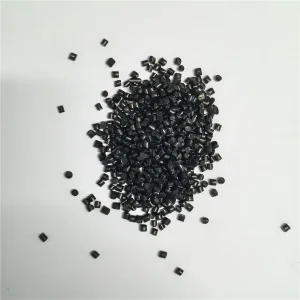
Carbon Black Masterbatches (P-type carbon black particle size < 20nm) offering long-term outdoor UV resistance, environmental stress crack resistance (ESCR), and mechanical reinforcement for underground drainage pipes and telecom conduits.
Cost-optimized co-extruded film masterbatches designed for courier bags utilized by London logistics hubs. Features high opacity black interior layer combined with bright, printable exterior color layers.
In addition to standard color masterbatches, our manufacturing plant produces high-efficiency CaCO₃ Filler Masterbatches. Formulated with ultra-fine, surface-treated nano-calcium carbonate particles (1.5 micron average particle size), these filler concentrates allow London plastics factories to replace up to 35% of expensive virgin resin while simultaneously increasing thermal conductivity, reducing cooling cycle times in injection molding by up to 20%, and lowering net carbon emission profiles.
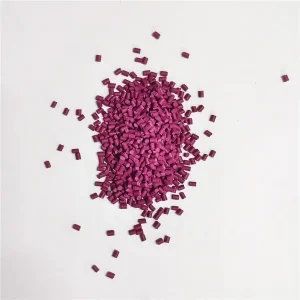
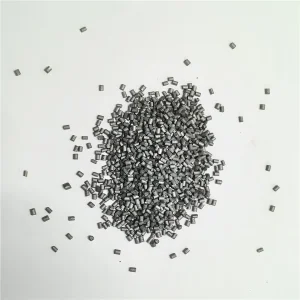
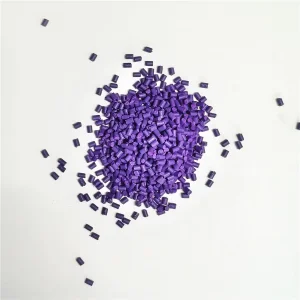
Explore our full line of non-toxic, heat-resistant, and anti-fading masterbatches engineered for injection molding, blown film, and sheet extrusion.
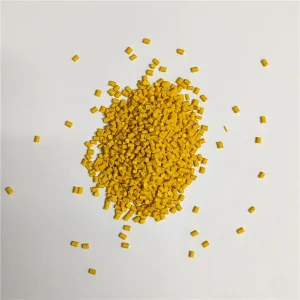
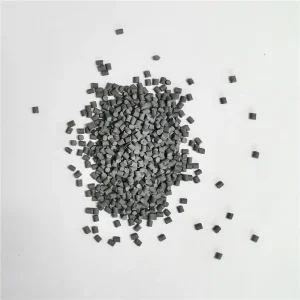
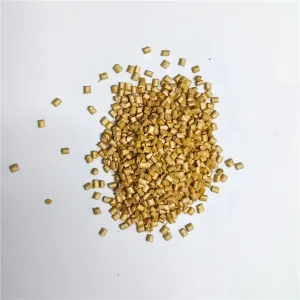
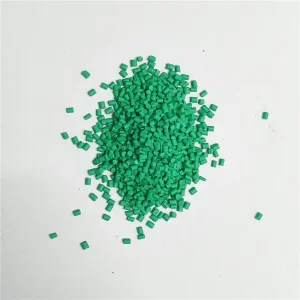
To establish absolute trust with procurement managers in London and international markets, our manufacturing plant operates under strict ISO 9001:2015 Quality Management Systems and ISO 14001:2015 Environmental Management Guidelines. Quality assurance is integrated into every step of the manufacturing chain—from raw material receipt to container dispatch.
All finished products are accompanied by comprehensive Certificate of Analysis (CoA) documentation, Safety Data Sheets (SDS) adhering to UK REACH regulations, and full traceability lot numbers mapped directly to raw material batch codes.
Expert technical answers addressing common procurement, formulation, and regulatory questions from London plastic converters.
The UK Plastic Packaging Tax imposes a financial penalty on plastic packaging manufactured in or imported into the UK containing less than 30% recycled plastic. High-concentration masterbatches utilize ultra-loaded pigment formulations, requiring much lower let-down ratios (e.g., 1% to 2% addition rates). This leaves maximum volumetric head-room within the polymer matrix for high-ratio Post-Consumer Recycled (PCR) or Post-Industrial Recycled (PIR) resin blends, allowing converters to easily surpass the 30% recycled threshold while maintaining rich, vibrant colors.
Traditional black plastics rely on Carbon Black pigments, which absorb Near-Infrared (NIR) light wavelengths emitted by automated optical sorters at UK Material Recovery Facilities (MRFs). As a result, standard black plastic cannot be detected and ends up in landfills. Our NIR-Sortable Black Masterbatches utilize specialized organic black pigment blends that reflect NIR light, allowing automated recycling plants serving London to identify, sort, and re-granulate black polyolefins into valuable recycled streams.
Pigment migration occurs when low-molecular-weight colorant molecules bloom or bleed out of the plastic matrix into food, liquids, or adjacent surfaces. We eliminate this risk by exclusively incorporating high-molecular-weight, highly insoluble inorganic and organic pigments bound tightly within high-purity Polyethylene (PE) carrier resins. Our food-grade masterbatch lines undergo rigorous overall and specific migration testing in accordance with EU No 10/2011 and FDA 21 CFR standards.
While Polyethylene (PE) carrier masterbatches offer broad universal compatibility with LDPE, LLDPE, HDPE, and PP resins, we also produce custom-matched masterbatches utilizing Polypropylene (PP), Polystyrene (PS), EVA, and universal carrier matrices tailored for specialized engineering plastics (ABS, SAN, PET) to guarantee absolute mechanical property retention.
Standard bulk production lead time is 10 to 15 business days. Cargo is packed in heavy-duty moisture-proof 25kg PE bags, organized on standard palletized units (1,000kg to 1,250kg per pallet with stretch wrap protection), or delivered in 1-tonne big bags (FIBCs). Direct sea freight shipments to Port of London (Tilbury) or London Gateway arrive reliably supported by complete customs documentation.
Partner with an established B2B masterbatch manufacturer offering tailor-made color formulations, technical laboratory matching, and dependable global logistics serving London and international plastic industries.